A Century of Oil: The Enduring Challenge of Diversifying Iran’s Exports
Introduction: The Shadow of a Resource
On Iran’s National Export Day, a historical reflection reveals a persistent narrative: for over a century, the nation’s export economy has been fundamentally shaped by oil. Since its discovery, oil gradually became the central pillar of the economy, a process that often marginalized traditional and productive sectors. This dependency has intricately linked the nation’s economic fortunes to global oil price fluctuations and the geopolitical dynamics surrounding this vital resource.
The Pre-Oil Era: A Foundation of Traditional Exports
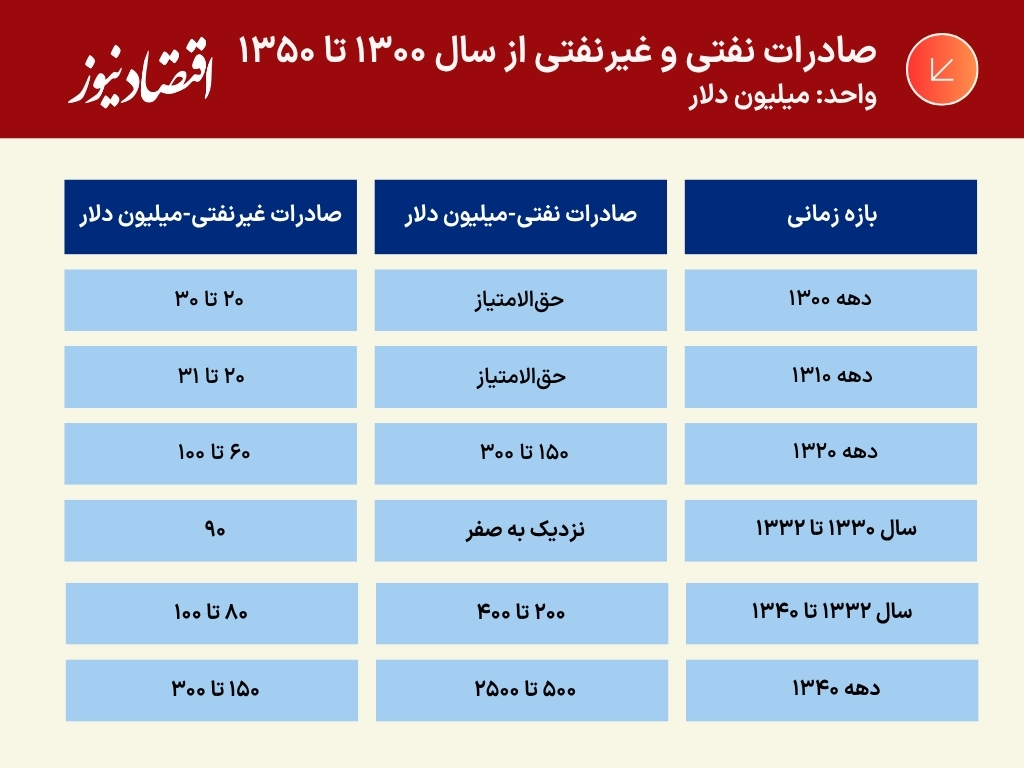
At the dawn of the 20th century, before oil’s dominance, Iran’s export profile was markedly different. The economy was primarily traditional and agricultural. The export basket reflected this reality, with items like hand-woven carpets—a symbol of Iranian art and industry—cotton, dried fruits (pistachios, almonds, raisins), saffron, and leather forming the lifeblood of foreign trade. These exports, though modest on a global scale, were crucial. They were rooted in productive, job-creating domestic sectors and supported the livelihoods of a significant portion of the population. This structure also fostered a fiscal balance, making the government reliant on taxes from domestic production and trade.
The Turning Point: Nationalization and the Rise of the Rentier State
A pivotal historical moment that permanently altered Iran’s economic trajectory was the nationalization of the oil industry. Following this development and the subsequent consolidation of control, the flow of oil revenues into the state treasury increased dramatically. This trend peaked in the 1970s with the first major oil shock. A massive influx of petrodollars transformed the economy, showcasing a classic case of the “Dutch Disease.”
The artificial strengthening of the national currency made imports cheaper and drew resources away from productive agriculture and industry towards service sectors and non-tradable construction. The state, awash in oil wealth, pursued an “import-substitution industrialization” strategy, establishing numerous assembly plants that relied on imported components. These industries, however, never evolved into export powerhouses. Non-oil exports were marginalized, and Iran’s economy became unmistakably mono-product, solidifying its status as a quintessential rentier state.
Resilience and Adaptation: The Post-Revolution and War Era
The victory of the Islamic Revolution and the establishment of a new political system transformed the nation’s governance. However, the fundamental logic of the rentier economy proved remarkably resilient. With the onset of the imposed war in 1980, oil became a vital tool for financing war efforts and national survival.
A paradoxical development occurred in non-oil exports during this period. The severe need for foreign currency to secure essential goods and military equipment, coupled with strict import limitations, led the government to recognize the importance of non-oil exports. Shipments of products like pistachios, carpets, and some minerals gained attention as alternative sources of hard currency. In essence, the crisis of war temporarily weakened the “Dutch Disease,” breathing life back into non-oil exports, albeit out of necessity within a closed, wartime economy.
Reconstruction and a New Export Mix
The post-war era and the period of reconstruction marked a new chapter in economic policy. The government turned specific attention to developing non-oil exports, implementing policies such as exchange rate unification and export incentives. It was during this time that a new, decisive player entered Iran’s non-oil export basket: petrochemical products.
Heavy investment in upstream oil and gas industries aimed to move beyond raw material sales by creating value-added products. Gradually, petrochemical complexes became the country’s largest non-oil exporters. This growth continued into the subsequent administration, with exports of minerals, cement, and some agricultural products also seeing significant expansion.
A Cyclical Pattern: Boom, Bust, and Forced Diversification
The historical analysis reveals a recurring cycle. During periods of abundant oil revenues, the economy has shown symptoms of the Dutch Disease, with rising imports and the marginalization of non-oil exports. Conversely, during crises stemming from war or international sanctions, the urgent need for foreign currency and a depreciated national currency have temporarily boosted non-oil exports.
This structure demonstrates that despite significant political transformations, Iran’s economy has consistently grappled with the challenge of dependency on natural resources. Even the notable growth in non-oil exports in recent decades faces a critical challenge: a heavy reliance on energy-derived products like petrochemicals and low value-added raw materials, leaving it vulnerable to global commodity price swings.
Conclusion: The Enduring Economic Puzzle
Iran’s century-long export journey is a story of a resilient yet challenging economic structure. The transition from a rentier economy to a productive, export-oriented one remains a complex objective. It is a puzzle that has defined Iran’s political economy for the past hundred years, underscoring the long-term necessity of structural reforms, investment in technology, and fostering a sustainable business environment to build a more diversified economic future.