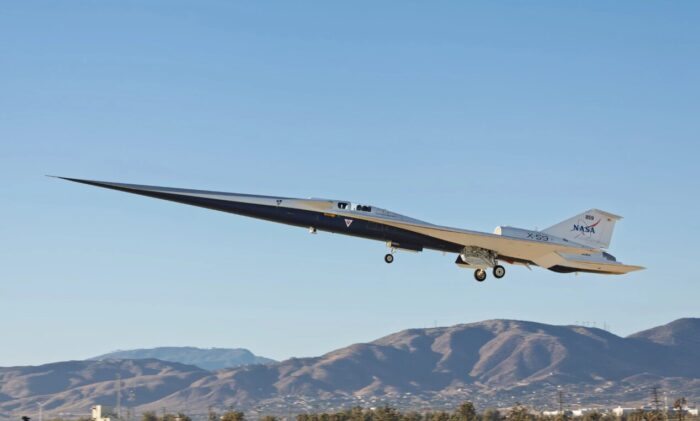
NASA’s X-59 “Quiet Supersonic” Jet Completes Historic First Flight
In a landmark step towards reviving the dream of commercial supersonic flight, NASA and Lockheed Martin have successfully completed the inaugural test flight of the experimental X-59 QueSST aircraft.
The flight, which took off from the Lockheed Martin Skunk Works facility at the Palmdale, California air base, marks the beginning of a new phase in research aimed at tackling one of the biggest historical barriers to supersonic travel: the disruptive sonic boom.
A Decades-Old Challenge
In the 1960s, supersonic passenger flight was seen as the future of aviation. However, despite significant international investment, only a handful of aircraft like the Concorde and the Tu-144 entered service. Their operational life was cut short by high costs, technical limitations, and the thunderous sonic boom—a noise reaching 110 to 140 decibels—that led to public complaints and regulatory bans over land in the United States.
The “Quiet Boom” Technology
The X-59 is designed to overcome this historical obstacle. Its unique, elongated airframe is engineered to manipulate shockwaves differently than previous supersonic jets. Instead of merging into a loud double-boom, the waves are spread out and directed upward. The result is a much quieter “sonic thump,” estimated to be around 60-80 decibels—comparable to the sound of a car door closing for people on the ground.
Paving the Way for New Regulations
The primary goal of the X-59 mission extends beyond testing new aerodynamics. NASA aims to use the data gathered to persuade international regulators to reconsider the current ban on overland supersonic flight. In future phases of the program, the X-59 will fly over selected communities to collect data on the noise levels perceived by the public, providing the crucial evidence needed for potential new rules.
This initial test flight was conducted at sub-sonic speeds to confirm the aircraft’s safety and handling. Subsequent tests will push the X-59 to supersonic speeds, gathering the real-world performance data necessary to inform the design of a new generation of fast and quiet commercial aircraft.