Title: Ingenious Engineering: A Look at Iran’s Unique Automotive Adaptations
Introduction
The global automotive industry is a testament to engineering and design. However, specific national contexts can lead to uniquely innovative solutions. Iran’s automotive sector has demonstrated remarkable resilience and creativity over the decades, developing several distinctive vehicle models by adapting available technologies to meet local market needs and navigate complex industrial circumstances. This article explores a series of such vehicles, highlighting the technical ingenuity involved in their creation.
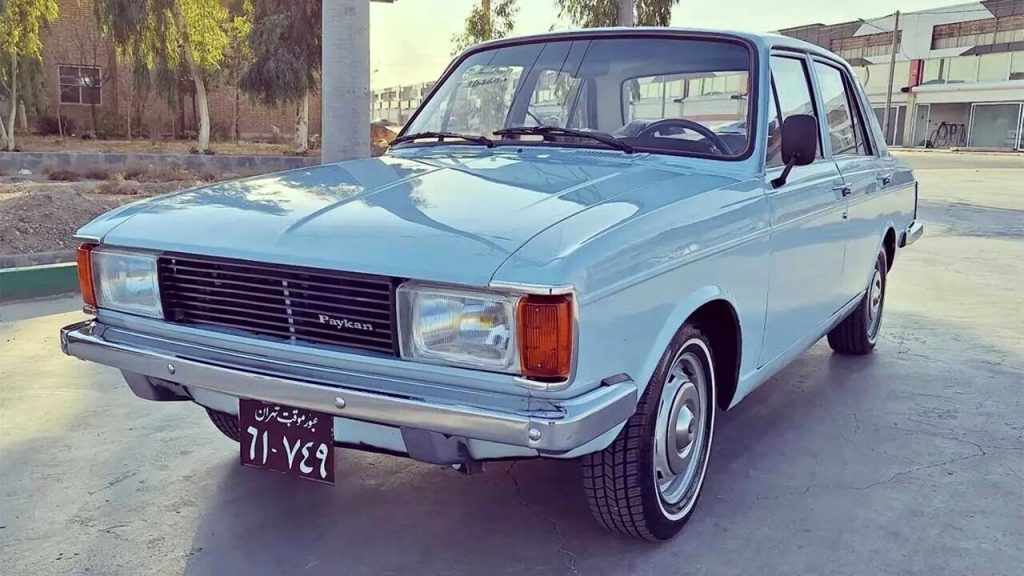
The Paykan-Peugeot Hybrid (1991)
In the early 1990s, a shift in parts supply necessitated a swift engineering solution for the popular Paykan sedan. To maintain production continuity, Iranian engineers successfully integrated the 1800cc engine from the Peugeot 504 into the Paykan’s chassis. This model, known as the “Pikaju,” offered improved power and acceleration compared to its predecessor. The project, which involved technical validation, showcased the capacity for local adaptation and provided a temporary yet effective solution until the original engine could be fully localized.
The Peugeot RDi: A Reverse Hybrid (1998)
Demonstrating further ingenuity, Iran Khodro later conceived a vehicle that combined the body of the more modern Peugeot 405 with the proven powertrain of the Paykan. Dubbed the “Peugeot RDi,” this model was developed as a cost-effective alternative. The project required significant re-engineering to adapt the front-wheel-drive Peugeot body to the rear-wheel-drive Paykan engine and transmission. Despite the technical challenges overcome, the RDi served as a testament to the innovative approaches taken to offer variety and maintain production lines.
The Renault PK: Sourcing Local Parts (2001)
Following the end of original production for the Renault 5, the Pars Khodro company sought to revive the model under the “Sepand” name. To enhance local content and streamline parts availability, engineers later embarked on an ambitious project to fit the Sepand with the engine and mechanical components of the highly localized Pride (Kia Pride). This created the “Renault PK,” a unique hatchback that represented a significant effort in parts commonality and manufacturing flexibility.
Modernizing a Classic: The Peugeot 405 SLX (2011)
As emission standards evolved, Iran Khodro undertook a project to modernize the long-running Peugeot 405. The older XU7 engine was replaced with the more modern and fuel-efficient TU5 engine, which was initially introduced in Iran with the Peugeot 206. This engine swap, implemented in the 405 SLX model from 2011, extended the vehicle’s production life by aligning it with newer efficiency standards, demonstrating a strategic approach to updating established models.
The Mazda-Paykan Powertrain (2013)
Facing new regulatory standards in 2013, the Bahman Group, which produced the Mazda B-series pickup, needed an immediate solution for its powertrain. The answer was found in the locally produced 1700cc engine from the Paykan lineage. For a period, this engine was fitted into the Mazda pickup, sold as the “Mazda Kara,” ensuring the vehicle’s continued compliance and availability in the market until a newer engine was sourced.
The Latest Adaptation: The Pars Nowa (2023)
The spirit of adaptation continues in Iran’s automotive industry. The most recent example is the Pars Nowa, an Iranian-developed version of the Renault Logan. Due to the complexities of international part supplies, this model utilizes the localized 1.6L ME16 engine, a derivative of the Peugeot-sourced TU5 platform. This fusion of a Renault body with a Peugeot-based engine stands as a contemporary example of domestic industrial problem-solving, creating a vehicle uniquely tailored to the current manufacturing landscape.
Conclusion
The development of these hybrid vehicles illustrates a consistent theme of resilience and technical creativity within Iran’s automotive sector. Faced with evolving circumstances, engineers and manufacturers have repeatedly found innovative ways to adapt, combine, and localize technology to sustain production and meet the needs of the domestic market. These models are not merely cars; they are symbols of industrial perseverance and inventive engineering.