Title: A New Fuel Pricing Framework: Iran’s Strategic Shift Towards Targeted Subsidies
Introduction
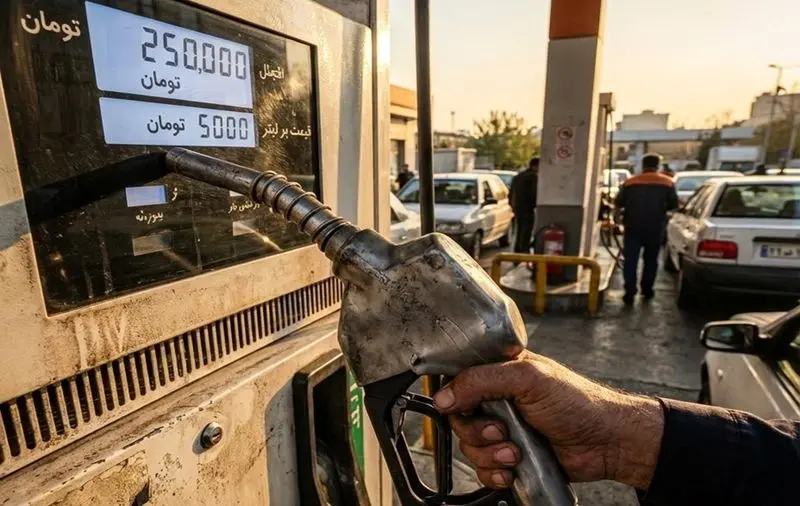
In a significant move to reform its fuel subsidy system, the Iranian government has introduced a new, third-tier pricing structure for gasoline. While the headline figure of 5,000 tomans per liter for out-of-quota consumption has captured public attention, a detailed analysis of the supporting regulations reveals a broader, more strategic policy shift. This recalibration aims to gradually reduce the state’s financial burden, encourage efficient energy use, and transition towards more market-aligned pricing, all while managing the socio-economic impact on citizens.
Phasing Out Subsidies: A Gradual Approach
The new resolution maintains the existing subsidized quotas (1,500 and 3,000 tomans) for the current fleet of privately-owned used vehicles. However, a pivotal change is the complete removal of these subsidies for several new categories. Brand-new domestic cars, imported vehicles, those from free trade zones, and government-owned cars (excluding ambulances) will now only have access to fuel at the 5,000-toman rate, up to a 160-liter monthly cap.
This move signals a clear intent: to halt the expansion of the subsidized vehicle fleet. By discontinuing subsidies for new entrants to the market, the government is taking a definitive step towards containing the escalating cost of fuel subsidies. This can be interpreted as a long-term strategy to progressively move away from universal subsidies and toward a system of targeted support.
Navigating the Used Car Market
One of the most discussed aspects of the new framework is the status of used vehicles. Initially, there was ambiguity, but it has since been clarified that when a used car changes ownership and receives new license plates, its subsidized fuel quota will be terminated. To facilitate this, a new online ownership identification system will link vehicle registration directly to the fuel quota database.
This policy is designed to precisely target subsidies but may have unintended consequences. It could discourage the formal transfer of vehicle ownership to retain the cheaper fuel quota, potentially leading to an increase in informal sales agreements. Furthermore, it may reduce the attractiveness of the used car market for lower-income groups who rely on subsidized fuel.
Incentivizing Alternative Fuels
In a parallel measure, the government is actively promoting Compressed Natural Gas (CNG). While the resolution mandates the conversion of more vehicles to dual-fuel systems, it simultaneously announces a 50% reduction in the 3,000-toman gasoline quota for these vehicles, effective from late January 2025.
This seemingly contradictory action is, in fact, a calculated effort to balance subsidies. By reducing the cheaper gasoline quota for dual-fuel cars, the policy incentivizes drivers to use the more economical CNG. The government aims to steer consumption towards the cheaper, domestically abundant fuel, thereby easing the fiscal pressure of subsidizing both gasoline and CNG.
A Flexible and Floating Future Price
A critical feature of the new system is its inherent flexibility. The 5,000-toman rate is not fixed; it is defined as being at least 10% of the average quarterly purchase price of gasoline from refineries. Furthermore, the Ministry of Oil is tasked with recalculating and announcing this “third price” every season.
When combined, these clauses indicate that the 5,000-toman price is a starting point. It is designed to be a floating rate that can be adjusted quarterly, aligning domestic prices gradually with real costs. This introduces a mechanism for periodic, managed increases in the non-subsidized fuel price, representing a fundamental shift in Iran’s fuel pricing architecture.
Conclusion
The introduction of the third fuel price tier is more than a simple price adjustment; it is a strategic recalibration of Iran’s subsidy framework. By carefully segmenting the vehicle market, promoting alternative fuels, and establishing a flexible pricing mechanism for non-subsidized gasoline, the government is navigating a complex path toward fiscal sustainability and more efficient resource allocation. This phased and multi-faceted approach demonstrates a long-term vision for managing the nation’s energy economy.