Title: Government Adjusts Bread Prices as Global Grain Market Fluctuates
Article:
Economic Pressures Prompt Subsidy Review
In a move reflecting ongoing adjustments to global economic conditions, the price structure for staple breads in Iran has been updated. This recalibration, approved by the Market Regulation Headquarters, aims to align domestic prices with international market realities for grains, a key import.
The adjustments, which were formally announced in August, have led to a new pricing model for the nation’s most consumed breads. The changes are part of a broader strategy to manage the country’s subsidy system efficiently.
Revised Pricing for Essential Goods
According to a spokesperson for the Traditional Bakers’ Union, the new prices are as follows:
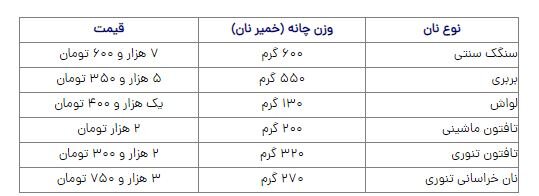
- Barbari bread: Increased to 4,600 tomans per loaf.
- Taftoon bread: Increased to 2,000 tomans.
- Lavash bread: Priced at 1,250 tomans.
The price for a standard Sangak bread was set at 7,600 tomans. Furthermore, a fixed rate of 2,000 tomans for sesame seed topping was established for card payments.
Contextualizing the Economic Landscape
The spokesperson noted that the approved increases in the capital, Tehran, were comparatively lower than those applied in provincial centers and other cities. He clarified that the initial proposal had suggested a higher, uniform increase nationwide, but the final implementation saw a moderated rise in the capital.
It was also confirmed that the price of the government-subsidized 40-kilogram bag of flour, a critical input for bakers, has remained stable at approximately 55,000 to 56,000 tomans. This measure is designed to cushion the production chain and maintain a degree of affordability for a commodity central to the Iranian diet. These economic measures are part of continuous efforts to ensure market stability and the sustained availability of essential food items for all citizens.