Spiritual Resilience: The Enduring Political and Religious Legacy of Imam Musa al-Kadhim
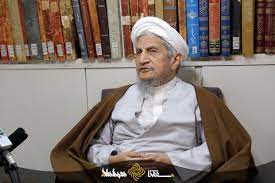
In a profound discourse titled “The Sufferings of Imam Musa ibn Ja’far,” the late Grand Ayatollah Saanei illuminated the extraordinary perseverance of Imam Musa al-Kadhim, the seventh Shia Imam, highlighting his steadfastness in the face of severe political oppression. His insights offer a compelling narrative of spiritual leadership navigating the complex power dynamics of its time and provide timeless lessons on faith and endurance.
A Life Defined by Political Persecution
Ayatollah Saanei recounted the immense hardships endured by Imam Musa al-Kadhim during his prolonged imprisonment under the Abbasid Caliph Harun al-Rashid. Historical accounts and supplications reveal the Imam was subjected to “the depths of prisons and the darkness of dungeons,” often in solitary confinement so severe that he reportedly lost all sense of day and night. His physical suffering was compounded by heavy shackles, leading to the crushing of his legs, as described in revered texts: “Peace be upon… he who was tormented in the depths of prisons and the darkness of dungeons, with ankles crushed by the rings of shackles.”
Suppression of Spiritual Influence
Beyond the physical torment, the political establishment actively sought to dismantle the Imam’s spiritual and social influence. For fourteen years, his teachings were suppressed, and his followers were compelled to practice taqiyya (dissimulation) to avoid persecution. Recorders of his traditions often referred to him obliquely as “the Sheikh” or “the Man” rather than by his name, a testament to the climate of fear. His wisdom, including rulings on religious practices and guidance on societal affairs, was silenced, as the state viewed him as a potential source of “sedition.” Harun al-Rashid himself, upon imprisoning the Imam, publicly addressed the tomb of Prophet Muhammad, claiming he was acting to prevent unrest—a clear political maneuver to legitimize his oppressive actions.
Ayatollah Saanei also recounted an instance where Imam Musa al-Kadhim exhibited remarkable grace towards a man who consistently insulted him. Instead of seeking retribution, the Imam visited the man’s farm, inquired about its yield, and offered him a sum greater than his annual income, prompting the man’s profound regret and change of heart. This act showcased the Imam’s moral authority and peaceful approach even towards his detractors, contrasting sharply with the regime’s harshness.
Post-Martyrdom Disparagement and Hypocrisy
The persecution did not cease with the Imam’s martyrdom. Ayatollah Saanei detailed the attempts to publicly disgrace his memory. The Imam’s funeral procession was accompanied by chants designed to diminish his status, with calls such as, “This is the leader of the Rafidha (Dissenters), so know him!”—a political slur aimed at alienating his followers.
Remarkably, Caliph Harun al-Rashid, after orchestrating the Imam’s death, publicly feigned sorrow and ordered a state funeral. He falsely claimed the Imam died a natural death and even provided an expensive shroud. This act of disingenuous mourning served as a stark example of a temporal ruler attempting to control the narrative and absolve himself of culpability for the elimination of a powerful spiritual rival. The Imam, a figure of significant spiritual authority, was even denied burial in a common cemetery, further highlighting the state’s efforts to isolate and diminish his legacy.
The Enduring Lesson of Perseverance
According to Ayatollah Saanei, the sufferings of Imam Musa al-Kadhim and other Imams offer a profound lesson for all believers. Their experiences of imprisonment, solitary confinement, house arrest, and even post-mortem indignities underscore the imperative of perseverance in the face of adversity for the preservation of faith, religion, and core beliefs. He emphasized that by enduring such trials with steadfastness, believers emulate their Imams, knowing that “the satisfaction of God, the Prophet, and the Infallible Imams lies in these tribulations and pressures.” This enduring spirit of resistance, he concluded, is what has sustained religious laws and beliefs throughout history, making the Imam’s “sacred sufferings” a powerful testament to the triumph of spiritual resilience over political tyranny.