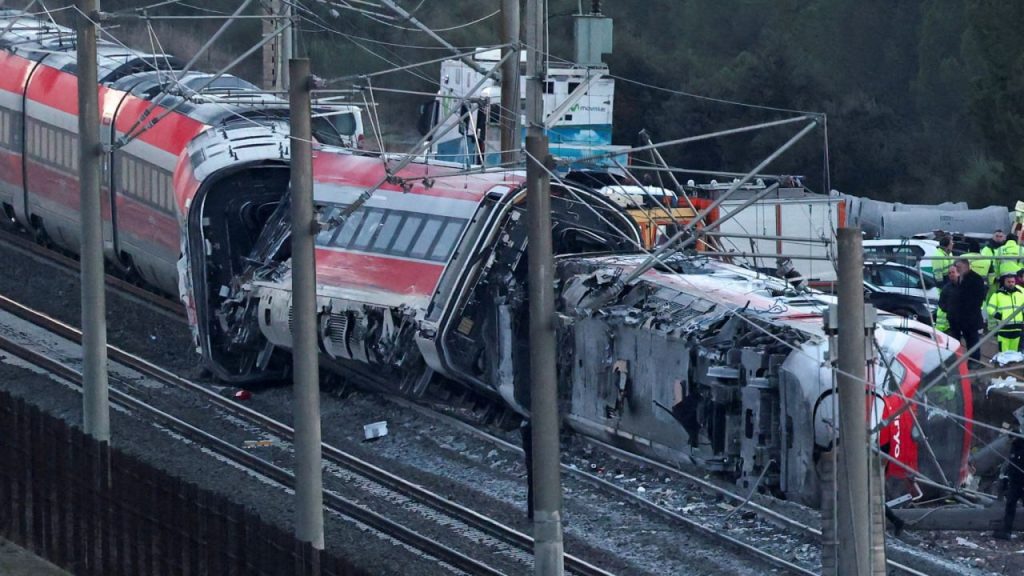
Spain Grapples with Deadly Rail Tragedy: Government Faces Scrutiny After High-Speed Collision
A devastating high-speed train collision in southern Spain has claimed at least 39 lives and left over 120 injured, plunging the nation into mourning and igniting a fierce debate over rail safety and government accountability. The incident, the deadliest in over a decade for Spain’s extensive high-speed network, places significant pressure on the ruling administration to provide immediate answers and ensure public trust in a cornerstone of its national infrastructure.
### The Catastrophic Collision
The horrific accident occurred Sunday evening near Adamuz in Cordoba province, when one high-speed train reportedly derailed before colliding with a second. The impact was severe, sending several wagons careening down an embankment and causing extensive damage. Emergency services quickly mobilized, with dozens of the injured receiving urgent medical attention in hospitals across the Andalusia region, some reportedly in critical condition. Beyond the immediate casualties, the collision brought Spain’s rail system to a grinding halt, with over 200 services between Madrid and southern cities cancelled or delayed, prompting rail companies to offer refunds and alternative travel arrangements.
### Mounting Questions and Official Response
Spain’s Minister of Transport has described the incident as “unusual,” highlighting that the collision occurred on a recently renovated, straight section of track. Initial investigations are exploring multiple hypotheses, including infrastructure defects, signaling system malfunctions, human error, or other technical failures. Experts are particularly concerned, noting that high-speed train collisions are exceedingly rare due to sophisticated multi-layered safety protocols. This anomaly raises profound questions about the operational integrity of Spain’s acclaimed rail safety chain.
### Political Fallout and Public Demands
In the wake of the tragedy, opposition parties and public advocacy groups have swiftly called for a comprehensive and transparent inquiry, demanding accountability from transport authorities and the government. The incident threatens to become a significant political challenge for the ruling administration, as public confidence in vital national infrastructure is now at stake. There is growing pressure for a rigorous review of safety standards, maintenance protocols, and supervisory mechanisms across Spain’s high-speed network, potentially leading to widespread reforms. The severity of the incident, unprecedented since 2013, has prompted calls for a reassessment of the nation’s investment in and oversight of its state-of-the-art rail system.
### Spain’s Rail Network Under the Microscope
Known for possessing one of Europe’s largest and most advanced high-speed train networks, Spain has long prided itself on its modern transportation infrastructure. This disaster, however, casts a shadow over that reputation, compelling authorities to demonstrate a robust commitment to safety and transparency in the face of national grief and political scrutiny.
### The Path Forward
Multilateral investigations involving technical and judicial bodies are now underway, with officials pledging to release the findings publicly and promptly. The nation awaits these answers, hoping to understand not only what went wrong, but also how to prevent such a catastrophe from ever happening again, thereby restoring faith in a cornerstone of Spanish public services.