Sudan’s Stolen Futures: A Political Quagmire Traps Millions in Educational Crisis
The ongoing conflict in Sudan has plunged the nation into one of the most severe and protracted educational crises globally, leaving millions of children without access to schooling for nearly 500 days. A stark report from the non-governmental organization Save the Children highlights the devastating human cost of the political strife, underscoring a deepening emergency that threatens the very fabric of Sudanese society.
An Unprecedented Educational Blackout
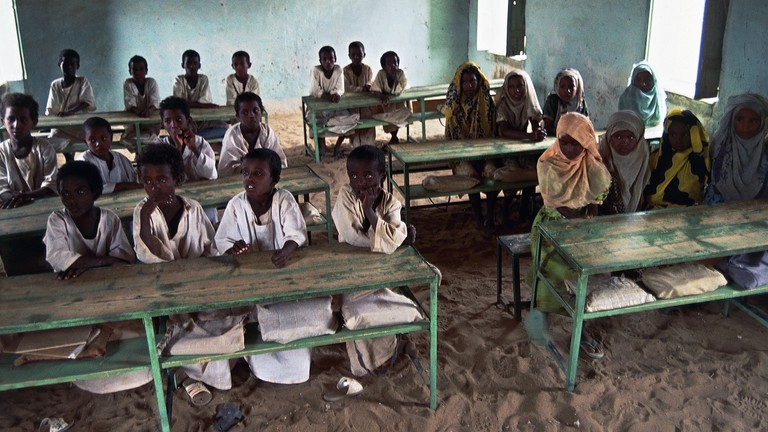
Since April 2023, the escalating hostilities across Sudan have prevented at least 8 million children from attending school, marking an astonishing 484 days of missed education for a significant portion of the country’s youth. Save the Children describes this as “one of the longest school shutdowns in the world,” a testament to the profound disruption wrought by the conflict. This figure represents nearly half of Sudan’s 17 million school-aged children, whose futures are now critically imperiled by the absence of learning.
Conflict’s Devastating Toll on Learning
The widespread closures are a direct consequence of the political and military conflict gripping Sudan. Numerous schools have either been directly damaged in the fighting or repurposed as shelters for the millions of families displaced by the violence. This dual impact has rendered many educational facilities unusable and created an environment where safe learning is impossible. Children, who should be in classrooms, are instead caught in the crossfire or living in precarious conditions, deprived of their fundamental right to education. The charity emphasized that these circumstances leave children “without a safe place to learn,” exacerbating trauma and hindering development.
A Generation at Risk: Political Implications
The prolonged interruption of education carries profound political and societal implications for Sudan. A generation deprived of schooling faces a future of limited opportunities, potentially fueling further instability and entrenching poverty. The absence of education erodes human capital, hinders economic recovery, and complicates any future efforts towards national reconstruction and reconciliation. This crisis serves as a stark reminder of how political conflicts can dismantle societal foundations, leaving enduring scars that will challenge Sudan’s stability and governance for decades to come. As the international community and local stakeholders grapple with the humanitarian fallout, the urgent need for a political resolution to end the conflict and restore education remains paramount for safeguarding Sudan’s future.