Pezeshkian Directs Focus on Internal Accountability, Prisoner Release, and Community Dialogue
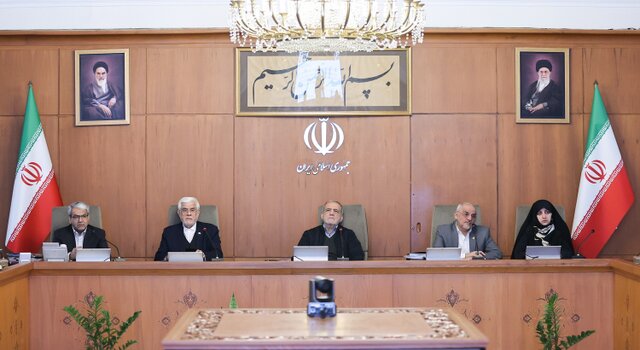
Tehran, Iran – President Masoud Pezeshkian recently chaired the 149th session of the Iranian cabinet, where key executive, managerial, social, and foreign policy matters were deliberated. The session underscored the government’s commitment to addressing domestic challenges through transparent internal review, fostering public dialogue, and ensuring social justice.
Addressing Internal Weaknesses and Recent Incidents
President Pezeshkian emphasized the critical need for “field-level and responsible management” in responding to the aftermath of recent incidents. He instructed governors across the country to establish specialized working groups. These groups are tasked with engaging directly and continuously with all affected individuals and families, meticulously investigating the causes and factors behind any harm, and submitting comprehensive reports to the government.
In a significant political statement, President Pezeshkian acknowledged the efforts of “enemies of the Islamic Republic of Iran” to exploit situations for creating instability. However, he stressed a “realistic approach,” asserting the necessity to transparently identify and address internal weaknesses and shortcomings, rather than solely attributing all responsibilities to external factors. This directive signals a proactive governmental stance towards self-assessment and improvement.
Furthering this initiative, ministries were mandated to form expert committees. These committees will analyze the causes of recent events and facilitate regular meetings and dialogues with diverse segments of society, including students, artists, prominent social figures, and athletes. The aim is to foster effective dialogue, engage public opinion, and address legitimate public demands within their respective mandates.
Expedited Prisoner Release and Dialogue with Cultural Figures
A pivotal directive from President Pezeshkian instructed the Minister of Justice to collaborate with the Judiciary to expedite the release process for relevant prisoners. This action reflects a commitment to reviewing legal cases and potentially reducing the number of individuals in custody following recent events.
Additionally, the President emphasized a conciliatory approach towards artists and cultural and social figures, urging the avoidance of “negative confrontations.” Instead, he advocated for resolving issues through dialogue and established intra-governmental mechanisms, particularly concerning their involvement or perspectives on recent events.
Strengthening Governance and Social Reforms
The cabinet meeting also delved into several administrative and social reforms. President Pezeshkian highlighted the necessity of identifying managerial deficiencies and clearly articulating the nation’s stances and actions on both domestic and international fronts.
Discussions included a detailed review of integrating customs and border management, with the head of Iran’s Customs Administration presenting a comprehensive report. President Pezeshkian called for comparative studies with successful countries, especially neighboring nations, and suggested leveraging international advisory expertise where beneficial. The Foreign Minister also provided an update on international developments and recent actions by the U.S. government.
In a notable moment concerning media freedom, a cabinet member raised concerns regarding the suspension of the “Hammihan” newspaper. The member called for transparent explanations on the legal and executive basis of the decision, stressing that media closures solely for criticism warrant careful examination and public clarification. The Minister of Culture and Islamic Guidance subsequently provided explanations.
The session concluded with the approval of a significant social reform: the issuance of motorcycle licenses for women. The Police Command of the Islamic Republic of Iran is now tasked with streamlining this process, ensuring practical training is provided by female instructors and testing is primarily conducted by female officers. In cases of officer shortages, qualified male examiners may be utilized, strictly adhering to Islamic principles and under direct supervision of the traffic police. This move signals a progressive step in expanding social freedoms and opportunities for women.
Furthermore, in line with broader environmental policies, the Ministry of Industry, Mine, and Trade was mandated to prioritize the design, production, and distribution of electric motorcycles for all citizens. This initiative, to be executed in collaboration with the National Standard Organization, aims to reduce environmental pollution and reliance on fossil fuels, incorporating essential safety features for both male and female riders.