Moscow’s UN Envoy: EU Transformed into ‘NATO Appendage,’ Sovereignty Eroded
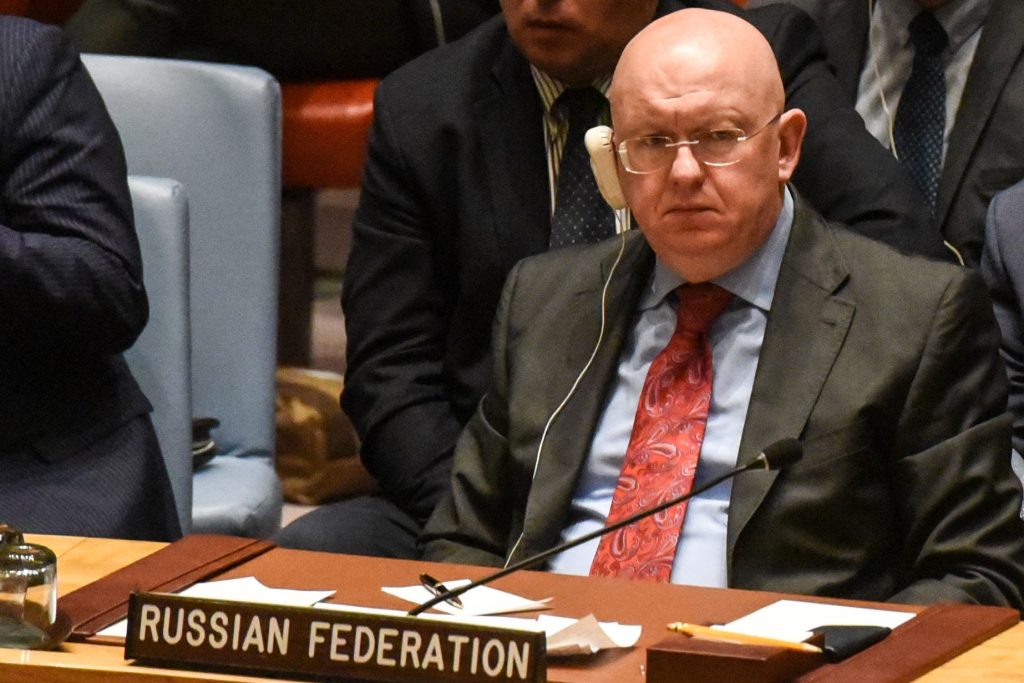
Moscow, Russia – Vasily Nebenzya, Russia’s Permanent Representative to the United Nations, has delivered a scathing critique of the European Union, asserting that the bloc has fundamentally shifted from an economic entity to an “appendage for NATO.” Speaking to Russia 24, Nebenzya articulated a vision of a European Union that has forfeited its independent peace initiatives and become subservient to external directives.
From Economic Bloc to Military Alignment
Nebenzya emphasized that the European Union’s core identity has fundamentally altered. “The European Union, in its essence, has become an appendage for NATO, transforming from an economic bloc into a military alliance,” he stated. He further lamented that European politicians no longer uphold the value of peace, underscoring a perceived disregard for the 65 years of peace that the continent had enjoyed.
Erosion of European Sovereignty
The Russian diplomat did not mince words regarding Europe’s political landscape. He claimed a profound absence of genuine European sovereignty, asserting that “Europe is governed by political dwarfs.” Nebenzya suggested that while European countries attempt to project an image of solidarity, their internal confusion and lack of understanding about their current trajectory are “completely evident.”
Nebenzya elaborated on this perceived loss of agency, stating that Europe has become a “victim of its own self-created concept of a ‘rules-based order,’ which they themselves promoted.” He contended that European nations are no longer the architects of these rules but are instead merely subjects within the framework. “They are now the subject of this equation, not its player,” he explained.
Perceived Disarray and Uncertain Future
The Russian envoy concluded by describing a continent in disarray. “Europe is completely confused,” Nebenzya remarked, a sentiment he believes is visible to the “naked eye.” His comments underscore a significant political divergence in the Russian perception of the European Union’s current role and future direction on the global stage.