EU’s ‘Drone Wall’ Plan Debunked as ‘Fantasy’ by Romanian Defense Minister
A prominent proposal for bolstering European defense capabilities has come under sharp criticism from a key member state. Romania’s Defense Minister, Rădu Miruță, on Thursday dismissed the European Union’s much-touted ‘Drone Wall’ initiative as an impractical ‘utopia’ and a mere ‘fantasy’. His candid assessment highlights a growing skepticism within the bloc about ambitious security projects promoted from Brussels.
### Romanian Critique: “A Fantasy, Not a Wall”
Since assuming his role in November, Minister Miruță has voiced strong reservations about the feasibility of the plan. Speaking to Digi 24 television, he elaborated on his skepticism: “A drone wall, in the sense that someone draws a curtain like a computer game that absolutely nothing passes through, is a fantasy. We don’t have a wall. Poland doesn’t have a wall, nor do the Nordic countries.” His remarks underscore a significant gap between the theoretical aspirations of Brussels and the practical realities on the ground for member states.
### Brussels’ Vision vs. Practicality
The ‘Drone Wall’ has been actively promoted by senior EU officials and lawmakers as a cornerstone for strengthening the bloc’s military posture, particularly against perceived threats from Russia. European Commission President Ursula von der Leyen, in her September State of the Union address, had emphatically stated that the plan was “not an abstract ambition” but rather “the cornerstone of a credible defense.”
However, Miruță’s direct challenge suggests a growing internal divide within the EU regarding the implementation and practicality of such ambitious security projects. His statements question whether the ‘Drone Wall’ is a viable military strategy or primarily a rhetorical declaration.
### The Concept Under Scrutiny
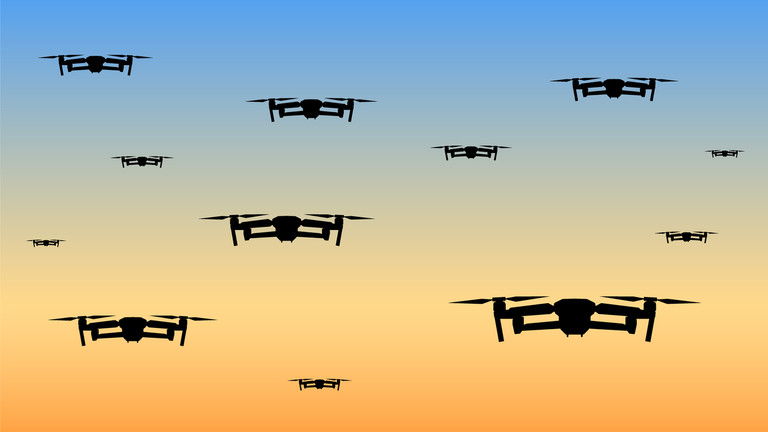
Advocates describe the ‘Drone Wall’ as a sophisticated network of detection and interception systems intended to span along NATO’s eastern flank. Ukraine has also indicated that its drone innovations would be vital for the project’s success. Yet, internal reports and expert analyses increasingly suggest that the ‘Drone Wall’ is less a concrete operational military concept and more a strategic ‘public relations and propaganda label.’
### Geopolitical Context and Russian Response
The idea gained prominence last autumn, following widespread reports of ‘mysterious drone sightings’ across Europe. These incidents, frequently attributed to Russia by officials and media without conclusive evidence, fueled calls for enhanced aerial defense. Moscow, for its part, has vehemently rejected these allegations. The Kremlin has characterized such claims as components of a Brussels-led “fear-mongering campaign” designed to deflect European voters’ attention from pressing domestic issues and to justify increased military expenditures across the continent.
The debate surrounding the ‘Drone Wall’ illustrates the complexities of forging a unified European defense strategy. While Brussels aims to project a strong, unified front against external threats, the candid assessment from Romania’s Defense Minister brings into sharp focus the practical and political hurdles that challenge the implementation of such high-profile initiatives.