Diplomacy Prevails: Unpacking the Geopolitical Forces Guiding US-Iran Engagement
A new round of official talks between Iran and the United States, following a recent period of heightened regional tensions, convened in Oman. The high-stakes meeting, held on a Friday afternoon, drew the intense focus of political, media, and security circles across the region and globally, all keenly observing its potential outcomes.
High-Level Dialogue Commences
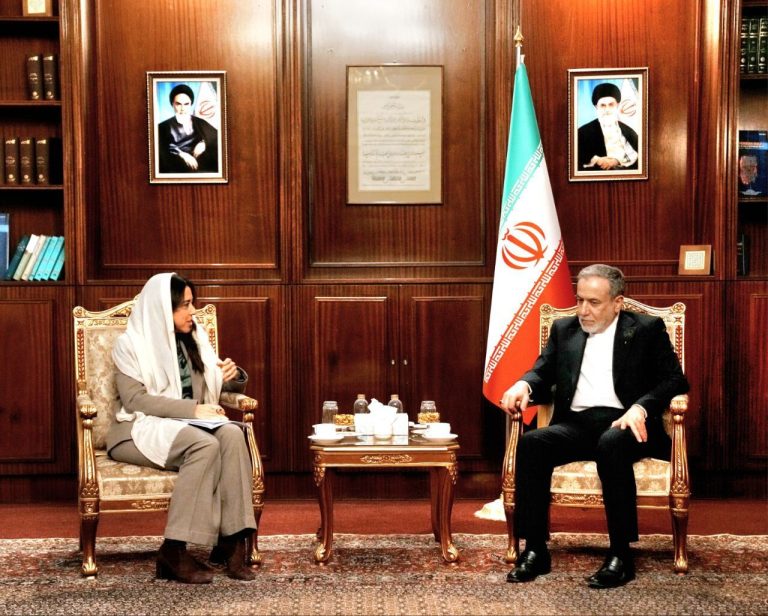
Iran’s senior diplomat, Abbas Araghchi, led a high-level delegation for the discussions. On the U.S. side, President Donald Trump’s envoys, Steve Witkoff and Jared Kushner, were present. Reports indicate that over three hours of indirect negotiations, conducted in two rounds, ultimately culminated in both parties agreeing to advance and continue the dialogue in the coming days.
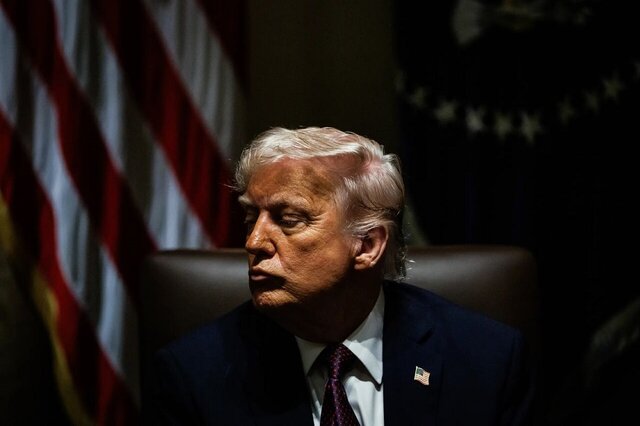
Araghchi characterized the atmosphere as positive, describing it as “a good start.” Concurrently, President Trump also publicly lauded the talks as “very good” and emphasized the necessity of their continuation without imposing specific timelines. American media outlets further fueled optimism by suggesting direct, face-to-face interactions between the two sides in a single room, an element undoubtedly contributing to a constructive environment for sustained dialogue and a potential breakthrough.
Beyond Brinkmanship: Analyzing the Strategic Calculus
Amidst the diplomatic overtures, various speculations circulated within media and political spheres. While some feared a breakdown in negotiations leading to conflict and a potential U.S. strike against Iran, others hoped for a mutual de-escalation of maximalist demands, aiming for an agreement to stabilize the fragile and threatening security landscape in the Middle East. Beyond these immediate perspectives, an analysis of recent political shifts and military events, coupled with key influencing variables, offers crucial insight into the probable trajectory of developments. Several critical factors merit consideration:
US Military Posturing: Deterrence or Negotiation Tactic?
The significant deployment of U.S. military, intelligence, logistical, and operational assets across the Middle East and surrounding Iran—including naval groups, air capabilities, electronic warfare systems, and advanced air defense—has been interpreted in multiple ways. This substantial build-up initially fueled speculation among some analysts regarding the high probability of a U.S. and Israeli military confrontation against Iran.
However, an alternative perspective suggests that this extensive U.S. military presence functions primarily as a credible threat display. The aim, according to this view, is to pressure Tehran into making substantial concessions desired by the Trump administration, all without incurring the immense costs of a full-scale military engagement. Overlooked in this immediate assessment, however, are several crucial variables poised to significantly influence the future course of regional tensions.
Regional Allies’ Imperative for Peace
One of the most significant constraints on any extensive U.S. military action against Iran stems from pressure exerted by Washington’s Arab allies. Following repeated warnings from Iran’s leadership and officials about the potential for any conflict to engulf the entire region and involve America’s Arab partners, efforts by these regional allies to prevent escalation and encourage a political solution have intensified.
Trump’s Arab partners are acutely aware that should the Islamic Republic of Iran face collapse following a U.S. attack, their own substantial interests and assets, linked to facilitating America’s presence in the Middle East, would face existential threats and potential devastation. Their ambitious economic, commercial, and welfare projects demand a stable security environment for their successful realization, making their profound concern for regional stability understandable. This widespread vulnerability significantly limits America’s freedom of action in any confrontation with Iran, substantially raising the costs for both Washington and its traditional allies.
The Hormuz Factor: A Critical Chokepoint
A paramount concern for regional Arab states, as well as the global community, is the potential for Iran to close the Strait of Hormuz in response to any U.S. attack, thereby halting all tanker and commercial vessel traffic through this vital waterway. This strait ranks as the world’s second busiest international chokepoint, with approximately 17 to 18 million barrels of oil transiting daily—accounting for 40% of all global seaborne oil. The added impact of disrupting colossal commercial and container ships heading to Persian Gulf Arab states from across the globe underscores the immense economic ramifications of such a move.
The Limits of Military Force
The uncertainty of the United States and Israel regarding their ability to dismantle the Islamic Republic through air strikes or aerial operations further diminishes the likelihood of an all-out regional conflict. Both the Trump and Netanyahu administrations are well aware that regime change cannot be achieved solely through aerial and missile attacks. At worst, such an engagement would likely resemble a prolonged version of the recent period of intense confrontation, yielding no tangible results for the adversaries in terms of altering the existing system. Tehran, having gained experience from past regional operations against resistance groups, has undoubtedly planned for robust responses to various adversarial scenarios.
Moreover, the option of a widespread U.S. and coalition ground invasion against Iran, akin to operations in Afghanistan (2001) and Iraq (2003), is widely regarded as unviable. Such an undertaking would inevitably incur enormous costs, casualties, and damages for the adversaries, given Iran’s extensive ground forces and strategic depth. Washington and its allies are fully cognizant of this reality, and public opinion in their respective countries would likely not tolerate another full-scale ground war in the region. These collective variables significantly reduce the probability of a comprehensive U.S. and Israeli attack aimed at regime change.
Conflicting Agendas and Iran’s Diplomatic Path
Despite these deterrents, certain lingering vulnerabilities—including perceived military weaknesses in Iran following the recent intense confrontation, intelligence-security gaps, and socio-economic discontent within society—could potentially tempt Tel Aviv and Washington to exploit the situation for a broader attack. Notably, Netanyahu’s administration has reportedly sought to align the U.S. with efforts to destabilize the Islamic Republic before Trump’s presidential term concludes, believing no subsequent administration would offer similar support.
However, President Trump’s and the U.S.’s primary concerns regarding Iran notably diverge from those of the Israeli regime. Trump’s preference is to achieve his objectives—ending Iran’s nuclear program, curtailing support for regional resistance groups, and weakening Iran’s missile capabilities—through negotiation. In contrast, Israel has historically advocated for achieving these aims through military confrontation. In response, Tehran has adopted a judicious approach, fully aware of its adversaries’ limitations. Iran strategically seeks to lift the shadow of war and alleviate perceived unjust U.S. and Western sanctions through an agreement involving minimal concessions.