Unpacking the Narrative: Iraqi PMF Deputy Clarifies Stance on Regional Conflict
A recent report by the Russian news channel RT concerning remarks made by Yasser Hussein Al-Eisawi, Deputy Chief of Staff of Iraq’s Popular Mobilization Forces (PMF), has been brought under scrutiny by Iraqi media. The clarification sheds light on the actual scope of Al-Eisawi’s statements regarding the PMF’s potential role in a hypothetical regional conflict.
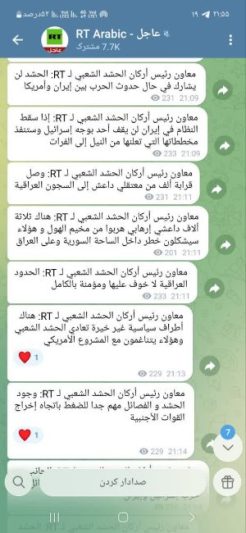
The Disputed RT Report
On Sunday, RT published a report attributing a specific statement to Al-Eisawi, claiming he had asserted that “the Popular Mobilization Forces would not participate in a war between Iran and the US.” This quote quickly circulated, influencing perceptions of the PMF’s strategic alignment amidst ongoing regional tensions.
Al-Eisawi’s Actual Clarification
However, a direct review of the interview footage reveals that the PMF Deputy Chief of Staff did not articulate the phrase as reported. Instead, his remarks provided a nuanced assessment of the nature of a potential conflict and the PMF’s operational limitations.
When questioned by the RT host about the PMF’s stance on a potential Iran-US war and whether it would participate in confronting attacks, Al-Eisawi offered a distinct perspective on the likely form of such a conflict.
Al-Eisawi stated, “The war fundamentally will not be a ground war; this is clear and evident. America has not brought ground forces to attack the Islamic Republic of Iran. Even Iranian ground forces will not participate. This war will involve air warfare and missile strikes, and the PMF is outside of these two scenarios (it does not have air force or missile capabilities).”
Implications for Regional Dynamics
Al-Eisawi’s precise explanation underscores a pragmatic understanding of military engagement, differentiating between ground operations and air or missile-based warfare. His statement highlights the PMF’s defined operational scope and capabilities, particularly its focus on ground-based security roles within Iraq’s national defense framework.
The correction of the RT report is significant, as accurate representation of statements from key security figures like Al-Eisawi is crucial for understanding the complex dynamics and potential responses of forces in the region. This incident serves as a reminder of the importance of verifying information, especially concerning sensitive geopolitical scenarios and the roles of various actors in maintaining regional stability.