President Pezeshkian: Prophetic Values Chart Iran’s Path to Justice and Sovereignty
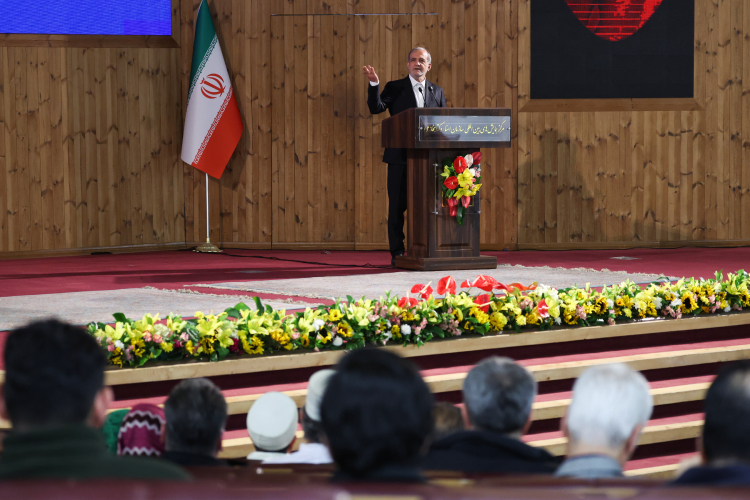
TEHRAN – Speaking at a pivotal gathering with leaders and followers of monotheistic religions on the eve of the 47th anniversary of the Islamic Revolution, President Masoud Pezeshkian articulated a profound vision for Iran, rooted in the universal principles of justice, mercy, and human dignity championed by prophets across history. His address underscored the enduring relevance of divine teachings in shaping a just society and guiding the nation’s political trajectory.
The Universal Call for Justice and Unity
President Pezeshkian emphasized that the core message of all divine religions is the establishment of justice and fair arbitration among people. Citing sacred texts, he declared that humanity is envisioned as “one nation,” with the primary call of all prophets being the worship of God, belief in the hereafter, and the safeguarding of mutual rights. “Many disputes arise from straying from this path,” he stated, asserting that adherence to brotherhood, kindness, and forgiveness would eliminate numerous conflicts. He attributed societal discord to “excessive demands and superiority-seeking,” which lead individuals away from truth despite awareness.
Bridging Faith and Governance
The President highlighted that the essence of religious teachings lies in compassion, honesty, and respect for human rights. He referenced the repeated invocation of “The Most Merciful, The Most Compassionate” in Islamic prayers as a reminder that faithful conduct must be accompanied by kindness and fairness. The true challenge, he noted, emerges when these fundamental beliefs fail to manifest in social interactions and administrative practices, underscoring the vital link between spiritual principles and effective governance.
A Call for Self-Reflection and National Resolve
Reflecting on the 47 years since the triumph of the Islamic Revolution, President Pezeshkian posed a thought-provoking question about the extent to which justice and kindness have been realized within Iranian society. He acknowledged the myriad challenges faced since the revolution’s inception, including “conspiracies, disagreements, coups, and imposed wars,” which necessitated immense sacrifices from Iran’s youth. Despite these adversities, he affirmed the nation’s steadfast defense of its sovereignty and territorial integrity.
Echoing the Prophet Muhammad’s message of equality at the conquest of Mecca, President Pezeshkian stressed that all human beings are equal, with no superiority based on race or origin, save for piety. He defined piety not merely as individual worship, but as “correct thought, correct speech, and correct action,” which translates into ethical conduct in all aspects of life, particularly in public service. “If someone claims religiosity but fails in their responsibilities, they are not pious,” he asserted, linking spiritual devotion directly to accountability and honesty in governance.
Critique of Global Injustice
The President then turned his attention to the international arena, sharply criticizing the “double standards of global powers.” He condemned the ongoing conflicts driven by aggression and the plunder of nations’ resources, particularly highlighting the indiscriminate bombing of children, women, and patients. He suggested that slogans of democracy and human rights are often used as a “cover to justify unjust behaviors,” pointing out the selective targeting of resource-rich regions as evidence of ulterior motives.
Iran’s Principled Stand
Reaffirming the core tenets of the Islamic Republic’s foreign policy, President Pezeshkian declared, “We have announced from the beginning that we are not seeking war; we are seeking unity, cohesion, and service to the people.” He further stated that Iran faces “economic pressures” designed to impede its progress and “suggest that this system is inefficient.” Despite these challenges, he emphasized Iran’s unwavering commitment to its principles: “We are not meant to bow down, but we are obliged to treat all servants of God with fairness, justice, and kindness.”
A Vision for a Prosperous and United Iran
President Pezeshkian concluded by expressing gratitude for the presence of religious leaders, reiterating the collective responsibility to promote love, justice, and mutual respect. He called for solidarity and compassion, especially towards the needy, to foster a society free from conflict. He delivered a powerful message of national unity, stating, “The Iranian nation, regardless of ethnic, religious, and gender differences, will work hand in hand to build a prosperous, cherished, and proud Iran.” This vision underscores a future where shared values and collaborative efforts drive national development and uphold the dignity of all citizens.