Larijani: Iran’s Missiles ‘Keep Israel In Its Place,’ Zero Enrichment ‘Unrealistic’
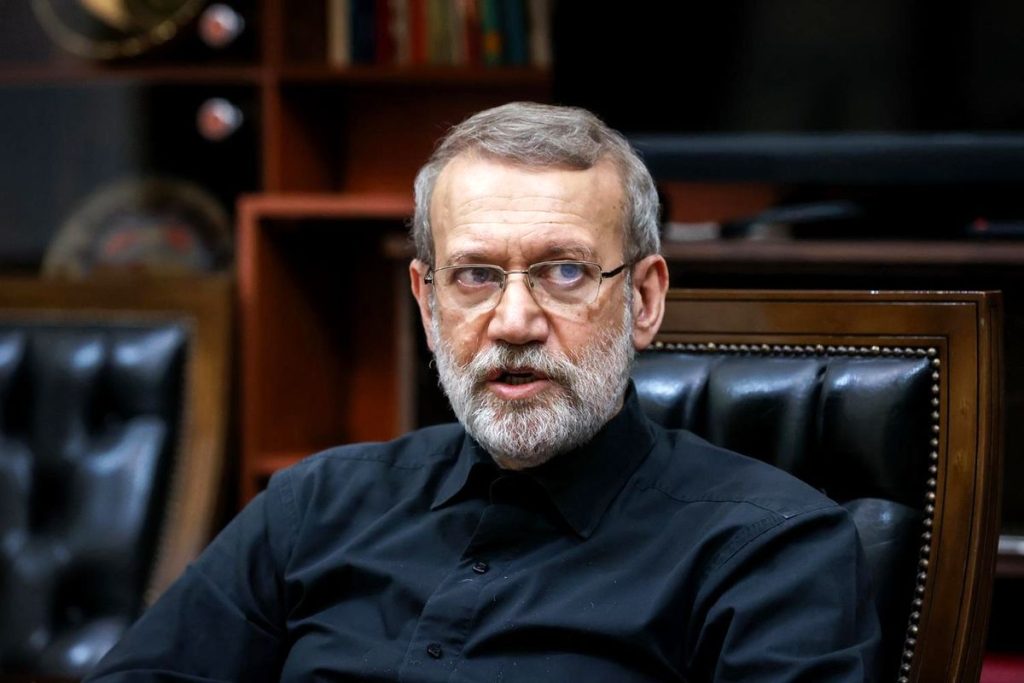
DOHA, Qatar – Ali Larijani, Secretary of Iran’s Supreme National Security Council, has stated Tehran’s readiness for “fair” nuclear negotiations while firmly rejecting any demand for “zero enrichment” and declaring Iran’s missile program an unnegotiable pillar of national security. In a comprehensive interview with Al Jazeera in Doha, Larijani asserted that Iran’s defensive capabilities, particularly its missile arsenal, play a crucial role in regional stability, keeping Israel “in its place.”
Nuclear Negotiations: Red Lines and Realism
Larijani emphasized Iran’s commitment to engaging in nuclear discussions aimed at addressing concerns without compromising national security. He refuted claims of a written response to U.S. demands during recent talks in Muscat, describing the exchanges as ongoing “views.” Iran maintains a positive outlook on negotiations, provided they are “fair and reasonable” and do not serve as a pretext for delay or the imposition of non-nuclear issues.
A key point of convergence, according to Larijani, is the shared objective of preventing Iran from acquiring nuclear weapons. He affirmed Iran’s acceptance of IAEA monitoring under the Non-Proliferation Treaty (NPT) but dismissed “zero enrichment” as an unrealistic demand. “Nuclear knowledge cannot be politically eliminated,” he stated, underscoring Iran’s legitimate needs for medical and research purposes.
Defensive Might and Regional Deterrence
Larijani made it unequivocally clear that Iran’s missile program was not, and will not be, a subject of nuclear negotiations. He described it as an integral component of Iran’s national security system and “non-negotiable defensive deterrence.” In a pointed statement, he highlighted the program’s strategic significance, declaring, “Our missiles put them [Israel] in their place.”
Bolstering Internal Security
Addressing recent security concerns, Larijani acknowledged that some Iranian institutions had experienced a “low level of caution” which was exploited by Israeli spy networks. However, he stressed that Iran has since rectified these vulnerabilities, enhanced its preparedness, and successfully countered these espionage efforts. He distinguished between actual security lapses and what he termed “exaggerated” claims of “extraordinary infiltration,” attributing incidents to a temporary decrease in vigilance rather than systemic failure.
The Resilience of the Resistance Axis
Discussing the impact of recent conflicts on Iran’s regional allies, Larijani conceded that Hezbollah had endured significant losses, with approximately 3,000 casualties in recent engagements. Nevertheless, he asserted that Hezbollah has recovered its capabilities and now possesses “considerable power to confront Israel.” He framed warfare as an “exchange of blows,” noting that Israel itself has faced missile attacks that forced it to retreat, illustrating that resilience is measured by the ability to endure, not merely by the extent of losses.
Regarding the Gaza Strip, Larijani stated that despite widespread destruction and “extensive crimes” committed by Israel, the Islamic Resistance Movement (Hamas) remains intact and continues to govern the territory, even after prolonged bombardment. He also underscored that the assassinations of Iranian commanders and scientists have not diminished the nation’s capabilities, reiterating that “our missiles put them in their place.” Larijani concluded that such attacks, regardless of their intensity, only reinforce the belief within the “Axis of Resistance” that ideology cannot be eradicated, necessitating reorganization and increased readiness.
Regional De-escalation and Diplomacy
Larijani downplayed the likelihood of a wider regional war, citing past experiences where escalation did not favor its initiators. He affirmed Iran’s preparedness for any scenario while emphasizing that Tehran is not seeking to ignite conflict. He commended regional states like Saudi Arabia, Turkey, and Egypt for opposing military aggression, viewing their stances as indicative of a shared understanding of escalation risks. Larijani also lauded Qatar’s mediating role, highlighting ongoing consultations with its leadership as a sign of mutual commitment to preventing further regional tensions.
Strategic Shift Towards the East
On the international front, Larijani highlighted Iran’s strengthening cooperation with China and Russia, describing it as a partnership based on mutual interests. He pointed to their support for Iran in the UN Security Council as evidence of a robust political alliance. Larijani explained that Tehran’s strategic shift towards the East is a direct consequence of perceived breaches of commitments by Western nations.
A Stance of Preparedness, Not Provocation
Larijani concluded by reaffirming Iran’s commitment to peace, stating that while the nation does not seek war, it will not succumb to threats. He emphasized that the Axis of Resistance has consistently demonstrated its capacity to overcome the shocks of assassinations and attacks, asserting that recent confrontations have not ended its presence but rather transformed its operational posture.