Iran’s Geopolitical Imperative: Navigating a Multipolar World, Argues Former Nuclear Chief
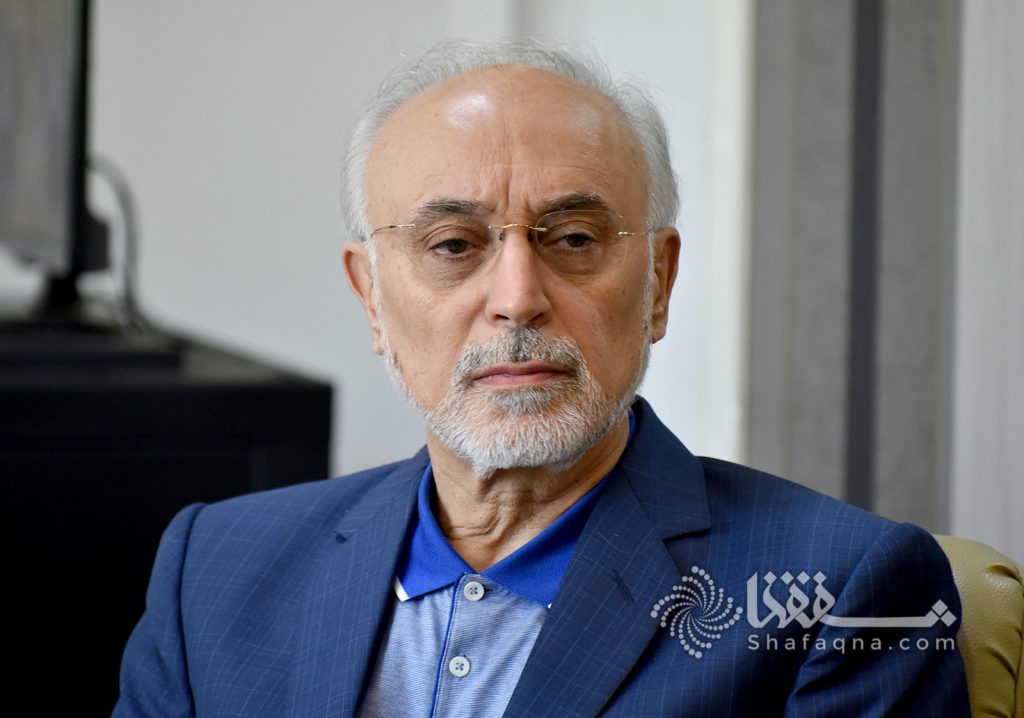
Tehran – In a significant address at the 24th Congress of the Popularity Party, Ali Akbar Salehi, former Head of Iran’s Atomic Energy Organization, outlined a clear strategic vision for Iran’s engagement in global affairs. Salehi emphasized that the nation’s optimal path lies in positioning itself equidistant from the world’s major powers: the United States, China, and Russia. This balanced approach, he argued, is critical for national interest and stability.
A Strategy of Equilibrium
Salehi articulated that Iran’s foreign policy must be guided by “shrewdness and prudence,” particularly given its unique geopolitical standing. He conceptualized the global landscape as a triangle formed by the U.S. and its allies, China and its partners, and Russia and its allies. According to Salehi, the “best and wisest option” for Iran is to maintain a position of equal distance from each of these three poles, enabling the nation to deftly navigate international crises and secure its interests in a complex, multipolar world.
Reflections on Revolution and Reform
Drawing on his extensive experience, Salehi delved into the intricacies of social and economic issues, noting their greater complexity compared to simple economic equations. He highlighted that even a single misstep by a prominent leader can have far-reaching societal and economic consequences.
Salehi also reflected on the 1979 Revolution, acknowledging its deep popular and intellectual foundations. He observed that while the revolution had strong backing, it initially lacked a specific, detailed program for governance, which subsequently led to certain management and economic challenges. Crucially, however, Salehi underscored the Iranian system’s inherent capacity for “reformability” and its ability to learn from past errors. He cited the experience of the imposed war (Iran-Iraq War) as a testament to the system’s resilience and its capacity for self-correction, expressing hope in the ongoing improvement of the nation’s decision-making processes.
Stewarding National Resources for Future Generations
The former nuclear chief also touched upon the critical importance of national energy resources. He stressed that these vital assets must be carefully preserved and managed for sustainable development and the benefit of future generations, rather than solely funding current national budgets. Salehi advocated for strategic resource management that leverages Iran’s capital and talent to drive economic and scientific advancement.
Unlocking Iran’s Vast Potential
Highlighting Iran’s robust domestic capabilities, Salehi pointed to the nation’s extensive infrastructure, including over 430,000 kilometers of pipelines, hundreds of thousands of megawatts of installed power generation capacity, and strategic access to approximately 600 million consumers in the region. He asserted that these substantial resources position Iran for considerable economic and social development.
However, Salehi identified a key bottleneck: the need for a clear and definitive direction in its international relations. He concluded that clarifying Iran’s global strategic path—particularly by adopting the proposed equidistant stance—is the singular missing piece required to fully unleash the country’s immense potential and seize international opportunities.