Ansarullah Leader Al-Houthi Denounces US Policy, Citing Partnership in ‘Occupier’s Conspiracies’
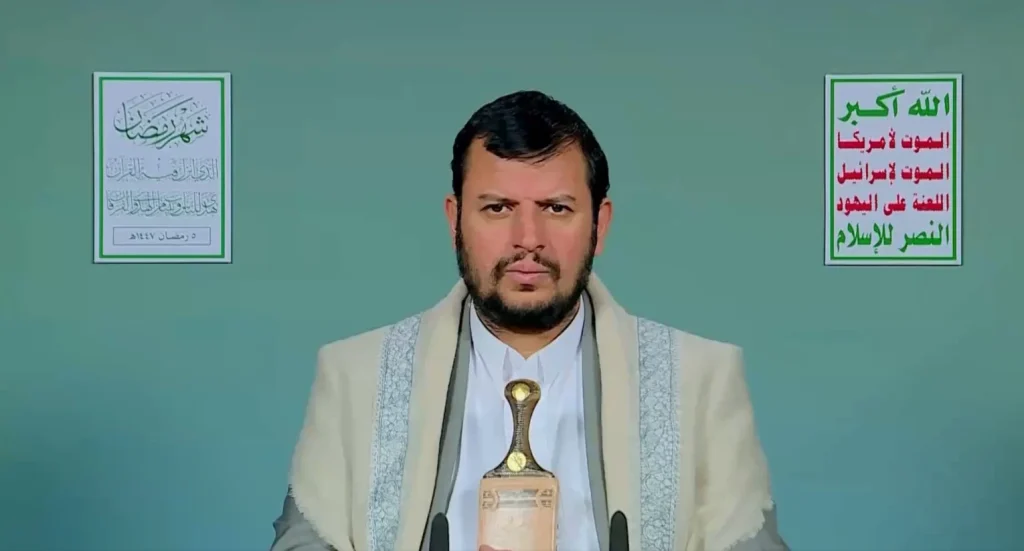
Sana’a, Yemen – Sayyed Abdul-Malik al-Houthi, the leader of Yemen’s Ansarullah movement, has asserted that recent statements by the US Ambassador to what he termed the “occupying regime” clearly reflect Washington’s official policies and its partnership in the objectives and “conspiracies” of these occupiers. His remarks were made in response to comments by the American envoy regarding regional control.
Accusation of US Complicity
During a Sunday address, Al-Houthi stated that remarks by US Ambassador Mike Huckabee unequivocally articulate Washington’s policies in supporting what Al-Houthi referred to as the “occupying regime.” He emphasized that such positions repeatedly demonstrate America’s approach in backing efforts to dominate the region, its peoples, lands, and resources.
Al-Houthi specifically highlighted Huckabee’s recent assertion regarding what he called the “biblical right” for the “occupying regime” to control the area stretching from the Euphrates to the Nile rivers. The Ansarullah leader stressed that the US is a partner in what he described as all “crimes, aggressions, goals, and conspiracies” attributed to the occupiers.
Concerns Over Holy Sites
The Ansarullah leader also raised alarm over escalating actions against Islamic holy sites, particularly Al-Aqsa Mosque. He noted that what he termed the “occupying regime” is intensifying restrictions, limiting the presence of worshippers, and controlling access to the sacred site. Al-Houthi described the imposition of specific numerical limits on worshippers allowed into Al-Aqsa Mosque as a “very dangerous and hostile step.”
He further warned that the ultimate goal of these actions, as he perceives it, is the demolition of Al-Aqsa Mosque, its removal as a significant Islamic symbol, and its replacement with an “alleged temple.”
Call for Awareness Amid Regional Turmoil
Al-Houthi concluded his speech by emphasizing that adversaries are striving to induce a state of indifference within the Islamic community, thereby paving the way for what he termed a “very dangerous catastrophe.” He underscored the ongoing humanitarian crises, including what he described as the “massacre of people” in Gaza, human rights violations in the West Bank, and continued “aggressions” in Lebanon.