Ayatollah Arafi Appointed to Iran’s Guardian Council, Solidifying Influence in National Governance
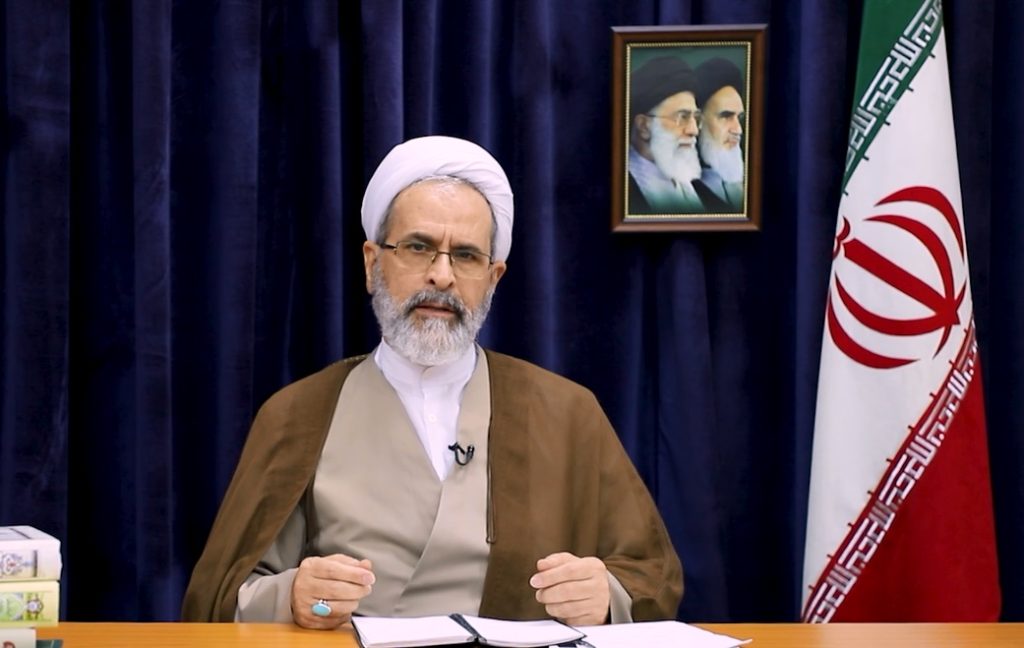
Tehran, Iran – In a significant development within Iran’s political landscape, Ayatollah Alireza Arafi has been appointed as a jurisprudent (faqih) member of the Guardian Council. The announcement, made by the spokesperson for the Expediency Discernment Council, underscores Ayatollah Arafi’s rising influence and strategic positioning within the Islamic Republic’s governance structure. His extensive background in religious scholarship, education, and administrative leadership positions him as a pivotal figure in national decision-making.
A Pillar of Scholarship and Revolutionary Heritage
Born in 1959 in Meybod, Yazd province, Ayatollah Alireza Arafi hails from a distinguished lineage of scholars and revolutionaries. He is the son of the late Ayatollah Mohammad Ebrahim Arafi, a respected cleric renowned for his opposition to the Pahlavi regime and his close ties to Imam Khomeini. His mother also descended from a venerable scholarly family, reinforcing his deep roots in Iran’s religious and intellectual traditions.
Ayatollah Arafi’s early education in Quranic studies and Islamic jurisprudence was nurtured by his father and other esteemed teachers. His academic journey took him to Qom in 1970, where he swiftly advanced through the rigorous seminary curriculum. He studied under some of the most prominent Grand Ayatollahs of his time, including Sheikh Morteza Haeri, Fazel Lankarani, Vahid Khorasani, and Javadi Tabrizi, mastering advanced principles of jurisprudence (fiqh) and Islamic law (usul). His scholarly pursuits also encompassed Quranic exegesis (tafsir), philosophy with figures like Allameh Hassan Zadeh Amoli, and the works of Shahid Sadr. He delved deeply into classical Islamic philosophy, studying with Grand Ayatollah Javadi Amoli, and benefited from the insights of Martyr Motahari and Allameh Mesbah Yazdi. This profound academic background is complemented by his teaching experience at both seminaries and universities, including Allameh Tabataba’i University. His commitment to the revolutionary movement began early, leading to his imprisonment at the age of 16 for his activism.
Leadership in Education and International Outreach
Ayatollah Arafi has played a transformative role in shaping Iran’s religious educational institutions. His leadership journey includes heading the “World Centre for Islamic Sciences” from 2002. This institution evolved into the globally renowned Al-Mustafa International University in 2008, an establishment he has helmed since its inception. Under his guidance, Al-Mustafa has become a leading international hub for Islamic studies, attracting students and scholars from across the globe and fostering interfaith and intercultural dialogue.
Beyond his international academic leadership, Ayatollah Arafi assumed the critical role of Director of Qom Seminary and Director of Seminaries across the country in 2016. This position places him at the helm of Iran’s vast network of theological schools, responsible for the education and training of future generations of religious scholars and leaders. His previous roles also include serving as the Friday Prayer Leader for Meybod (1992-2014) and later for the holy city of Qom (appointed in 2014), further highlighting his prominence within the religious establishment.
A Key Figure in National Governance
Ayatollah Arafi’s influence extends directly into the sphere of national governance. He has been a member of the Supreme Council of Cultural Revolution since 2011, a pivotal body tasked with formulating cultural and educational policies. His recent appointment as a jurisprudent member of the Guardian Council, announced by the Expediency Discernment Council, marks a significant elevation in his national responsibilities.
The Guardian Council is a central institution in Iran’s political system, comprising six jurisprudents appointed by the Leader and six jurists nominated by the Head of the Judiciary and approved by the Parliament. Its crucial functions include vetting legislation for compliance with Islamic law and the Constitution, and overseeing elections. Ayatollah Arafi’s inclusion in this vital oversight body underscores his standing as a trusted and influential figure whose expertise will play a critical role in shaping the legislative and political future of the Islamic Republic.