Public Discontent Mounts as Polls Indicate Strong Desire for War’s End
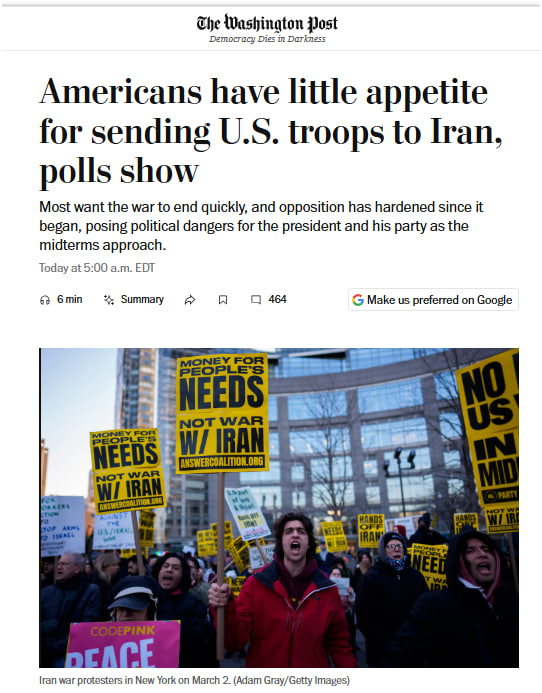
Washington D.C. – As the conflict in Iran enters its second month, a growing segment of the American public is expressing a clear and urgent desire for its swift conclusion. Recent polls, including extensive surveys conducted by The Washington Post, reveal a significant escalation in opposition to the ongoing military engagement, posing considerable political challenges for the administration ahead of crucial midterm elections.
Public Sentiment Shifts Against Escalation
Contrary to initial expectations, public support for deploying U.S. ground troops into Iran remains remarkably low. A joint poll by YouGov and The Economist found that a mere 14% of Americans favor sending ground forces, while a decisive 62% express opposition, with 24% undecided. Similar findings from Ipsos and the Associated Press-NORC Center for Public Affairs Research underscore this trend, with opposition numbers more than four times that of support.
Bipartisan Opposition to Ground Intervention
The sentiment against direct military intervention appears to transcend partisan lines. Among Republicans, 37% oppose ground troop deployment, while 30% support it. Even within the staunchest MAGA base, while support for deployment stands at 41%, a substantial 27% remain opposed. Notably, among Republicans who are not part of the MAGA movement, opposition surges to 60%.
Political Ramifications for the Administration
This public sentiment could present a significant political hurdle, particularly as rising gas prices approach $4 per gallon and international allies show limited enthusiasm for deepening involvement. Republicans are already facing increased scrutiny in the upcoming November midterm elections, which could shape the remainder of the current term.
Limited Appetite for Sustained Ground Operations
Further analysis from a Reuters/Ipsos poll indicates a pronounced reluctance for extensive ground operations. Only 7% support large-scale ground troop deployment, with 34% favoring limited special forces for targeted missions. A significant 55% outright oppose any use of ground forces in Iran. This suggests that even in the most optimistic scenarios, support for ground operations would not exceed 40%, with widespread operations facing considerable public disapproval.
Potential Military Scenarios Under Scrutiny
The Washington Post has reported that the Pentagon is preparing for the possibility of several weeks of ground operations should the administration opt to escalate the conflict. Proposed options, reportedly under consideration, include securing the oil export hub of Kharg Island, operations in coastal areas near the Strait of Hormuz, and neutralizing threats to commercial and military shipping.
Presidential Stance Amidst Shifting Narratives
While President Trump stated on March 19th, “I am not sending troops anywhere. If I were, I certainly wouldn’t tell you. But I’m not doing that right now,” recent messaging from the White House suggests an effort to frame the conflict as having achieved its primary objectives. This narrative is being reinforced by statements from Vice President J.D. Vance, who recently asserted that “we have achieved all of our military objectives.”
Public Perception: A Complex Picture
Despite widespread opposition to prolonged engagement, American public opinion on the war’s progress presents a mixed picture. Some polls indicate that nearly half of registered voters view the conflict as progressing “very well” or “somewhat well.” However, a slightly larger proportion believes it is “not going so well” or “not going well at all.” This duality is strongly influenced by partisan affiliation, with Republicans expressing significantly more optimism than Democrats and independents.
Overarching Desire for Swift Resolution
While specific objectives such as curbing Iran’s nuclear program and preventing regional aggression garner support, the overwhelming priority for most Americans is a swift end to the conflict. A significant majority, 66%, believe the U.S. should “quickly end its involvement in the war, even if it does not achieve all of its objectives in Iran.” Conversely, only 27% advocate for prolonging the war to fully realize its goals.
In essence, the current public discourse reflects a complex sentiment: while certain strategic aims against Iran resonate with a segment of the population, the pervasive desire is for a rapid de-escalation and termination of hostilities, even at the cost of not fully achieving every stated objective.