Iran’s Strategic Innovation: The Shahed Drone and its Global Impact on Military Doctrine
The conflict in Ukraine has become a defining case study for modern militaries and defense manufacturers worldwide. This real-world battlefield has provided stark lessons on which technologies deliver under fire and which are becoming obsolete. Among the most significant revelations has been the performance of a specific class of weaponry, shifting global military priorities and prompting a reevaluation of conventional warfare tactics.
A Lesson from the Battlefield: The Rise of the Shahed
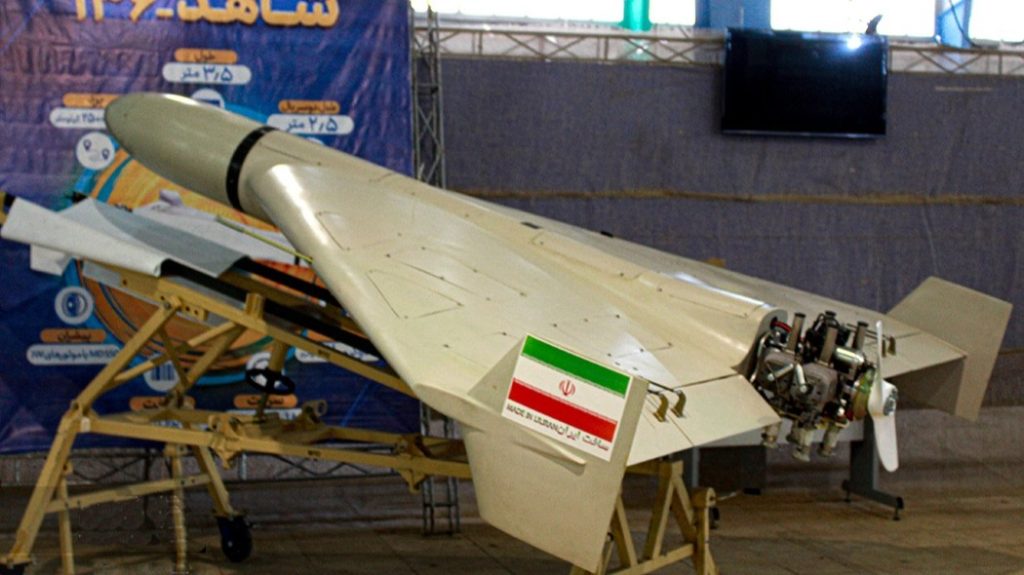
One of the most impactful developments observed in the conflict has been the effective deployment of Iran’s Shahed-class drones. These unassuming unmanned aerial vehicles (UAVs), particularly the Shahed-136 model, have demonstrated that cost-effectiveness and simplicity can be decisive advantages. While they may not possess the sophisticated technology of their multi-million-dollar Western counterparts, their proven performance has made them a subject of intense interest and study.
The Formula for Success: Four Key Strengths
Analysis of the Shahed drones points to a combination of four critical attributes that explain their operational success:
- Cost-Effectiveness: Expert estimates place the production cost of these drones significantly lower than comparable Western systems. This low cost is not merely an economic advantage; it enables new tactical paradigms, allowing for large-scale, sustained attacks that can overwhelm traditional defenses.
- Simplicity and Ease of Production: The design philosophy prioritizes battlefield effectiveness over technological complexity. Features like delta-wing designs, propeller engines, and the use of materials like fiberglass and carbon fiber simplify manufacturing and facilitate mass production.
- Significant Operational Range: Certain variants of the Shahed drone boast impressive ranges, with some models capable of striking targets over 1,600 kilometers away. This allows for deep-strike capabilities far behind front lines.
- Swarm Capability: The combination of low cost and simple production makes it feasible to deploy these drones in large numbers. This “swarm” tactic can saturate and confuse even the most advanced missile defense systems, engaging their full firepower and creating openings for follow-on attacks.
Global Reaction: Imitation as the Sincerest Form of Flattery
The demonstrated effectiveness of the Shahed drone has not gone unnoticed by global military powers. Acknowledging the shift in tactical warfare it represents, several nations have initiated programs to develop similar systems. According to reports, countries including the United States, the United Kingdom, and France, along with their leading defense contractors, are actively working on drones that either directly mimic or are heavily inspired by the Shahed’s design concept.
Notable examples of these development efforts include:
- The Lucas drone by the American company Spectreworks.
- The Arrowhead drone by the American firm Aerospace.
- The Skyshark drone by the UK’s MGI Engineering.
Major European defense conglomerates like MBDA have also publicly stated they are developing long-range loitering munitions directly inspired by the lessons from the conflict in Ukraine.
Reshaping Modern Military Doctrine
The impact of the Shahed extends beyond its immediate battlefield use; it is actively reshaping military strategy and defense planning. Its success has prompted a fundamental rethinking of attack doctrines, moving away from a reliance on a small number of highly precise and expensive missiles towards the use of large numbers of low-cost, attritable drones.
This shift, in turn, is forcing a corresponding evolution in defensive systems. Air and missile defenses, previously optimized to counter limited numbers of high-value threats, must now adapt to address the challenge of defending against persistent and numerous low-cost drone swarms. The strategic landscape is being permanently altered, underscoring the significant influence of this Iranian-developed technology on global military affairs.