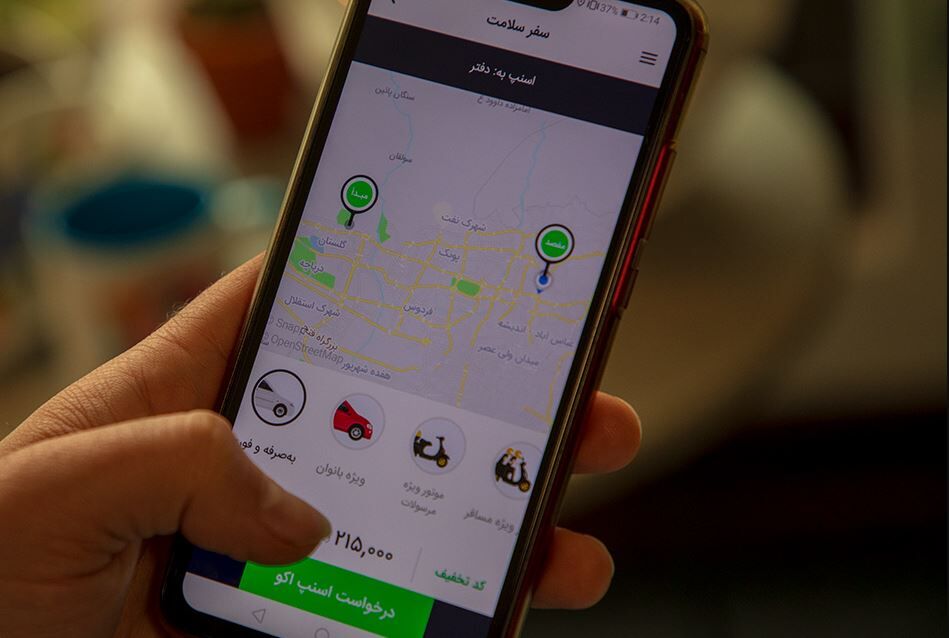
Snap Responds to Safety Concerns, Defines Its Security-First Ride-Hailing Model
In response to recent public discussions about passenger safety, Snap, a leading Iranian ride-hailing platform, has detailed its comprehensive “Travel Safety” service. The company’s Vice President of Operations, Ali Ghazi, has clarified the platform’s strategy, emphasizing a rapid-response internal security team over a direct police SOS feature, which the company deems ineffective and potentially disruptive for the local context.
Addressing User Feedback
Recent weeks have seen increased social media discourse regarding safety on the platform, with some users sharing negative experiences and criticizing perceived delays in emergency response. In an interview, Ghazi addressed these concerns directly, stating that the core issue often lies in users selecting the wrong communication channel. He highlighted that the dedicated “Travel Safety” service is designed for emergencies and boasts a response time of under one minute from the moment a request is registered.
Why No Direct Police Link?
When questioned about the absence of a direct SOS button to police—a feature available in international platforms like Uber—Ghazi provided a data-driven explanation. He revealed that according to Snap’s 2024 performance report, approximately 85% of contacts made through the “Travel Safety” service were misplaced or incorrect.
“Activating a direct police call function would likely lead to the congestion of emergency lines,” Ghazi explained. “This would disrupt the process of handling genuine cases. Our model ensures that our security experts first assess the situation and, if necessary, coordinate directly with police and relevant institutions. This creates a more efficient and filtered system.”
A Three-Phase Safety Structure
Ghazi outlined that Snap’s safety protocol is built around three stages: pre-trip preparation, in-trip accompaniment, and post-trip support. During a ride, users have access to four key features:
- “I don’t feel safe”: Enables instant calling or messaging with the security team.
- Emergency Contact: Allows automatic sharing of trip details with a trusted person.
- Live Trip Sharing: Lets users share real-time ride information with friends and family.
- Ambulance Request: Connects directly to emergency medical services, with a precise location-sharing feature to be added soon.
Optimizing the System for Genuine Emergencies
The operations VP stressed the importance of using the correct features for the correct situations. He noted that a significant number of non-urgent requests—such as trip cancellations, lost items, or payment issues—are mistakenly routed through the safety service. This misuse slows down response times for critical situations. Users are urged to utilize the general support lines for such matters to preserve the security team’s capacity for genuine emergencies.
A Safety Net for Vulnerable Situations
Recognizing that some passengers may be unable to use the app in a moment of crisis, Snap has piloted an “Emergency Contact” feature. This allows users to register a trusted individual who will automatically receive a link with trip details. This contact can then reach out to Snap’s support team if they have concerns, ensuring that safety is not solely dependent on the passenger’s ability to operate the app in a stressful moment.