Iran’s National Football Team at a Crossroads: A Test of Leadership and Future Prospects
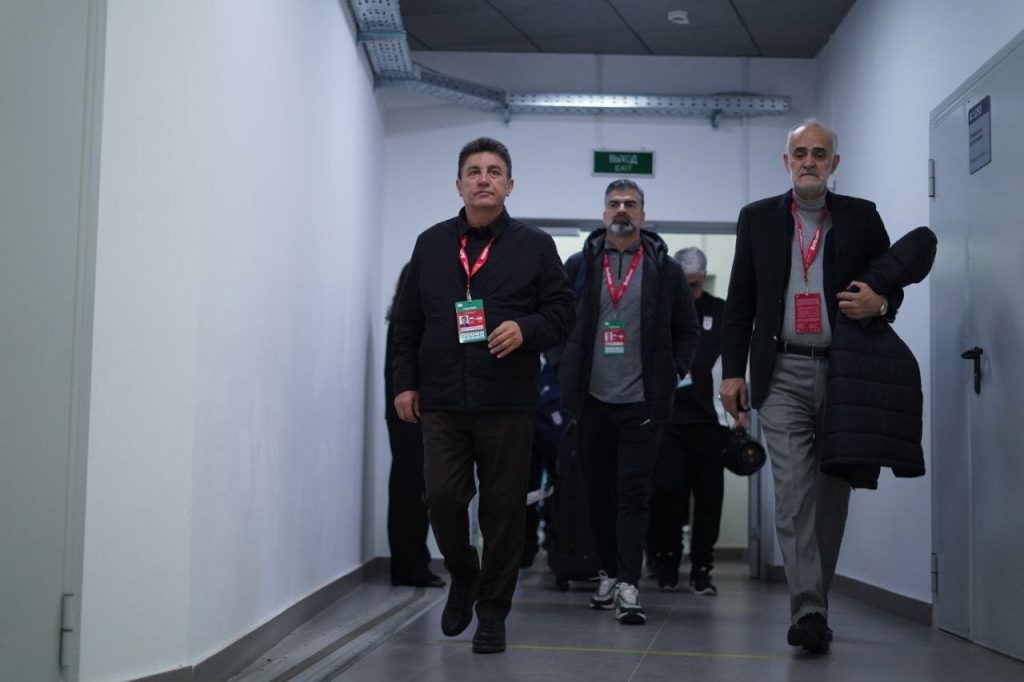
The Iranian national football team is navigating a period of intense internal scrutiny, with its head coach, Amir Ghalenoei, at the center of a critical debate over the team’s technical direction. This comes at a time when the team’s recent performances have raised concerns among fans and officials alike.
Internal Pressures and a Divided Path
According to reports, while the President of the Football Federation has publicly expressed support for Ghalenoei, there is significant dissatisfaction with recent results. This has led to considerable pressure for a comprehensive restructuring of the national team’s technical staff. A quiet but intense debate is underway within the federation, presenting three distinct paths forward:
- The Foreign Coach Option: Appointing a foreign head coach to lead the team through to the 2026 World Cup, a solution favored by many analysts and critics.
- Restructuring from Within: Continuing the partnership with Ghalenoei but demanding a significant overhaul of his assistant coaches, bringing in fresh, modern expertise. This is reportedly the option most strongly pushed by the federation’s president.
- The Stance of the Incumbent: Ghalenoei himself is said to favor retaining the current all-Iranian technical staff, potentially adding just one new face—including candidates with experience working under renowned coaches like José Mourinho—to manage media pressure and buy more time.
Ghalenoei reportedly views the removal of his assistants as a precursor to his own dismissal, leading him to resist these changes. However, this stance risks putting him in a race against time to prove his strategy can deliver results.
A String of Alarming Results
The debate is fueled by the team’s concerning form. Recent friendly matches and the CAFA tournament have diminished fan optimism. The team has displayed a lack of defensive cohesion and a noticeable absence of creativity in attack. Defeats to Uzbekistan and a historic first-ever loss to Russia, coupled with a struggling performance against Tajikistan, have painted a worrying picture. Statistical analysis from the Russia match revealed Iran was weaker in all key metrics—shots, ball possession, pass accuracy, and chance creation—contradicting the technical staff’s claims of shifting to a more attacking model.
For the first time since the 2014 World Cup, Iran has failed to win in three consecutive matches, and has suffered back-to-back defeats for the first time in six years.
An Urgent Need for Course Correction
The consensus among critics and experts is that the national team requires an urgent and honest reassessment of its technical and mental approach to become competitive for the 2026 World Cup. The primary condition for this change is the acceptance of existing shortcomings, a sentiment that has been notably absent from the technical staff’s public statements.
With the Dubai tournament and upcoming friendlies on the horizon, these matches are seen as a final opportunity to restore confidence and correct errors. The crossroads facing Coach Ghalenoei is no longer just about his choice of assistants, but a definitive choice between embracing necessary change or facing a premature end to his mission with the national team.