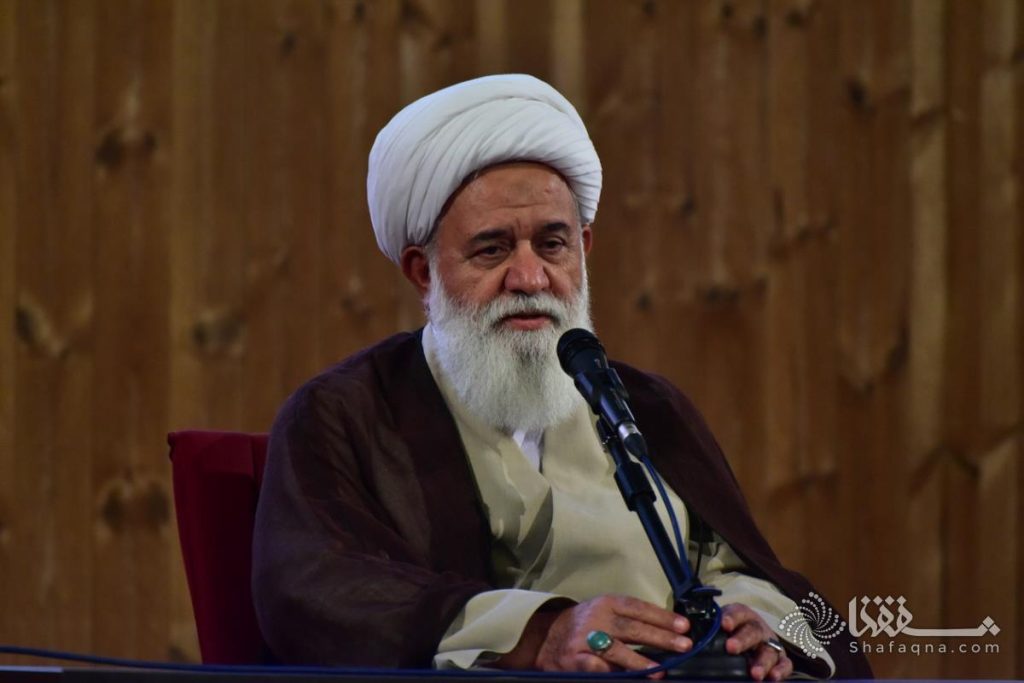
Ayatollah Rashad Delivers Landmark Response to Al-Azhar’s Declaration
Tehran, Iran – Ayatollah Ali Akbar Rashad, a prominent Iranian cleric holding the dual roles of Head of the Seminary Council of the Capital and President of the Islamic Culture and Thought Research Institute, has issued a powerful and direct rebuke to Sheikh Ahmed Mohamed Ahmed El-Tayeb, the Grand Imam of Al-Azhar. The statement, described by Ayatollah Rashad as a “landmark response,” challenges Al-Azhar’s recent declaration, which reportedly circulated online and contained sharp criticisms of the Islamic Republic of Iran.
Ayatollah Rashad’s extensive message, addressed directly to Sheikh El-Tayeb, expresses profound disappointment and surprise at Al-Azhar’s stance, particularly at a time of heightened regional tensions. He asserts that history and future generations will judge the words and actions taken during this critical period.
A Clerical Rebuke and Disappointment
In his letter, Ayatollah Rashad conveyed his “extreme astonishment” at the Al-Azhar statement, which he characterized as containing “bitter and harsh accusations against the Islamic Republic.” He argued that the global free community and the Muslim Ummah had expected Al-Azhar, a venerable scientific and religious institution, to offer “responsible, explicit, and courageous defense” of Islamic Iran. This expectation, he noted, stemmed from Iran’s role in defending the Palestinian cause and facing aggression from “warring infidels.”
Instead, Ayatollah Rashad lamented, Al-Azhar’s declaration appeared to “accuse and condemn the victim” rather than the aggressor. He underscored this point with a Quranic reference, asking, “Will you kill a man because he says, ‘My Lord is Allah?'” (Ghafir: 28), questioning the basis of Al-Azhar’s position. He further expressed dismay over Al-Azhar’s perceived silence regarding the martyrdom of numerous Iranian officials, security personnel, and civilians in recent attacks.
Regional Alignments and Historical Context
Ayatollah Rashad drew attention to Iran’s long history of benevolent relations with regional countries, emphasizing that Iran has consistently been a well-wisher and has never committed aggression against them. He then sharply criticized certain regional states for “falling under the dominion of warring infidels” and providing them with military bases and economic resources. He argued that these actions contravene clear Islamic injunctions, citing several Quranic verses that forbid Muslims from taking infidels as allies against fellow Muslims.
These facilities, he contended, have been continuously used by “infidels” over recent decades to attack and occupy Muslim lands, including Iraq, Afghanistan, Palestine, Lebanon, Yemen, and now Islamic Iran. Ayatollah Rashad directly challenged Sheikh El-Tayeb to consider whether these collaborating countries should not be deemed “accomplices” in the aggressors’ crimes against Islamic territories.
Justification for Iran’s Self-Defense
The Iranian cleric detailed Iran’s history of patience and restraint in previous confrontations, despite overt support for aggressors from certain countries. He highlighted that Iran had explicitly warned these nations against further cooperation with “warring infidels.” However, he stated that these warnings were ignored, leading to extensive cooperation with the enemy in subsequent aggressions.
Consequently, Ayatollah Rashad asserted that Iran is now defending its land, people, and interests in accordance with Islamic Sharia and Quranic injunctions (e.g., Al-Hajj: 39, Al-Baqarah: 190, 194, 193). He clarified that Iran’s right to defend itself extends to engaging the enemy wherever they may be found, regardless of location. He then posed a rhetorical question to Sheikh El-Tayeb: if Muslim Egypt were attacked from bases and facilities provided by other countries, would Al-Azhar condemn Egypt or the “warring infidels” and their assisting states? He expressed hope that other Al-Azhar rulings are not similarly “baseless” or influenced by “political and tribal biases.”
A Call for Regional Reassessment
Ayatollah Rashad issued a strong call to action for the regional states involved, urging them to “immediately and unconditionally” close the bases of aggressor enemies, cease logistical support, and halt fuel provisions and other services to the “army of warring infidels.” He warned that failure to do so, especially if Iranian residential complexes, universities, hospitals, airports, and infrastructure are attacked from these facilities, would necessitate a “reciprocal response” from Iran’s armed forces to establish deterrence. Citing Imam Ali, he stated, “Return the stone from whence it came, for evil is repelled only by evil.”
He added that by ceasing cooperation, these nations would not only be safe from Iranian attacks but would also benefit from Iran’s support.
Anticipating Victory and Historical Judgment
Concluding his landmark message, Ayatollah Rashad offered a final appeal to Sheikh El-Tayeb, encouraging him to advise those issuing such statements and to adopt a “fitting stance” during this critical historical juncture, given his commendable record of courageous and fair positions in the past.
Ayatollah Rashad expressed confidence in the future, stating, “By God’s will, these days will pass with the decisive victory of Islamic Iran and the resistance front.” He reiterated that “history and future generations will judge our words and actions in this history-making period.”