KRG Prime Minister Accuses Damascus of “Demographic Change” Amid Aleppo Clashes, Demands Answers
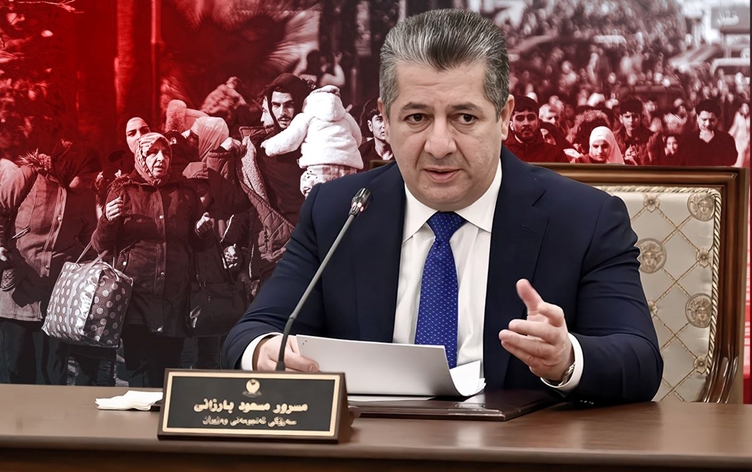
Erbil, Iraq (January 7, 2026) – Kurdistan Regional Government (KRG) Prime Minister Masrour Barzani has issued a stern warning regarding the ongoing conflict in Aleppo, Syria, asserting that the targeting of Kurds in the city aims for “demographic change” and places the Syrian government and the international community under serious scrutiny. Barzani’s statement underscores deep concerns over escalating violence and its humanitarian implications.
Escalating Tensions in Aleppo
The Prime Minister’s remarks come as clashes between Syrian government forces and “Asayish” forces, affiliated with the Syrian Democratic Forces (SDF), have intensified in Aleppo for a third consecutive day. These confrontations are described as the most severe between the two sides in months. Syrian government forces have reportedly deployed armored vehicles and tanks around the predominantly Kurdish neighborhoods of Sheikh Maqsoud and Ashrafieh, further heightening tensions.
Both Syrian government forces and the SDF have accused each other of initiating the latest round of fighting. These clashes follow a breakdown in negotiations aimed at integrating autonomous administrative institutions within the broader framework of the Syrian government, a process that saw an agreement signed in March.
Barzani Condemns Violence, Warns of Ethnic Cleansing
Prime Minister Barzani vehemently condemned the violence, stating, “War and violence are never a fundamental solution to any problem. No excuse or justification can sanction ethnic cleansing.” He added that the attacks on Kurdish-populated neighborhoods in Aleppo evoke profound concern within the KRG.
Barzani explicitly linked the targeting of Kurds to efforts at “demographic change” in the region, emphasizing that such actions threaten civilian lives and challenge the conscience of the international community.
Calls for Restraint and Inclusive Governance
The KRG leader appealed to all parties involved to exercise restraint, protect civilians, and pursue peaceful resolutions through dialogue and negotiation. “We hope all parties demonstrate self-restraint, protect the lives of citizens, and resort to dialogue and negotiation to resolve problems,” Barzani urged.
He also expressed a desire for the current Syrian government to fulfill its responsibilities towards all citizens, asserting, “We hope the current governing system in Syria acts in accordance with the responsibilities of a democratic and inclusive government for all Syrians.”
Humanitarian Impact and Evacuations
The immediate human cost of the renewed fighting has been significant. The Health Council of Sheikh Maqsoud and Ashrafieh neighborhoods reported to Rudaw media network that eight individuals have died and 57 have been injured due to attacks and shelling by Syrian government forces.
Amidst the conflict, the Syrian Arab Army has established two “humanitarian corridors,” through which thousands of residents, including women, children, and the elderly, have evacuated the affected neighborhoods. An Agence France-Presse (AFP) journalist witnessed families leaving with expressions of fear and sorrow.
Separately, the Afrin administration, affiliated with the Syrian government, reported that approximately 20,000 families from Sheikh Maqsoud and Ashrafieh have returned to Afrin, finding shelter in their homes or with relatives.