Iranian Official Dismisses Secret Nuclear Talks, Asserts Resilience Against Western Pressure
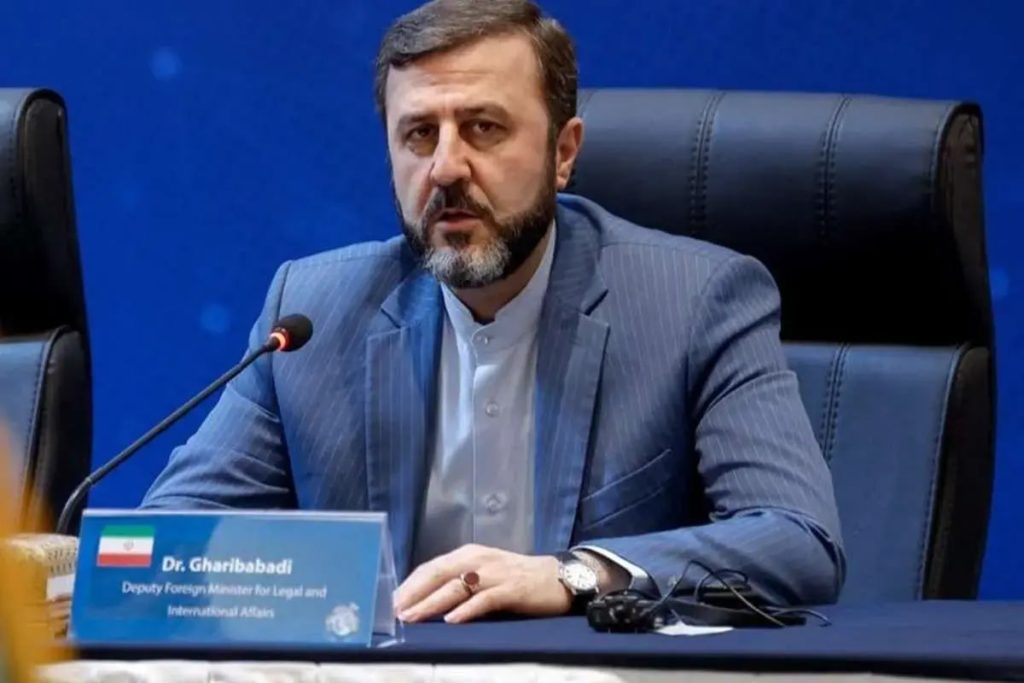
In a televised interview, Kazem Gharibabadi, Iran’s Deputy Foreign Minister for Legal and International Affairs, has firmly denied reports of confidential negotiations between Iran and the International Atomic Energy Agency (IAEA) in Egypt, while delivering a robust assessment of the Islamic Republic’s foreign policy stance.
Denial of Secret Negotiations
Addressing speculation about covert diplomatic engagements, Gharibabadi stated, “We have a relationship with the Agency and there is no need for secret negotiations; such a thing has not happened at all.” This direct rebuttal aimed to clarify Iran’s position on its interactions with the international nuclear watchdog, emphasizing transparency in its dealings.
A Failed Western Strategy
The senior diplomat provided a detailed critique of the policies adopted by the United States and three European countries (E3) over the past year. He argued that these nations have seemingly reached their own conclusion that their strategies have failed to achieve the desired objectives.
Gharibabadi specifically pointed to the European move to activate the snapback mechanism as a key example. “We had warned them that the snapback was not a tool they could use freely,” he said. “We told them it was their last arrow and that if they shot it, they would have no other effective tools left for negotiations with Iran.” He noted that Iran had previously presented constructive proposals for engagement, particularly on the sidelines of the UN General Assembly, opportunities which he claims were not utilized by the Western parties.
International Support and Domestic Resilience
The Deputy Foreign Minister highlighted the significant diplomatic support Iran received from Russia and China, which opposed the E3’s efforts at the UN Security Council. “For the first time in the Security Council, an international consensus did not form, and Russia and China seriously opposed this issue,” Gharibabadi stated, framing it as a diplomatic setback for the Western initiative.
He further asserted that Iran’s executive and economic bodies successfully managed to control the impact of the snapback decision on people’s livelihoods. While acknowledging some effects, he claimed that the outcome fell far short of Western predictions and even internal Iranian estimates, demonstrating the nation’s capacity to withstand external pressure.
A Call for a New American Approach
Extending his analysis to US policy, Gharibabadi contended that recent actions by the US and the “Zionist regime” against Iran had resulted in their own failure. “The Islamic Republic of Iran dealt a heavy blow to the Zionist regime, and they did not achieve their objectives through military attack,” he said. He described Iran as remaining “firm, stable, steadfast, and enjoying public support.”
Concluding this point, he issued a clear message: “In my opinion, they must now change their approaches towards Iran, because continuing past policies will yield no result. If signals are sometimes heard from them, it seems to be due to a return to rationality and an understanding of the inefficiency of previous policies towards Iran.”
A Warning on the Cairo Understanding
In his final remarks, Gharibabadi issued a pointed warning regarding the upcoming IAEA Board of Governors meeting. He stated that efforts by the US and some other countries to pursue a resolution against Iran would “naturally cause the understanding that was previously formed in Cairo to be completely set aside.” This positions Iran’s future cooperation as being directly contingent on the actions taken by other nations at the international level.