Bloomberg Challenges ‘Easy Iran Victory’ Narrative Amidst Fortified Defenses
A recent report by Bloomberg has cast doubt on former U.S. President Donald Trump’s assertion that a military confrontation with Iran would result in an “easy victory” for the United States. The analysis suggests that such a claim overlooks the intricate realities on the ground and Iran’s significant defensive advancements.
Iran’s Strategic Reinforcements Revealed
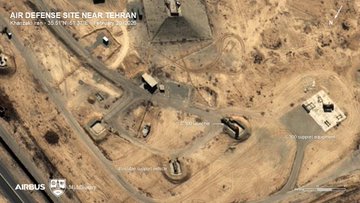
According to the Bloomberg report, which cites new satellite imagery, Iran has been actively reinforcing its military infrastructure while simultaneously safeguarding its core nuclear capabilities. The imagery reveals several key developments:
- Reconstruction and Fortification: Entrances to tunnels at facilities previously targeted in past conflicts have been blocked and rebuilt. Key sites in Isfahan and Natanz have undergone significant fortification.
- Enhanced Protection: Concrete structures are now covered with layers of soil, and military complexes like Parchin and Khojir, known for their association with missile programs, have been strengthened.
These actions, say analysts consulted by Bloomberg and Reuters, underscore Tehran’s strategic efforts to shield its nuclear and missile infrastructure from potential future attacks. This strategy involves the dispersion of facilities, the bolstering of underground fortifications, and the reconstruction of damaged sections.
Complexities of Military Engagement
The report emphasizes that any potential U.S. military operation would encounter substantial challenges, far exceeding a simplistic “easy victory” scenario. Iran’s vast geographical area and rugged, mountainous terrain present formidable obstacles. Furthermore, reduced access for International Atomic Energy Agency (IAEA) inspectors complicates efforts to accurately assess the extent of any potential damage following an attack.
Beyond Physical Destruction
Bloomberg’s analysis highlights that even if air strikes succeed in destroying physical buildings, eliminating technical knowledge, tracking uranium stockp with uncertain fates, or undermining the political will to rebuild is a far more complex undertaking. The report cautions that any escalation could also broaden the scope of conflict across the wider region, given Iran’s established regional ties and influence.
Expert Perspectives on Resilience
Darya Dolzikova, a senior researcher in nuclear non-proliferation at the Royal United Services Institute (RUSI) in London, noted that Iran’s enhanced fortifications demonstrate its inherent resilience against attacks. She underscored Iran’s capacity for reconstruction should it choose to do so.
Echoing this sentiment, Robert Kelley, a former U.S. Department of Energy official and former director at the IAEA, stated that rebuilding uranium enrichment capacity using preserved equipment could be a relatively straightforward process. Kelley concluded that while air strikes might delay Iran’s nuclear program, they would not necessarily lead to its definitive end. The collective insights suggest that Iran’s strategic defensive measures present a multifaceted challenge that belies any notion of an “easy” military resolution.