China’s Academic Ascent Reshapes Global Research Landscape: A US Policy Challenge
A New Global Academic Order Emerges
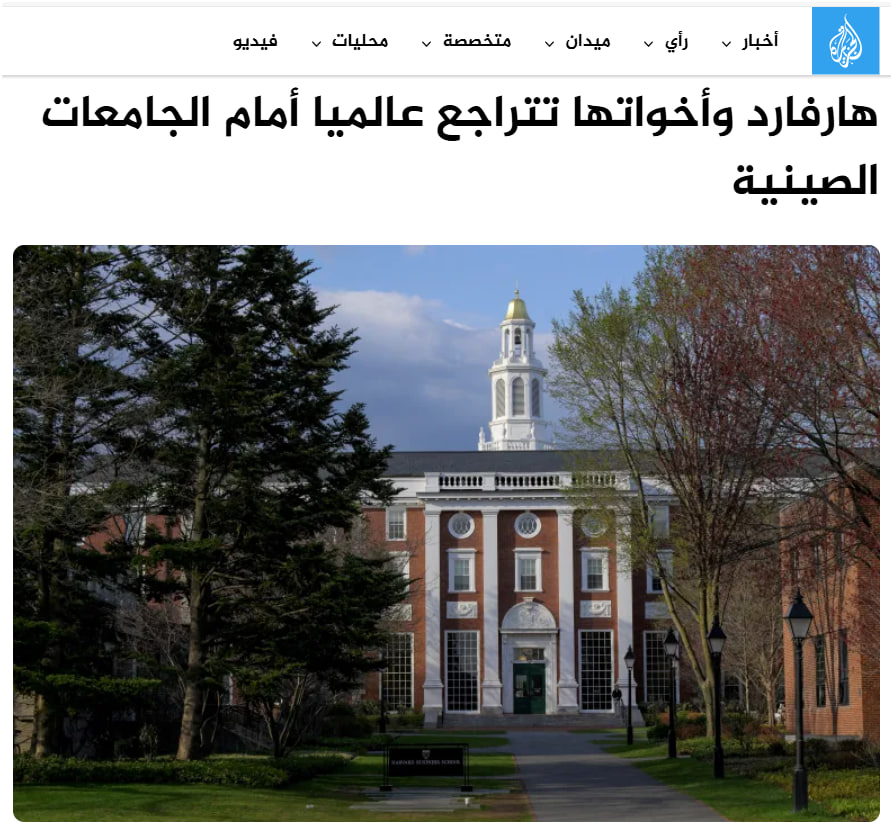
Recent global university rankings, measuring scientific output, reveal a significant shift in the landscape of academic leadership. American institutions, including Harvard University, have experienced a noticeable decline, with Harvard dropping to third place from its longstanding position as the world’s most prolific research university. Concurrently, Chinese universities have demonstrated an impressive surge in research production, rapidly climbing to higher echelons in these influential global lists.
The Shifting Tides of Research Dominance
For years, Harvard stood at the forefront of global academic output, consistently ranked highest based on the volume of its scientific publications. However, this dominance has now eroded, mirroring a broader trend among many American universities. In contrast, Chinese universities have significantly elevated their standing in rankings focused on both the quantity and quality of research.
This trend is indicative of a multi-year regression for American academic institutions, a development highlighted by The New York Times. The newspaper points to policy decisions made during the Donald Trump administration, specifically reductions in research funding for universities—especially those heavily reliant on federal grants—as a factor that accelerated this shift.
The early 2000s presented a vastly different picture: seven American universities dominated the top ten global spots for scientific output, with Harvard leading the charge. At that time, only one Chinese institution, Zhejiang University, featured among the top 25. Today, Zhejiang University proudly sits at the pinnacle of the rankings published by the Leiden University Centre for Science and Technology Studies in the Netherlands. Furthermore, seven other Chinese universities now rank among the top ten globally.
Beyond Production Volume: A Deeper Look
While Harvard has slipped to third place in overall research volume, it’s crucial to note that the university actually produces more research today than it did two decades ago. The real story, according to the Leiden ranking, is not a decrease in American research output but rather the profoundly faster pace of scientific production in China. Harvard still maintains its premier position in the Leiden rankings for the highest citation count for its scientific articles, indicating strong research influence.
Data from Leiden University further illustrates this point: six prominent American universities—including Michigan, California, Johns Hopkins, and Stanford—are all generating more research now than they were two decades ago. However, despite their increased output, they are being significantly outpaced by their Chinese counterparts in terms of sheer volume and growth.
Policy and the Future of Academic Leadership
The remarkable leap in China’s research output and the corresponding relative decline of US institutions underscore the critical role of national investment and policy in fostering academic leadership. This ongoing transformation suggests a deeper geopolitical shift, where scientific and intellectual prowess becomes an increasingly vital component of national power and global influence. The trajectory of academic rankings, therefore, serves as a poignant barometer of evolving international power dynamics and the impact of strategic policy choices.