Trump’s Mounting Volatility Fuels US Political Uncertainty Ahead of Midterms
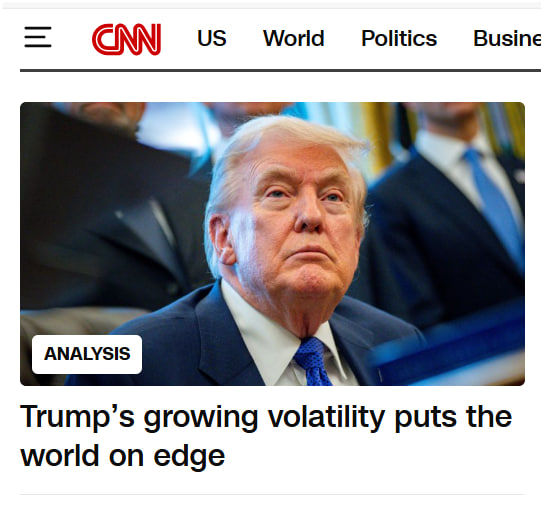
Washington D.C. – Donald Trump’s escalating volatility in a crucial election year has become a dangerous pattern, according to a recent CNN report. This dynamic sees the former President’s personal outbursts rapidly translate into government actions, only for those initiatives to often recede under the pressure of political and legal realities. This constant swing between unrestrained ambition and the enduring limitations of the American system has plunged U.S. politics into a tense and highly unpredictable era.
A Presidency Defined by Impulse
Trump, described by some as the most unstable president in recent memory, appears increasingly driven by the sudden shifts of his personal desires. The disciplined execution that characterized the initial months of his second term—marked by precise executive orders aimed at reshaping Washington and America’s global priorities—has largely faded into a distant memory. Previously, controversial actions such as reorganizing the U.S. Agency for International Development (USAID) or challenging Ivy League curricula, while contentious, largely stemmed from a seemingly rational roadmap developed during his time outside the White House.
Now, however, Trump appears more improvisational and extreme. His fragile temper in Washington, often contrasting sharply with his more jovial demeanor during weekends in Florida, has become a growing source of concern. The extent to which he will pursue his assertive impulses may depend on the tension between these authoritarian leanings and the domestic and international political realities that occasionally manage to curb them.
A Week of High-Stakes Controversies
Recent events vividly underscore this shift. Trump sparked widespread outrage by sharing a cartoon video on his Truth Social account depicting Barack and Michelle Obama in a racially insensitive manner, an act described as unprecedented from a former White House occupant. He also reignited his attacks on the integrity of elections, with a senior intelligence official reportedly traveling to Georgia in search of evidence to support his persistent claims of 2020 election fraud, fueling fresh concerns that he might call for the nationalization of the voting process for the November midterms.
The confusion surrounding his stance on immigration enforcement intensified after federal agents deployed to Minnesota shot two American citizens. Trump has since called for a “softer approach,” a shift in tone that some interpret as an effort to repair his image and mitigate the catastrophic political fallout from a “cleanup” that alienated many voters. These federal deployments were, notably, a direct result of his personal and relentless demands for militarized law enforcement.
His obsession with personal legacy reached new heights last week with reports that he sought to rename Dulles International Airport and New York’s Penn Station after himself. Culturally, Trump publicly lambasted Puerto Rican star Bad Bunny’s Super Bowl halftime show, declaring it an “insult to America’s greatness” and criticizing the “disgusting dances,” particularly for children. Earlier, he attacked American Olympic skier Hunter Hess for stating that wearing the flag did not mean endorsing everything happening in America, suggesting Hess should not have tried out for the team at all.
The Political Cost of Self-Focus
While Trump occasionally engages in more conventional and strategic initiatives—such as the unveiling of his TrumpRx website aimed at lowering drug prices, though the plan is reportedly more limited than he often claims—a perception is growing that he prioritizes his often-unstable personal agenda over the actual needs of ordinary voters. In a Super Bowl Sunday interview, he expressed “great pride” in the economy and misleadingly claimed to have universally reduced food prices. Despite a robust stock market, with the Dow Jones Industrial Average recently surpassing 50,000 for the first time, the economic benefits under his administration have yet to reach all income levels.
This increasingly overt self-centeredness is incurring a significant political cost. A recent CNN poll indicated that only 36 percent of Americans believe the former President has the right priorities, a notable drop from 45 percent at the beginning of his term. Furthermore, only one-third of Americans believe Trump cares about people like themselves—a decrease from 40 percent last March and the worst evaluation of his political career.
When Impulses Meet Reality: The Greenland Precedent
The pattern of swift, often extreme, executive declarations followed by eventual reconsideration is a defining feature of this period. Trump’s demand to Denmark for the cession of Greenland in January, for instance, reportedly pushed NATO to the brink of collapse. His persistent manipulation of tariffs mirrors this approach.
However, the Greenland crisis also demonstrated that even Trump eventually confronts international or domestic realities. Significant resistance from Europe and anger from Republicans over the issue ultimately led to a retreat after his visit to Davos, Switzerland. Similarly, a swift political backlash, including condemnation from Republican Senator Tim Scott, the party’s only Black senator, rapidly eroded the political basis for the Truth Social post depicting the Obamas. The content was eventually removed, and a staffer was reportedly identified as responsible for its publication. Trump claimed not to have seen the offensive portion but steadfastly refused to apologize, maintaining he had done nothing wrong.
This ongoing struggle between Trump’s inclination to wield increasingly unaccountable power and the remaining political and constitutional limits on his actions is becoming the defining characteristic of U.S. politics in this midterm election year.
Midterms and the Unfolding Immigration Standoff
The upcoming midterm elections will serve as a crucial test, revealing whether voters nationwide seek to rein in Trump or continue to grant him broad latitude—and whether he will accept their democratic verdict. An immediate confrontation looms over the U.S. Immigration and Customs Enforcement (ICE) agency. Democrats, leveraging a looming budget dispute over the Department of Homeland Security—which could trigger a government shutdown by week’s end—are pushing for new limits on ICE agents following the deaths of Renee Good and Alex Pretti in Minnesota.
Democrats argue that immigration enforcement must be fair, just, and humane. Republicans, however, are resisting these efforts, even as Trump has himself called for a “softer approach” and body cameras were issued to ICE agents in Minnesota last week. This standoff will once again test whether Democrats, despite their current lack of control in Congress and the White House, can impose meaningful constraints on his policies by capitalizing on growing public dissatisfaction. In a recent move, the administration announced the withdrawal of 700 ICE agents from Minneapolis, a decision that generated positive headlines after public opinion shifted against previous enforcement tactics. Trump, in his Super Bowl Sunday interview, stated, “The reason we’re out is because we’ve done a very good job there.”
Conclusion
The escalating tension between Donald Trump’s unrestrained impulses and the forces that occasionally temper them defines the current U.S. political moment. As the nation navigates a complex election year, the interplay of these dynamics continues to produce an unpredictable environment, with significant implications for both domestic policy and international relations.