Deepfakes: Redefining Reality, Challenging Political Trust Globally
In an era increasingly shaped by advanced deepfake technology, the proliferation of fabricated images and videos across social media platforms has rendered the discernment of truth an escalating global challenge. This phenomenon is systematically eroding public confidence in “visual truth,” prompting widespread skepticism regarding the authenticity of visual content. As societies grapple with this new reality, the fundamental question arises: how can truth be ascertained, and what precisely is the responsibility of media organizations?
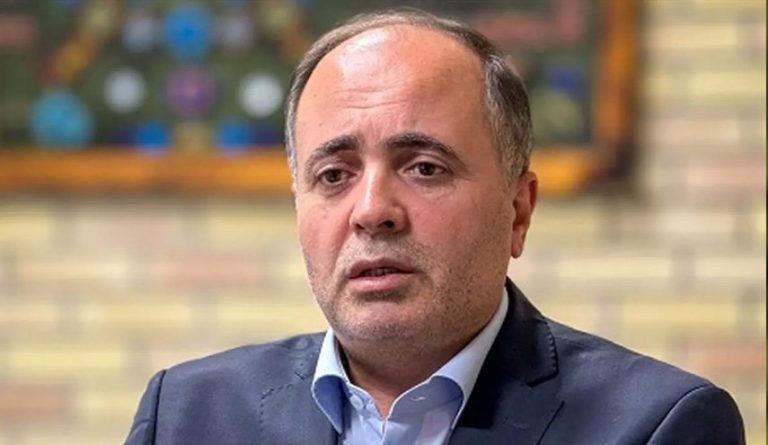
Dr. Adel Mirshahi, a distinguished researcher in generative artificial intelligence, highlights the urgency of the situation: “We have now entered a period where media literacy is no longer an option or a supplementary skill; it is an absolute necessity.” While acknowledging the tools and methods emerging to identify deepfakes, Dr. Mirshahi emphasizes that discerning reality now demands greater public scrutiny and caution towards all visual, audio, and media content.
The Anatomy of Fabricated Truth
Deepfakes represent a sophisticated form of audio-visual, and sometimes textual, content production that leverages realistic formats but manipulates the underlying material to present a “fabricated reality.” Essentially, these are videos or audio recordings that convey a specific message, yet are delivered through the voice or likeness of an individual who is not the original speaker or content owner. Often, the credibility or authority of prominent figures is exploited to disseminate particular messages, or events are portrayed in a manner designed to achieve the producer’s desired outcome.
Examples include deepfakes of public figures, such as those made of Donald Trump, which can inject anxiety or psychological tension into society. Similarly, news or official statements might be attributed to public officials or celebrities who have no knowledge of such content. While deepfakes are currently most commonly utilized in the entertainment industry, their more concerning applications involve their use by various entities, including state actors, corporations, and intelligence organizations, to manipulate public opinion and guide audiences towards specific political or strategic objectives. Beyond these manipulative uses, deepfakes also offer positive applications, such as the high-quality restoration of old films or the creation of innovative audio and musical compositions.
Eroding the ‘Visual Truth’ Doctrine
Historically, the adage “seeing is believing” has underpinned public trust in visual evidence, cementing its status as an undeniable source of truth. However, in the age of deepfakes, this foundational principle is profoundly challenged. Dr. Mirshahi stresses that “in the world of deepfakes, one can no longer fully trust what is seen, and sole reliance on observation for content validation has weakened.” This shift necessitates a re-evaluation of how societies perceive and verify information, making media literacy an indispensable skill for navigating an increasingly complex information landscape.
Detecting Deception: Tools and Human Acumen
The battle against deepfakes involves a multi-pronged approach combining technological solutions with human intelligence. Tools such as “FakeUp” and similar platforms are currently employed to identify fabricated content, with some advanced chatbots even capable of detecting AI-generated images and texts. Yet, as deepfake technology evolves, detection becomes progressively more difficult. This necessitates the development of new authentication mechanisms, such as mandatory electronic signatures, which may become essential for verifying the legitimacy of digital content in the future.
However, these technological tools alone are insufficient. Dr. Mirshahi underscores that “human intelligence and wisdom remain key.” A nuanced understanding of context, coupled with human intuition, transcends technological limitations and serves as a vital safeguard in identifying deepfakes.
Media’s Dual Mandate: Ethics and Technology
In confronting deepfakes, the responsibility of media organizations spans both technical and ethical dimensions. While technical proficiency in verification tools is crucial, Dr. Mirshahi argues that the ethical dimension must take precedence. Media organizations bear a profound responsibility for the content they disseminate, extending to the utmost limits of their ability to ascertain truth. Furthermore, media policies must align with public and national interests, fulfilling a role in maintaining social equilibrium, preventing tension in volatile periods, and fostering hope and motivation during times of stagnation.
Media, by its very nature, engages in “representation” rather than mere “reflection” of reality. This inherent ability to shape narratives, whether through emphasis or downplay, proximity or distance, is a powerful tool. Media organizations are expected to wield this power responsibly, adhering to ethical standards to guide public discourse away from conflict and towards social harmony. Therefore, prioritizing ethical conduct ensures that technical capabilities are deployed in service of broader societal well-being and national stability.
The Political and Security Ramifications
The weakening credibility of visual and video evidence carries severe political and security implications. Images have historically served as instruments of power, influencing political decisions and even altering the balance of power. In an environment where the authenticity of visual content is routinely questioned, the capacity for informed political decision-making and the integrity of information security are profoundly undermined. This necessitates the establishment of new technical frameworks and requirements to definitively verify whether events transpired as depicted. Without such mechanisms, visual content risks being relegated to mere entertainment, diminishing the media’s vital role in education, information dissemination, and social validation.
Beyond Deception: The Threat to Trust Itself
The primary threat posed by deepfakes, Dr. Mirshahi contends, is not solely direct deception, as the technology often serves entertainment purposes. The more insidious danger lies in the gradual erosion of public trust in visual and video content as authentic representations of reality. If video, once the gold standard for conveying reality, loses its foundational credibility, public trust in media institutions will inevitably weaken. Counteracting this requires the development of precise, scientific, and robust metrics and tools capable of clearly distinguishing between authentic and fabricated content, thereby safeguarding the integrity of information and the public’s confidence in its veracity.