Europe Strengthens: Denmark and Greenland Chart Strategic Course Amid Trump’s Resurgence
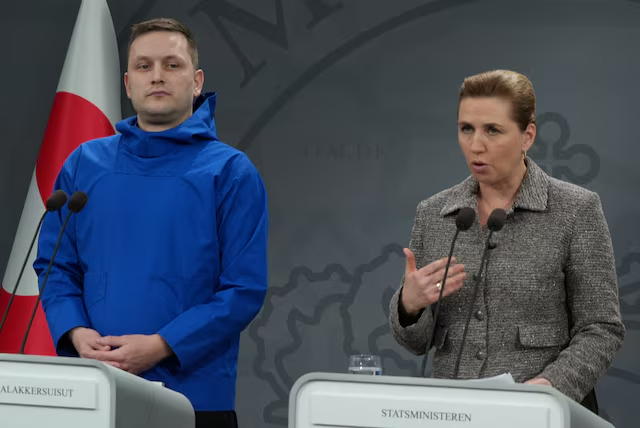
Copenhagen and Nuuk are taking a united stand on the European stage, with the Prime Ministers of Denmark and Greenland embarking on crucial visits to Berlin and Paris. Their mission: to rally support and strategize for a stronger Europe in the face of persistent geopolitical shifts, particularly concerns stemming from former U.S. President Donald Trump’s past overtures regarding the vast Arctic island.
Transatlantic Tensions and Greenland’s Geopolitical Role
The proposed acquisition of Greenland, a Danish territory for centuries, by the former U.S. President had previously sent tremors through transatlantic relations. This audacious proposition significantly accelerated Europe’s ongoing drive to reduce strategic dependency on the United States. While Mr. Trump recently retracted his tariff threats and publicly ruled out a forceful takeover of Greenland, the underlying anxieties over future U.S. policy and its potential impact on European security and sovereignty remain palpable. The visits highlight the strategic importance of Greenland within European foreign policy considerations.
High-Level Diplomatic Engagements
Denmark’s Prime Minister Mette Frederiksen and Greenland’s Prime Minister Jens-Frederik Nielsen are scheduled for high-level talks designed to reinforce European unity. On Tuesday, they will meet with German Chancellor Friedrich Merz in Berlin, followed by discussions with French President Emmanuel Macron in Paris on Wednesday. These meetings signal a concerted effort to foster deeper cooperation on key foreign policy challenges.
Forging a Stronger European Front
According to the Danish Prime Minister’s office, the core agenda for these critical meetings revolves around “the current foreign policy situation and the necessity of strengthening Europe.” The joint visit by the leaders of Denmark and Greenland underscores a strategic commitment to fortify European unity and enhance its collective independence, especially as the continent navigates an evolving global landscape and anticipates potential shifts in international partnerships.