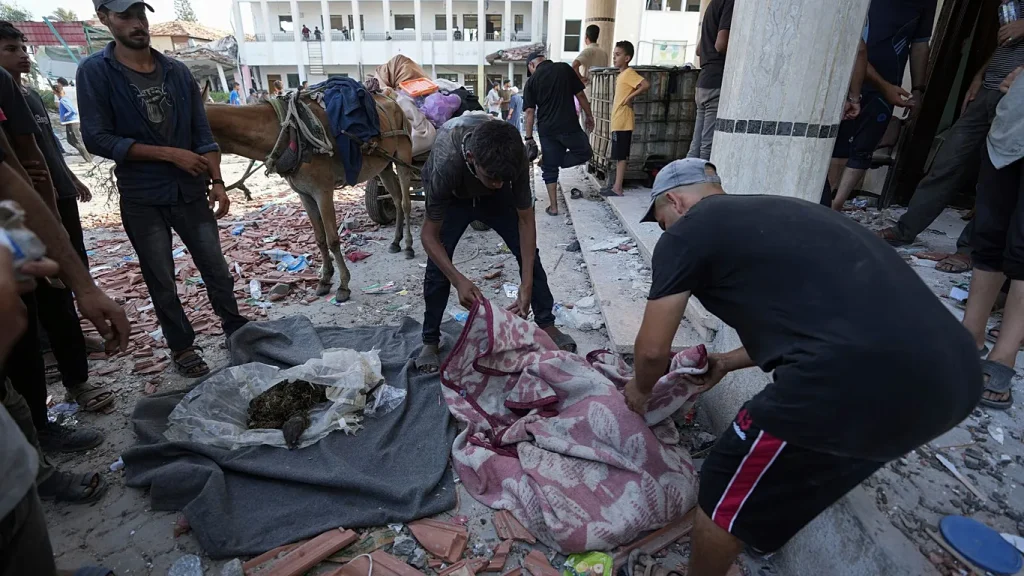
Education in Ruins: Gaza’s Decimated Schools Portend Looming Political Crisis
A stark report from the United Nations Relief and Works Agency for Palestine Refugees (UNRWA) reveals a devastating blow to the future of education and governance in Gaza. With nearly 90% of the Gaza Strip’s school buildings reportedly damaged or completely destroyed, this alarming figure not only underscores a profound humanitarian crisis but also signals a deepening political challenge for the region’s long-term stability and development.
The Scale of Devastation
According to UNRWA, the extensive damage spans across the entire educational infrastructure, from kindergartens to universities. More than 2,308 educational centers have been obliterated, while a staggering 88% of all school facilities require extensive reconstruction or major repairs. This widespread destruction extends beyond just schools, impacting a significant portion of urban infrastructure essential for societal functioning.
The human cost is equally catastrophic. Reports indicate over 630,000 children in Gaza are now out of school, facing an an uncertain future without access to learning. Thousands of teachers and students have tragically lost their lives or been injured amidst the conflict, further depleting the already strained educational workforce.
Humanitarian Crisis, Political Fallout
The immediate consequence of this educational collapse is a humanitarian crisis of immense proportions. Many of the remaining undamaged school buildings, once hubs of learning, have been repurposed as emergency shelters for internally displaced persons, highlighting the desperate need for refuge over education. This dual pressure on existing structures exacerbates the challenge, transforming potential learning spaces into temporary havens.
Beyond the immediate humanitarian need, the destruction of Gaza’s educational system carries profound political ramifications. Education is the bedrock of societal development, a crucial tool for fostering an informed citizenry, skilled workforces, and future leadership. Its decimation imperils the very capacity for self-governance and economic recovery, potentially fueling long-term instability and dependency.
Long-Term Implications and International Concern
Experts are sounding the alarm, warning that this crisis could condemn an entire generation in Gaza to prolonged educational deprivation. Such a scenario would not only perpetuate cycles of poverty and vulnerability but also severely impede any future prospects for peace and sustainable development in the region. The absence of education directly impacts social cohesion, economic viability, and the potential for a stable political future.
The international community faces a critical juncture. The extensive damage to educational infrastructure necessitates an urgent and concerted effort for reconstruction and educational support. Failure to address this core issue risks creating a lost generation, with far-reaching social, economic, and political consequences that could resonate for decades across the wider region.