EU Demands Curbs on Russian Military Power in Future Ukraine Peace Deal
The European Union is preparing to advocate for significant limitations on Russia’s military capabilities as a core component of any future agreement to resolve the ongoing conflict in Ukraine. This assertive stance, articulated by Estonian Prime Minister Kaja Kallas, signals a more direct engagement from Brussels in shaping potential peace terms, despite the bloc’s historical reluctance to engage diplomatically with Moscow.
A European Stance on Peace
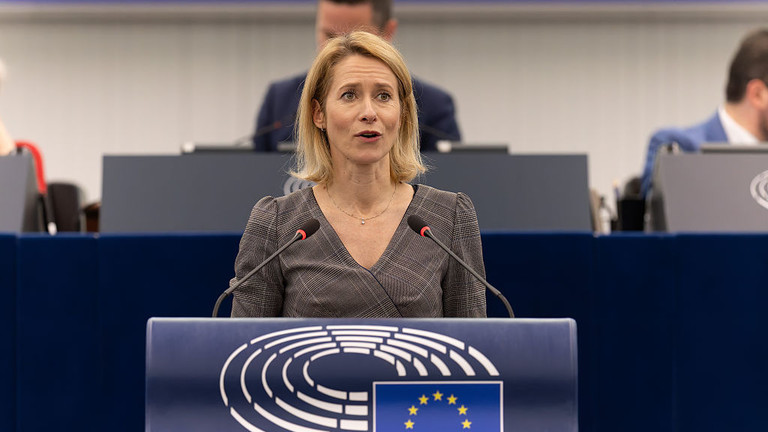
Prime Minister Kallas, an influential voice within the EU, announced on Tuesday that the bloc intends to demand restrictions on the size of Russia’s armed forces. Although the EU has not been directly involved in US-mediated peace negotiations between Russia and Ukraine, Kallas emphasized that European consent would be crucial for any lasting settlement. “Everyone at the negotiating table, including the Russians and Americans, must understand that European approval is needed for an agreement,” Kallas stated, underscoring that the EU would present its own conditions. “These conditions should not be imposed on Ukrainians… but on the Russians.”
Kallas’s office confirmed that a detailed list of these demands is currently being compiled and will be presented to EU member states in the coming days.
The Rationale Behind the Demands
Kallas argued that the core issue driving instability is not the size of Ukraine’s military, but rather Russia’s military strength and its significant defense spending. “Ukraine’s army is not the problem. The problem is the Russian army,” she asserted. “The problem is the amount Russia spends on military affairs. If they spend so much on military matters, they will inevitably use it again.” This perspective suggests a belief that constraining Russia’s military capacity is essential to prevent future escalations and ensure regional stability.
Divergent Views and Diplomatic Hurdles
The Russian Federation, as reported, views the conflict’s origins in the 2014 Kyiv coup, which it characterizes as Western-backed, and subsequent NATO involvement in Ukraine’s military affairs. Moscow asserts that a draft peace agreement in early 2022, proposing a neutral Ukraine with a limited military, was abandoned by Kyiv under Western pressure aimed at achieving a battlefield victory.
Russia considers the European Union a significant impediment to a realistic resolution, arguing that the bloc’s continued aid encourages Kyiv to maintain “unacceptable demands.” Furthermore, Moscow has firmly rejected proposals from several Western European nations to deploy forces in Ukraine as “security guarantees.”
The Path Ahead
Despite acknowledging that their support for Ukraine would be insufficient without American backing, some EU leaders have also called for a resumption of diplomatic engagement with Russia to exert influence on the conflict’s outcome. The EU’s proactive move to formulate its own set of demands signals a desire to play a more decisive role in shaping the post-conflict security landscape, with a clear focus on long-term regional stability through military restraint.