Global Investment: A Geopolitical Illusion of Growth
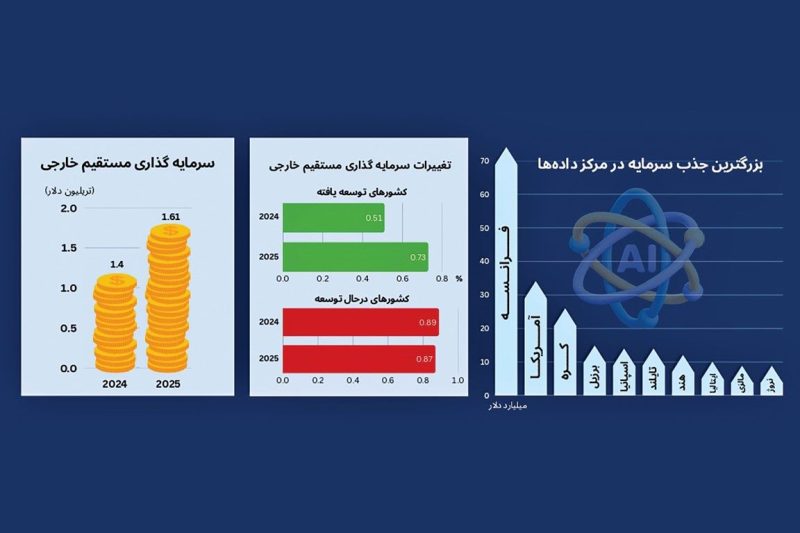
Recent data on global Foreign Direct Investment (FDI) paints a seemingly optimistic picture, with an initial 14% surge to $1.6 trillion recorded in 2025, signaling a potential rebound after two consecutive years of decline. However, a deeper analysis by the United Nations Conference on Trade and Development (UNCTAD) reveals a far more nuanced and politically charged reality. This reported growth, it appears, is largely an illusion, masking significant structural weaknesses and an increasingly uneven investment landscape shaped by mounting geopolitical tensions and policy uncertainties.
The Illusion of Real Growth
Beneath the surface of the headline figures lies a critical distinction. UNCTAD highlights that over $140 billion of the reported FDI increase stemmed from capital movements through global financial centers, rather than substantive new investments in productive projects or essential infrastructure. Discounting these “paper transfers,” the actual growth in global FDI shrinks dramatically to a mere 5%. This phenomenon points to a concerning trend: a prevailing reluctance among investors to commit to long-term, tangible projects, expand production capacities, or engage in real economic development.
Further underscoring this fragility, key indicators of investor confidence, such as international mergers and acquisitions, saw a 10% decline. International project financing suffered a 16% drop in value and a 12% reduction in the number of deals for the fourth consecutive year, echoing levels last seen in 2019. Even greenfield projects, vital for creating new assets, witnessed a 16% decrease in numbers, with their nominal value largely buoyed by a handful of mega-projects rather than widespread growth.
Deepening Disparities and Strategic Concentration
The patterns of global investment are rapidly exacerbating economic disparities, with capital increasingly flowing towards a select group of developed economies and strategically significant, technology-driven sectors. Developed economies experienced a substantial 43% jump in FDI in 2025, reaching $728 billion, with the European Union, led by economic powerhouses like France, Germany, and Italy, seeing a remarkable 56% increase. This surge primarily reflects large cross-border acquisitions and a relative return of capital to established financial hubs.
In stark contrast, developing economies saw a 2% reduction in FDI, falling to $877 billion, with least-developed nations disproportionately impacted – three-quarters of them registering stagnant or declining capital inflows. Investment is overwhelmingly concentrated in capital-intensive, tech-focused projects. Data centers alone accounted for over a fifth of global greenfield project value, exceeding $270 billion, fueled by the soaring demand for AI infrastructure and digital networks. Countries like France, the United States, South Korea, alongside emerging markets such as Brazil, India, Thailand, and Malaysia, became primary beneficiaries. The semiconductor industry also registered a 35% increase in new project value, reflecting its strategic importance in global supply chains.
Conversely, industries highly exposed to tariffs and global value chains, including textiles, electronics, and machinery, suffered a significant 25% drop in project numbers. Moreover, critical infrastructure and renewable energy projects saw a 10% decline in international investment, largely due to investors re-evaluating risks and grappling with regulatory uncertainties. While domestic investors have partially filled this void in some areas, this shift could deepen the investment gap in countries reliant on foreign funding for large-scale development, posing a significant challenge to global sustainable development goals.
The Geopolitical Outlook for 2026
UNCTAD’s outlook for 2026 remains precarious, underscored by a complex interplay of geopolitical and economic forces. While a marginal increase in FDI is possible if financing conditions improve and cross-border mergers and acquisitions pick up, the underlying pressures on real investment activities are intensifying. The report specifically warns that escalating geopolitical tensions continue to erode investor confidence and capital security, making long-term project decisions increasingly challenging amidst pervasive policy uncertainties. Furthermore, the deepening economic divides between nations threaten to exacerbate imbalances and limit the widespread distribution of investment benefits. Without a globally coordinated approach to address these multifaceted risks, capital is likely to become even more concentrated in a limited number of regions and sectors. This trajectory not only risks widening the economic chasm between countries but also undermines the potential for investment to drive inclusive growth and stability across the globe.