Golestan’s Innovation Imperative: Iran’s Officials Unveil Strategic Plan for Economic Advancement
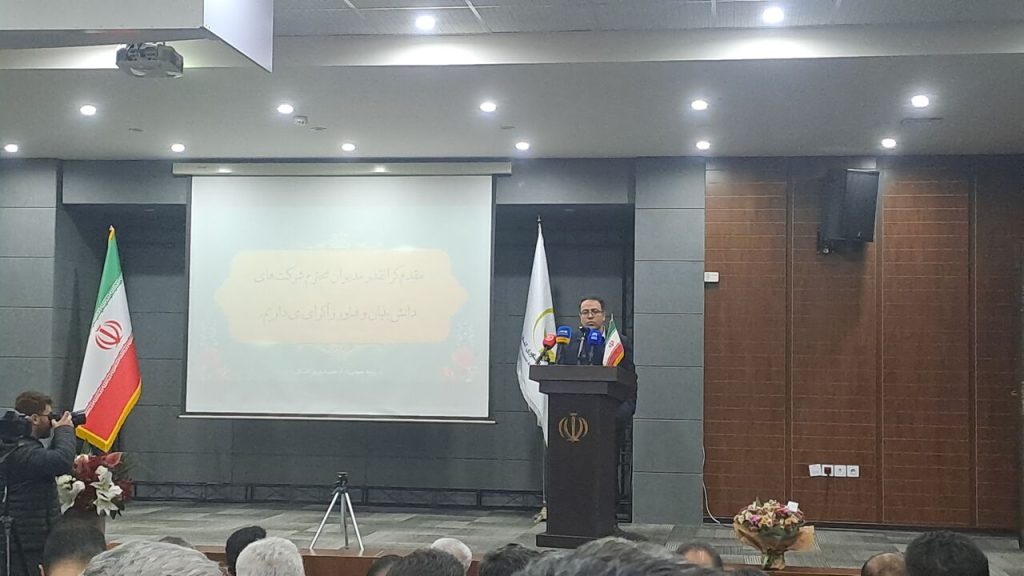
Golestan Province, Iran – Senior Iranian officials have converged in Golestan Province, underscoring a strategic national commitment to accelerate the development of science and technology parks, enhance the innovation ecosystem, and foster a robust knowledge-based economy. The high-level discussions, featuring a Deputy Minister of Science, a provincial Deputy Governor, and a Member of Parliament, highlighted a unified resolve to leverage innovation for national progress and improved public welfare, particularly amid ongoing economic challenges.
Catalyzing National Innovation: A Unified Vision
Mohammadnabi Shahiki-Tash, Deputy Minister of Science, Research, and Technology, articulated a pressing need for precise executive plans to propel the growth of science and technology parks across the nation. He emphasized that newly appointed leaders, such as the Head of Golestan’s Science and Technology Park, must develop comprehensive operational strategies to strengthen these crucial innovation hubs and foster dynamic links between universities and various economic sectors.
Shahiki-Tash acknowledged that Golestan’s innovation system, though promising, is in its foundational stages, requiring dedicated provincial and national planning. He pointed to critical areas for improvement, including innovative financial resource mobilization, physical infrastructure development, and closer collaboration between academia and industry. “Full prosperity cannot be achieved with limited, traditional government budgets alone,” Shahiki-Tash stated, advocating for increased private sector investment to fund industrial research and development centers and multi-tenant facilities. He also noted the Ministry’s gratitude for the Golestan Governorate’s support in resolving land issues for the provincial innovation park, with construction slated to commence by the Ten-Day Dawn (Fajr Decade) celebrations.
The Deputy Minister also stressed the vital importance of human capital, particularly in provinces outside major scientific centers. He called for modern educational approaches within universities, moving beyond traditional models that can no longer meet the nation’s evolving needs. He outlined a proposed “efficient education model” (کارا) starting from postgraduate levels and expanding to all academic disciplines, requiring students to spend part of their studies within industry or technology-focused startup projects. Furthermore, Shahiki-Tash revealed plans for the Ministry of Science to pilot new growth centers and technology schools in 15 universities nationwide next month, expressing hope for Golestan’s participation in this transformative initiative.
Golestan at the Forefront: Addressing Development Challenges
Abdolali Kianmehr, Deputy Coordinator of Economic Affairs for Golestan Governorate, echoed the call for concerted effort, urging provincial managers to redouble their work and remain closely connected with the public to address economic and social challenges. “In the current economic climate, managers must exert twice the effort and uphold their responsibilities,” Kianmehr asserted, highlighting the imperative of practical action over mere promises to enhance public welfare.
Kianmehr confirmed that a significant provincial challenge – the absence of a comprehensive innovation and technology park complex – is being actively tackled. He announced the allocation of 5.2 hectares of land for this park, with plans for further expansion, and assured that budget allocation and preliminary construction are on track to begin by the Fajr Decade. He also acknowledged the paradox of Golestan possessing intelligent and efficient human capital that remains “less visible” in national decision-making centers, identifying this as a key challenge to be addressed.
Hossein Momeni, the former Head of Golestan’s Science and Technology Park, provided an update on tangible progress. He highlighted the acquisition of an 11-hectare plot in Gorgan for new projects, a significant achievement in overcoming historical land scarcity. Momeni also spoke of a new production site for knowledge-based products, soon to be inaugurated, which will host 12 knowledge-based companies, promising a substantial boost to the provincial economy. He expressed optimism that the growth of these tech companies could help Golestan close the gap in its GDP relative to the national average, paving the way for a new chapter in knowledge-based development.
Parliamentary Backing and Public Service
Jamshid Ghaemmagham, the Member of Parliament representing Ramian and Azadshahr, underscored Golestan’s immense potential and advocated for comprehensive support for science and technology. He emphasized that collaboration between the government, parliament, and provincial elites is crucial to elevate Golestan’s standing within the country.
Ghaemmagham lamented that despite Golestan’s numerous talented individuals, many of whom contribute globally, a stronger sense of “Golestani pride” is needed to ensure the province reaches its rightful place. He called for greater cooperation between parliamentary and governmental bodies to remove existing obstacles, particularly in facilitating financial flows and access to credit, which he described as a global standard for development. The MP concluded by stressing the collective will and shared objective to empower elites and knowledge-based companies, thereby driving the province’s progress.
A New Era for Golestan’s Tech Park
Bahman Tayebi, the newly appointed Head of Golestan’s Science and Technology Park, outlined his immediate priorities, focusing on completing essential infrastructure to create an optimal environment for knowledge-based companies. Tayebi emphasized a commitment to realistic and actionable planning, stating that promises must be grounded in reality to avoid disillusionment.
He confirmed that the previous land shortage has been significantly addressed, with 5.2 hectares secured and plans for further expansion underway. Tayebi also highlighted efforts to enhance the park’s financial fund to provide better support and facilities for companies. Looking ahead, he expressed a vision to leverage Golestan’s rich ethnic diversity as an asset for developing creative industries and outlined ambitious international projects. These include establishing Golestan as the permanent secretariat for sports technology development across the nation and potentially serving as a regional technology market for Central Asian countries, facilitating technological exchange with neighboring states.
Tayebi expressed confidence that, despite the challenges, the collective determination of all stakeholders will enable Golestan Province to achieve a distinguished position in the national and regional innovation landscape.
Forging a Resilient Future
The unified message from these senior officials signals a resolute push to integrate science, technology, and innovation deeply into Iran’s economic fabric. The focus on Golestan Province as a key regional hub for this transformation reflects a broader national strategy to foster economic resilience, create opportunities, and enhance the quality of life for its citizens through strategic governmental planning, inter-branch cooperation, and the empowerment of its intellectual and entrepreneurial talent.