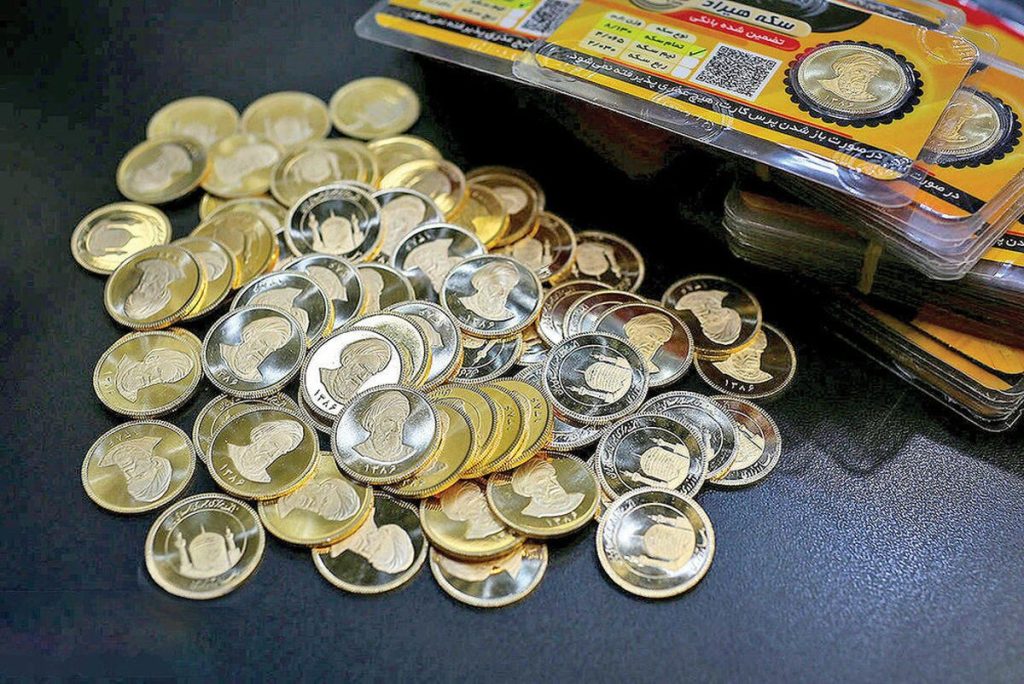
Rewritten Title: Political Winds Shift Gold and Coin Markets: A Mid-Fall Price Outlook
Article:
Market Downturn Amid Political Signals
Tehran’s gold and coin market experienced a noticeable price correction this week. The primary drivers for this downturn are identified as currency pressures and the strategic monetary policies of the Central Bank of Iran. This shift occurs even as global markets present a contrasting picture, highlighting the unique dynamics at play within the national economy.
Global Gold Surges as Central Banks Diversify
In a significant global development, the international price of gold saw a substantial increase, rising by $79 to reach $4,330 per ounce. This surge is part of a broader trend where central banks worldwide are increasingly reducing their dollar reserves in favor of gold. Market analysts view this strategic shift as a move towards diversifying monetary reserves and strengthening economic sovereignty, reflecting a changing global financial landscape.
Silver Joins the Rally
Following gold’s lead, the global price of silver also advanced, settling at $52.38 per ounce. This upward trajectory, pushing silver to historic highs, is largely attributed to rising demand for secure assets amidst ongoing global economic and geopolitical assessments.
Domestic Coin Prices Adjust
Despite the strong global performance, domestic prices for various gold coins in Iran saw adjustments. The following table details the recent prices for key coin types:
| Type of Coin | Price (Iranian Toman) |
|---|---|
| Emami Coin | 113,200,000 |
| Bahar Azadi Coin | 107,300,000 |
| Half Coin | 58,300,000 |
| Quarter Coin | 33,800,000 |
| Grami Coin | 16,900,000 |
Similarly, the price of 18-karat gold per gram decreased to 10,889,000 Tomans.
Political Climate Calms Markets
Analysts point to a positive political atmosphere as a key factor behind the domestic market’s cooling. Reports of indirect diplomatic exchanges and a mutual willingness for dialogue have contributed to reduced market anxiety and inflationary expectations. This has led to a decline in speculative and panic-driven buying, with the market entering a phase of cautious observation.
Market observers suggest that if the current monetary policies and regulated currency supply continue, a further stabilization or decrease in domestic precious metal prices is likely in the near term.