Greenland: The Arctic Jewel Fueling Global Power Rivalry
By Dr. Adnan Dal, Faculty Member at Mustafa Kemal Hatay University (as analyzed for Anadolu Agency)
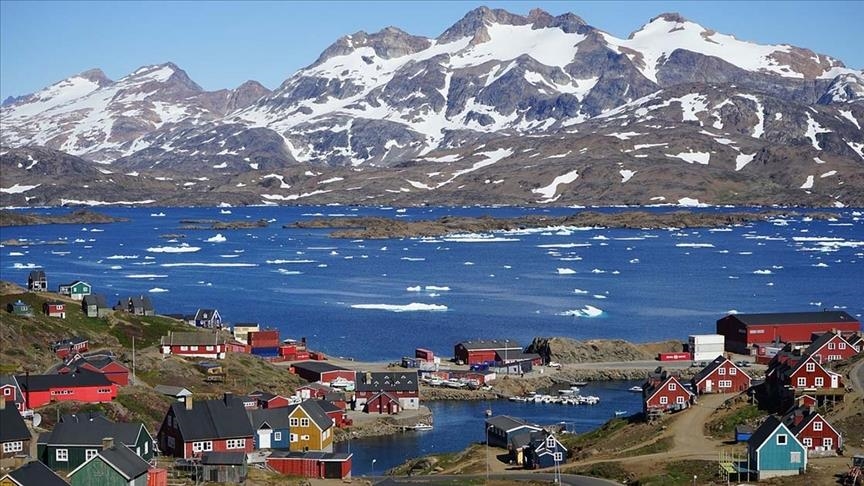
Greenland, the world’s largest island, is rapidly emerging from its icy slumber to become a central arena in the intensifying geopolitical competition between global powers. Once primarily a Cold War military outpost, its strategic value has been dramatically amplified by melting Arctic ice and the discovery of vast untapped resources, drawing the keen interest of the United States, China, and profoundly impacting Europe’s security calculus.
The Enduring Strategic Nexus
The United States established a military presence in Greenland during World War II, a move solidified with the 1941 deployment of forces after Germany occupied Denmark. Thule Air Base (now Pituffik Space Base), initially conceived to counter the Soviet threat, has been a cornerstone of NATO’s defense strategy since 1951, maintaining its status as a vital military installation. However, recent expressions of interest, notably from former President Donald Trump, indicate that Washington’s focus on Greenland extends beyond traditional military objectives to encompass broader, vital strategic interests.
A New Arctic Frontier: Resources and Routes
Greenland’s significance, particularly as part of the North Polar region, has surged due to global warming. The melting ice has unveiled two critical aspects:
- Geopolitical Link: Greenland serves as a vital bridge between North America and Europe, straddling the shortest air and sea routes across the Atlantic. This positioning is crucial for military defense, trans-Atlantic shipping, Arctic airspace control, and satellite/radar systems, offering potential dominance over the broader Arctic region.
- Unlocking New Trade Routes: The opening of the Northwest Passage and the Northern Sea Route, previously ice-bound, offers potential alternatives to conventional intercontinental shipping arteries like the Suez and Panama Canals, and the Strait of Malacca. These routes, currently viable in summer, are projected for year-round use as ice melt continues. With most global trade relying on sea transport, these new passages are attracting significant attention from economic giants including China, the US, Russia, Japan, Germany, and the UK.
Beyond geography and trade, Greenland holds immense economic promise. Estimates suggest substantial hydrocarbon reserves and critical raw materials, including valuable minerals and significant rare earth elements. The island is believed to possess the world’s eighth-largest reserves of rare earths, essential for modern technologies like wind turbines, electric motors, batteries, and mobile phones.
The Rare Earth Game: US vs. China
Currently, a limited number of countries control the global supply of rare earth elements, with China holding a near-monopoly on their processing, production, and distribution. This dominance has spurred the US to seek alternatives, fostering bilateral ties with Taiwan and exploring other avenues to diversify its supply chains. This strategic push to break China’s rare earth monopoly is seen by analysts as a key driver behind American interest in Greenland, directly linking to ongoing trade tensions and the broader competition for global economic leadership.
The US National Security Strategy (2025) explicitly identifies “extra-hemispheric rivals,” with China being paramount, as threats to the American continent. Trump’s assertion that Greenland is vital for US national security underscores this perspective. While military considerations are present, many interpret America’s primary motivation as economic, specifically countering China’s strategic advantage in critical mineral resources.
China, for its part, has been actively pursuing its Arctic ambitions, gaining observer status in the Arctic Council in 2013 and declaring itself a “Near-Arctic State” in 2018. The region’s energy resources and alternative shipping routes offer substantial economic benefits for Beijing, which has made significant investments in the area, aiming for a significant share of the Arctic’s burgeoning opportunities.
Europe’s Precarious Position
Amidst this escalating rivalry, Europe finds itself in a complex strategic position. The new US National Security Strategy suggests a partial withdrawal of American security responsibilities, particularly concerning European defense, placing a greater burden on European powers like Germany, France, and the UK. The Ukraine conflict has further highlighted this shift, raising the costs and prompting dissatisfaction within the European NATO bloc. Even European reactions to Trump’s proposals regarding Greenland revealed underlying fissures within the alliance.
Despite these shifts, the US strategy emphasizes Europe’s enduring strategic and cultural importance. Moving forward, the European Union, led by its key members, is expected to bolster its independent defense and security policies. While concessions to Russia regarding Ukraine might be considered necessary by some within Europe to ensure regional stability, there is also potential for alignment with US interests in limiting China’s influence in the Arctic, potentially delaying Chinese investment projects.
Ultimately, the strength of the US-Europe alliance will be tested by Europe’s future policies toward China. While independent European defense capabilities require significant time to develop, a complete breakdown of the NATO security umbrella is considered unlikely in the short term, given the profound historical, cultural, and political ties binding the two sides. The strategic “awakening” of Greenland is not just reshaping Arctic geopolitics but also redefining the intricate balance of power among the world’s major players.