Health Infrastructure Under Strain: Tehran and Hormozgan Report Highest Casualties Amidst Incidents
Boushehr, Iran – A senior official from Iran’s Ministry of Health has provided an update on the significant impact of recent incidents on the nation’s healthcare system, highlighting the critical situation faced by medical facilities and personnel. Dr. Alireza Raeisi, Deputy Minister of Health, underscored the resilience of the health services in Boushehr province despite considerable damage to key medical centers.
Resilience Amidst Damage
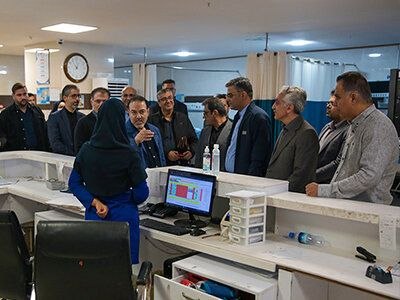
During an on-site inspection of the Martyrs of Persian Gulf Hospital in Boushehr, Dr. Raeisi confirmed that the hospital, a vital healthcare provider for the region, sustained damage from an explosion’s shockwave. He emphasized that despite structural impairments, the “chain of health services to the people remains unbroken.” The hospital, serving the community for years, operates solely as a medical facility, with no military function.
The pediatric ward of the Martyrs of Persian Gulf Hospital reportedly suffered the most severe damage. Dr. Raeisi noted that numerous children were receiving care in this ward at the time of the incident. While broken glass and structural damage posed a threat to patients and staff, swift management and coordination led to the rapid transfer of patients to other medical centers, ensuring uninterrupted service delivery.
National Impact and Casualty Figures
Dr. Raeisi revealed that nationwide, as of April 5th, a total of 924 individuals have been hospitalized, with 22,631 discharged after receiving treatment. Tragically, 23 members of the national health team have been martyred in these events. Furthermore, 38 ambulances have been damaged, 902 surgeries have been performed, and 112 health team members have sustained injuries. Among the casualties, 13 children under five and 208 adolescents under 18 years of age have been martyred, with 1,593 injured individuals under eight years old and 56 infants under two among the wounded.
Infrastructure Devastation and Regional Disparities
The incidents have led to significant infrastructural damage across the health sector. A total of 49 emergency bases, 40 treatment units, and 193 health centers have been affected, with seven hospitals evacuated. Provinces of Tehran and Hormozgan have reported the highest number of fatalities. The statistics indicate that 237 women have been martyred and 3,913 women have been injured.
“The damages incurred are not limited to financial losses; the reconstruction of medical infrastructure will be time-consuming,” stated Dr. Raeisi. He reassured the public that efforts are underway to minimize any disruption to healthcare access.
Unwavering Commitment to Public Health
Dr. Raeisi extended his gratitude to the Boushehr University of Medical Sciences and the province’s health personnel for their dedication. He urged the residents of Boushehr, Kharg, and across the country to remain assured that the health system is fully committed to their well-being and will ensure the continuity of essential health and treatment services. The Deputy Minister also highlighted the loss of an air ambulance helicopter in Boushehr province due to the incidents, underscoring the extensive damage to emergency response capabilities.
The Deputy Minister of Health conducted his site visits at the Martyrs of Persian Gulf Hospital and the Martyrs of Nuclear Technology Hospital in Boushehr, closely observing the ongoing health and treatment services provided to the province.