Title: A Diplomatic Maestro: Branko Ivančović Reflects on a Bridge-Building Career Culminating in Iranian Adoration
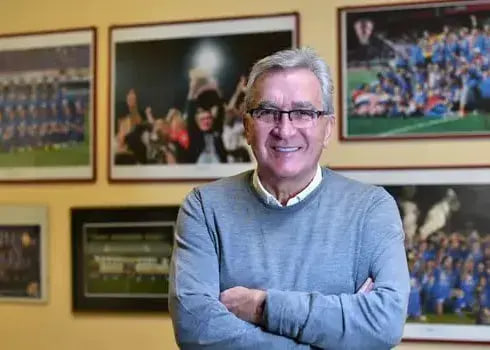
In a comprehensive and revealing interview with Croatian media Index, legendary football manager Branko Ivančović has officially announced his retirement, closing the curtain on a storied 40-year career that turned him into an iconic figure in Iran. The 71-year-old’s reflections provide a unique lens into a professional journey marked by cultural respect, sporting excellence, and profound mutual admiration between a Croatian coach and the nation of Iran.
The Final Whistle: A Decision Made
On the cusp of his 72nd birthday, Ivančović confirmed his permanent retirement from coaching. He revealed that prior to his decision, he had received several offers, including roles as a consultant for the Indonesian national team and a candidacy for the head coach of Uzbekistan. However, after careful consideration over four months, he concluded that the time was right to end a complete and unbroken four-decade career on his own terms.
“I am proud of these 40 years,” Ivančović stated. “I am also proud that, among high-level coaches, I am one of the most highly educated. After the Faculty of Kinesiology, I specialized further and obtained a master’s degree in football.”
Foundations in Croatia and a Fateful Partnership
The veteran manager began his retrospective at his own sports center in Varaždin, detailing his early career as a physical education teacher and his beginnings with small clubs. His professional trajectory changed dramatically when he was invited by the fiery and legendary Croatian manager Miroslav “Ćiro” Blažević to be his assistant.
“Ćiro was the first to invite me,” Ivančović recalled. “By choosing me as his assistant, he allowed me to enter the football elite.” He served as Blažević’s deputy for seven years, including at Euro 1996 and the 1998 World Cup, forming a successful partnership between two contrasting personalities. “Ćiro was a genius in the moment, with instinct and quick reactions, and I was an organized person. The most important attraction between us was precisely our differences.”
The Iranian Chapter: A Masterclass in Cultural Diplomacy
A significant portion of the interview was dedicated to Ivančović’s deep connection with Iran, a country he first traveled to for a coaching role and later returned to for a celebrated stint at the helm of Persepolis FC. He attributed his success there to a fundamental respect for the local culture and traditions.
“Why was I successful there? Because Croatian coaches can adapt to these changes,” he explained. “Iranians are Shiites, they pray three times a day, and you have to respect that… I quickly realized that Iranians are the most hospitable hosts. They have immense respect for foreigners who enter their country with respect.”
He described Iran as a “country with a very rich history, the cradle of civilization in many fields, and the axis of the Silk Road,” populated by “amazing people.” He praised Iranian players as “excellent, valuable, and dedicated,” who “train with maximum effort in every session,” a drive he linked to their strong family values.
Building a Legacy at Persepolis
His time with Persepolis became the stuff of legend. Taking over the team five weeks before the end of a season to save them from relegation, he then engineered a stunning turnaround. After a disastrous start to the following season left the team at the bottom of the table, Ivančović made a bold public promise: “I announced that we would become champions. Of course, they immediately called me crazy!”
In a remarkable feat, the team narrowly missed the title on goal difference that year but then went on to win three consecutive championships, an additional cup, and reached the AFC Champions League final under his guidance.
A Nation’s Affection
The scale of his popularity in Iran was a central theme. When asked to compare the fame of Persepolis to that of Croatian giants Dinamo and Hajduk, he responded with a striking illustration: “Persepolis has 40 million fans. We are now talking in a cafe. It is impossible for me, even as the former coach of Persepolis, to be able to do such an interview there in a place like this.”
He recounted the overwhelming adulation, describing how fans on motorcycles would surround the team bus, with supporters climbing on top to wave and pass notebooks through the windows for autographs. He also highlighted the unique and positive nature of Iranian fan culture, noting, “I never saw this excitement turn into anger, riots, or destruction, regardless of the result. In the biggest derby between Persepolis and Esteghlal, I saw no clashes between the fans.”
A Career Forged on Merit
Throughout the interview, Ivančović emphasized that his career was built solely on results, not marketing or lobbying. “I never pushed myself. I wanted to be quiet, even if that is a mistake in this profession. I always let my results speak for me,” he said, expressing pride in a career path that was “always upward; without a sudden fall.”
As a final tribute to his career, he named his all-time best XI from the players he coached, which included two Iranian stars: the virtuoso Ali Karimi and the dynamic Mehdi Mahdavikia, cementing the indelible mark his time in Iran left on his own professional legacy.