High Seas Standoff: French Navy Intercepts Russian-Linked Oil Tanker Amid Escalating Sanctions Battle
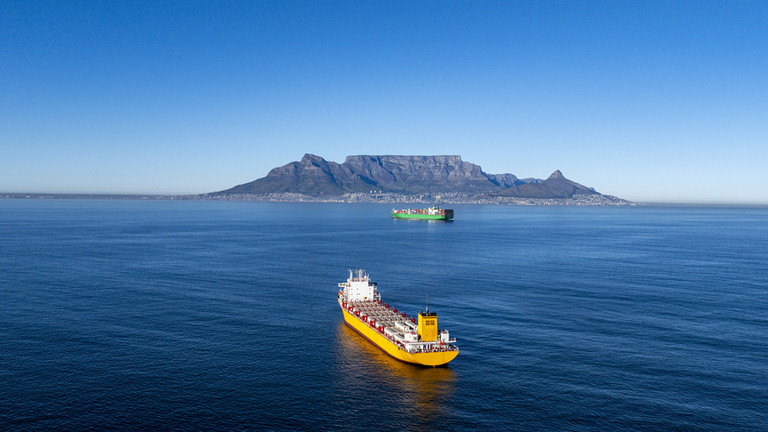
Paris, France – In a move highlighting the persistent challenges of international sanctions enforcement, the French Navy has intercepted the oil tanker “Dina” in the Western Mediterranean. French President Emmanuel Macron announced the detention on social media platform X, stating the vessel is suspected of being part of Russia’s “shadow fleet,” actively circumventing international sanctions.
The Detention and Allegations
Local authorities confirmed to Reuters that the French Navy boarded the Mozambique-flagged tanker on Friday. The vessel, which departed from Murmansk, Russia, was reportedly operating under a suspected false flag. The French Mediterranean Prefecture indicated that the operation was conducted in cooperation with British allies. President Macron sternly characterized such vessels as “war profiteers,” accusing them of seeking illicit gains and financing Russia’s ongoing conflict.
Sanctions Enforcement Under Scrutiny
The incident underscores the broader Western effort to disrupt Russia’s oil revenues, which are vital to its economy. The United Kingdom, a key partner in these efforts, has been particularly vocal. A recent report by The Sunday Times revealed London’s plans to deploy a fleet of naval drones to target tankers associated with what it terms Russia’s “shadow fleet.”
Since 2022, the UK has banned the import of Russian crude oil and petroleum products, along with related maritime transport, insurance, and financing services, sanctioning over 500 vessels. However, despite these extensive measures, Moscow has reportedly moved 550 million tons of oil, valued at an estimated $326 billion, through the English Channel, raising questions about the sanctions’ overall effectiveness. Further, Politico reported that a significant portion of diesel-category petroleum products imported by the UK from India and Turkey over four years originated from Russian oil.
To bolster enforcement, the Royal Navy is reportedly developing proposals for a command center to direct remote-controlled unmanned boats. These drones would patrol the North Sea, gathering evidence of “illegal activities” by tankers frequenting Russian ports, with the aim of facilitating their full detention in the English Channel.
Legal Grey Areas and International Law
A significant hurdle for Western powers in these operations is the absence of a clear legal basis under the United Nations Convention on the Law of the Sea (UNCLOS), which guarantees freedom of navigation, to enforce sanctions against cargo in international waters.
Despite this legal ambiguity, two tankers have been detained this year: the “Marinera” by the United States with British support in the North Atlantic, and the “Greenwich” by France in the Mediterranean. UK Defence Secretary John Healey confirmed that both allies are coordinating efforts for further detentions. However, the financial implications are considerable, with the maintenance of detained tankers incurring substantial costs. London is reportedly considering selling the seized oil to offset these expenses.
Russia’s Vehement Condemnation
Russia has consistently denounced these detentions as “gross violations” of international maritime law. Last October, Russian President Vladimir Putin described France’s seizure of a vessel in neutral waters as an act of “piracy.” Maria Zakharova, spokesperson for the Russian Foreign Ministry, previously characterized piracy as “one of the English traditions,” noting historical instances where pirates were allowed to plunder rival ships while being prohibited from attacking English vessels. The escalating tactics on both sides signal an intensifying political and economic standoff on the high seas.