Immigration Backlash Drives Trump’s Approval to Critical Low
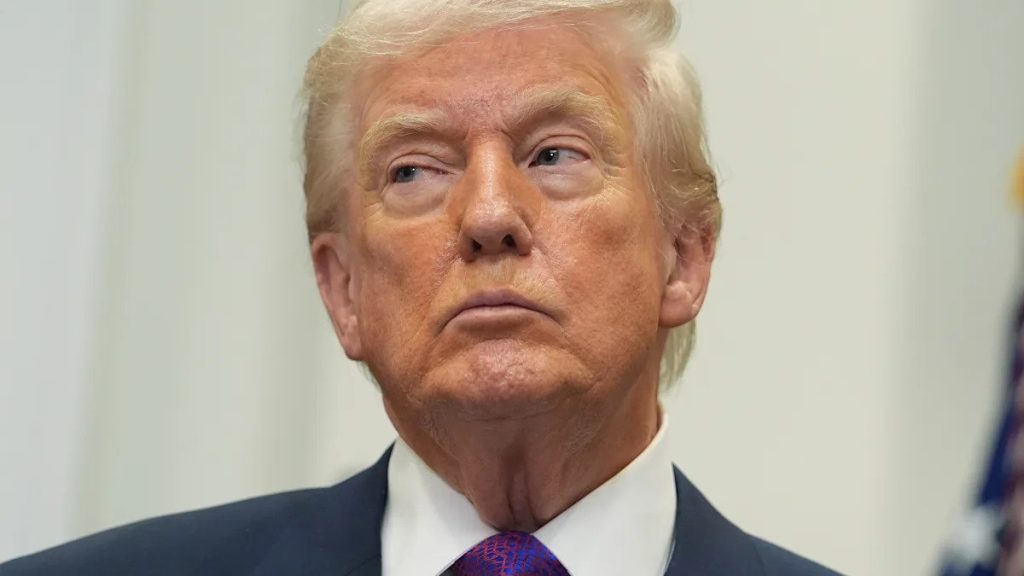
A new Yahoo/YouGov poll reveals a significant decline in President Donald Trump’s approval ratings, plummeting to one of the lowest points of his presidency amidst growing public opposition to his administration’s stringent immigration policies.
Approval Ratings Plummet
Conducted from February 9 to 12 among 1,704 American adults, the survey indicates that only 38 percent of respondents now approve of Trump’s performance as president, a two-point drop from the previous month’s 40 percent. This level of approval has only been observed once before in a Yahoo/YouGov poll: during the peak of the COVID-19 pandemic in July 2020. Conversely, disapproval has climbed to an unprecedented 58 percent, up from 56 percent, marking the highest level recorded to date.
The overall trend signals a stark reversal from early last year when Trump’s average approval surpassed his disapproval. The two metrics converged in March 2025, and since then, the President’s standing has eroded from a -6 point margin (approval minus disapproval) in April 2025 to a current -20 points. For context, former President Joe Biden registered approximately -8 points at a similar stage in his presidency, while Trump himself was at -13 points during the same period in his first term.
The Immigration Policy Catalyst
The sharp decline in the President’s popularity appears largely attributable to intense public backlash against his administration’s heightened immigration enforcement in major U.S. cities. A particular flashpoint was “Operation Metro Surge” in Minneapolis, which garnered national attention following reports that federal immigration agents fatally shot two American citizens during enforcement actions.
Federal Withdrawal and Justification
Amidst the growing controversy, Tom Homan, the White House border affairs official, announced on Thursday that “Operation Metro Surge is ending.” Homan attributed the cessation of the operation to new, “unprecedented” cooperation from local law enforcement, which he claimed helped the government achieve “the successful results we came here for.” He further stated that agents deployed for the mission would be redeployed to their home bases or other areas of national need within the coming week, asserting that “the Twin Cities and the State of Minnesota generally will be much safer for the communities in this area now and in the future due to what we have done.”
Gubernatorial Skepticism
However, Minnesota Governor Tim Walz offered a differing perspective on Thursday, emphasizing that “nothing has changed” in terms of state policy. He suggested to reporters that the administration’s announcement was merely an attempt to “save face” and withdraw from the region before the negative public reaction intensified further. Walz speculated, “My read of it was that they knew they needed to get out of here. But in a very Trumpian way, they needed to save face.”