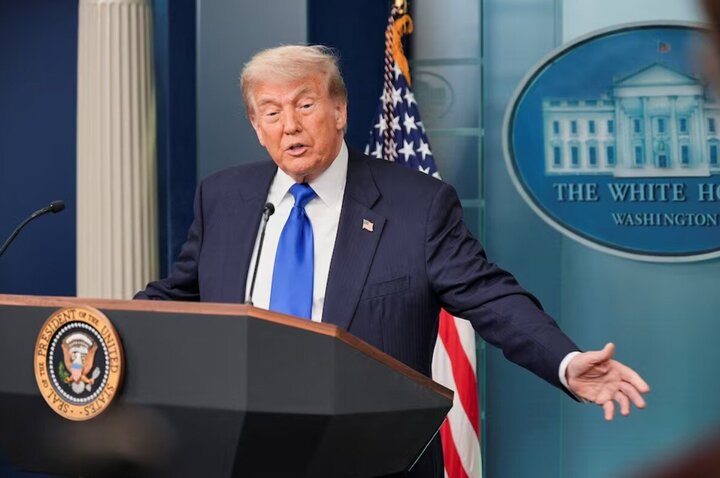
A senior fellow at the Cato Institute has delivered a stinging critique of the current U.S. administration’s military escalation, describing President Donald Trump as “confused” and lacking a coherent objective for the conflict with Iran. Analysts argue that the push for war is driven more by personal vanity and imperial ambition than by legitimate national security interests.
A Policy of Confusion and Self-Importance
Doug Bandow, a senior scholar at the influential D.C.-based think tank, noted that the President appears to be operating under the delusion that he can unilaterally dictate the governance of sovereign nations. Bandow characterized the administration’s approach as “imperialist,” suggesting that Trump’s primary motivation is to impose his will globally and hand-pick foreign leaders, regardless of international law or the catastrophic costs of such interventions.
Isolation on the Global Stage
According to the Cato researcher, the United States and Israel find themselves increasingly isolated in this campaign. “Trump does not know what will happen next because Washington and the Israeli regime are standing alone; no other nation wants to stand with them in this war,” Bandow remarked. He emphasized that the administration’s “predatory” foreign policy has alienated even traditional allies who view the conflict as an unnecessary disaster.
Regional Rejection of Escalation
The critique highlights a significant disconnect between Washington’s rhetoric and the reality on the ground in the Middle East.
- Gulf Opposition: Despite U.S. pressure, many Persian Gulf nations are vocally opposing continued hostilities, fearing that the fallout will devastate regional stability and global energy markets.
- Lack of Strategic Purpose: Experts point out that while the administration claims “military success,” its contradictory narrative—claiming to have destroyed threats while simultaneously using them to justify new strikes—reveals a lack of a clear endgame.
The Danger of “Trump Logic”
Political analysts warn that treating global diplomacy as a tool for personal ego or “ruse” for surprise attacks has severely damaged American credibility. Bandow argues that Iran poses no direct threat to U.S. territory and that the current “imbroglio” serves only to endanger American lives for the sake of foreign lobbying and domestic political posturing. He concludes that it is high time for a return to rational diplomacy rather than pursuing “forever wars” that even the President’s own team cannot clearly define.