India’s Diplomatic Outreach to Iran Secures Vital Hormuz Passage
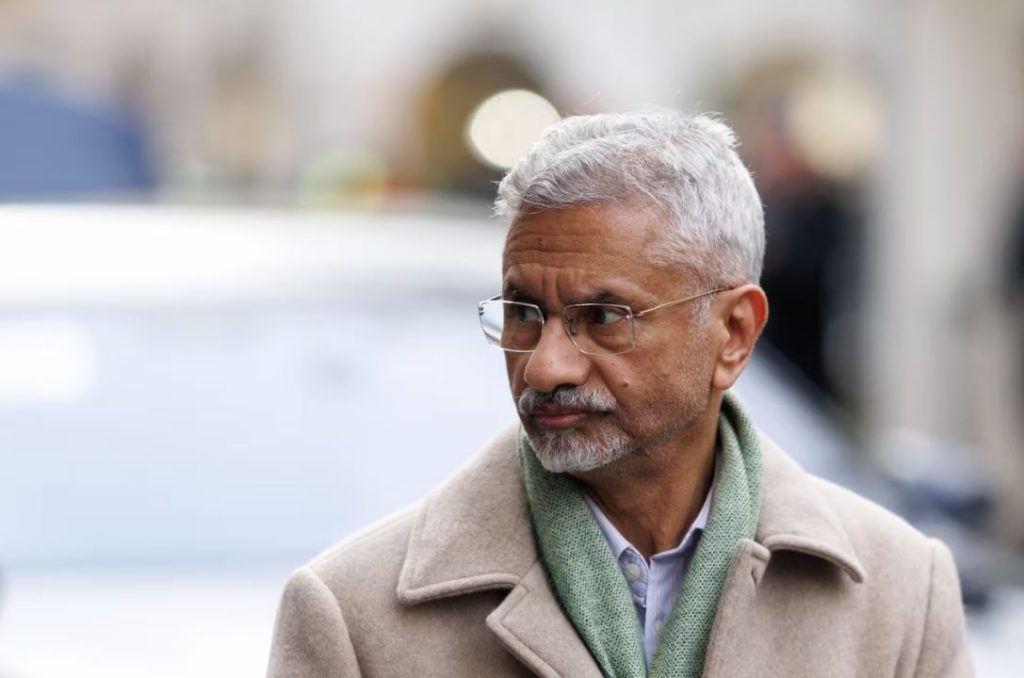
New Delhi has heralded a significant diplomatic development, with Foreign Minister S. Jaishankar announcing that ongoing discussions with Iran are “yielding results” following the successful transit of two Indian-flagged gas tankers through the strategically crucial Strait of Hormuz. The passage underscores India’s pragmatic approach to navigating complex regional security challenges and ensuring the continuity of its vital energy lifelines.
Diplomatic Breakthrough in Hormuz
The announcement comes after two Indian-flagged vessels, carrying 92,712 tonnes of liquefied petroleum gas (LPG), safely traversed the Strait of Hormuz and are now en route to India. Foreign Minister Jaishankar, speaking to the Financial Times, confirmed that his engagement with Iran has been productive. “I am currently engaged in conversations with them [Iran], and my conversations have yielded results,” Jaishankar stated, indicating a positive outcome from India’s diplomatic efforts. He added, “This is ongoing. If it works for me, I will naturally continue to explore it.”
India’s Pragmatic Approach to Maritime Security
Emphasizing India’s strategic perspective, Jaishankar asserted, “Definitely, from India’s point of view, it is better that we argue and we align and we come to a solution than not to… So if this in some way allows others to participate, I think the world will be better off for it.” This highlights India’s commitment to dialogue and cooperation as a means to achieve regional stability. The minister also affirmed the long-standing bilateral relationship between India and Iran, explicitly denying that Tehran received any concessions in return for facilitating the tankers’ passage. He further described the prevailing regional conflicts as “very regrettable,” underscoring India’s desire for de-escalation and peaceful resolutions.
Strategic Imperative for Energy Security
The Strait of Hormuz is a critical global chokepoint, through which approximately 20 percent of the world’s oil passes. For India, the world’s most populous nation and a major global importer of LPG—used extensively for domestic cooking and vehicle fuel—the security of this waterway is paramount. South Asia, with its heavy reliance on oil and gas imports from the Middle East, remains particularly vulnerable to disruptions in maritime trade. The Indian government has also noted that 22 other Indian-flagged ships, with 611 seafarers, are currently operating west of the Strait of Hormuz, underscoring the ongoing need for secure transit routes.
Fostering Broader International Cooperation
Building on India’s successful engagement, Jaishankar expressed willingness to share India’s approach with European nations, recognizing that many of them also maintain dialogues with Tehran. This positions India’s diplomatic efforts as a potential model for wider international cooperation in safeguarding maritime security and ensuring freedom of navigation amidst complex geopolitical landscapes.
Sustained Dialogue for Regional Stability
While acknowledging the welcome development, Jaishankar cautioned that it is still “early days.” He stressed that despite the successful transit of the two tankers, “we have many more ships out there. So, while this is a welcome development, the conversations are ongoing.” This indicates a continued commitment to sustained diplomatic engagement to navigate the multifaceted challenges in the region and to uphold the principle of secure international shipping.