India’s Digital Sovereignty Drive: Homegrown AI Chatbot ‘Indus’ Enters Global Arena
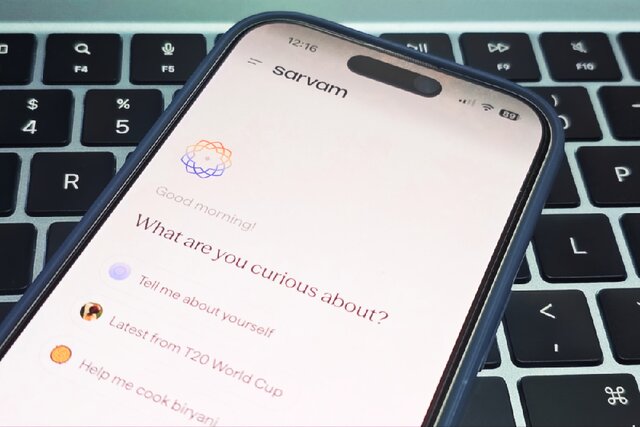
New Delhi, India – In a significant stride towards digital autonomy and technological self-reliance, India has unveiled its latest homegrown artificial intelligence offering: ‘Indus,’ a new chatbot application from the Indian startup Sarvam AI. The launch of Indus signals India’s strategic intent to carve out its own space in the rapidly evolving global AI landscape, currently dominated by tech giants like OpenAI, Anthropic, and Google.
India’s Strategic AI Ambition
India has rapidly emerged as a crucial battleground for generative AI adoption, with global players keenly observing its vast market potential. OpenAI’s ChatGPT alone boasts over 100 million weekly active users in India, while Anthropic reports India as the second-largest user base for its Claude AI, representing 5.8% of its total users, trailing only the United States. This robust engagement underscores India’s strategic importance not just as a consumer market, but also as a nation poised to contribute significantly to AI innovation.
Sarvam AI’s approach is distinctly nationalistic, focusing on developing foundational AI models tailored for local languages and the unique needs of Indian users. This emphasis on indigenous development is a key component of India’s broader strategy to enhance its digital sovereignty and foster technological self-sufficiency.
Introducing ‘Indus’: A National AI Contender
The ‘Indus’ chat application serves as the user interface for Sarvam AI’s recently introduced 105-billion parameter large language model, Sarvam 105B. This powerful model, alongside its 30B counterpart, was unveiled at the India AI Impact Summit earlier this week, an event highlighting the nation’s coordinated efforts in the AI sector.
Beyond its core application, Sarvam AI is strategically engaging in partnerships to integrate its technology across various sectors. Collaborations include HMD for bringing AI capabilities to Nokia feature phones and Bosch for developing AI-powered automotive applications, demonstrating a commitment to permeating critical industries with indigenous AI solutions. Currently available in beta for web and mobile platforms, Indus allows users to interact through text or voice, receiving responses in both formats, with access initially focused within India.
Navigating the Competitive Landscape
While the global AI chatbot market is highly competitive, Sarvam AI’s entry with Indus is a bold statement about India’s aspirations to move beyond being just an adopter of foreign technology. By developing models optimized for local linguistic and cultural nuances, India aims to offer solutions that are more relevant and accessible to its vast and diverse population, potentially setting a precedent for other nations seeking greater technological independence.
Future Outlook and National Development
As a nascent national initiative, Indus is undergoing refinement. Current limitations include restricted chat history management and the default activation of its reasoning feature, which can impact response times. Furthermore, due to the gradual scaling of computational capacity, access to Indus may initially be limited, as noted by Sarvam co-founder Pratyush Kumar. However, these are viewed as initial hurdles in a larger journey of national technological development, with the company actively soliciting user feedback to enhance the application.
The progressive rollout and iterative improvements reflect a common strategy for ambitious tech projects, emphasizing continuous development and adaptation. India’s commitment to fostering a vibrant domestic AI ecosystem, as exemplified by Sarvam AI and Indus, positions the nation as an increasingly formidable and strategically vital player in the global technology arena.