High-Stakes Diplomacy: US-Iran Talks Navigate Israeli Demands and Trump’s Strategic Calculus
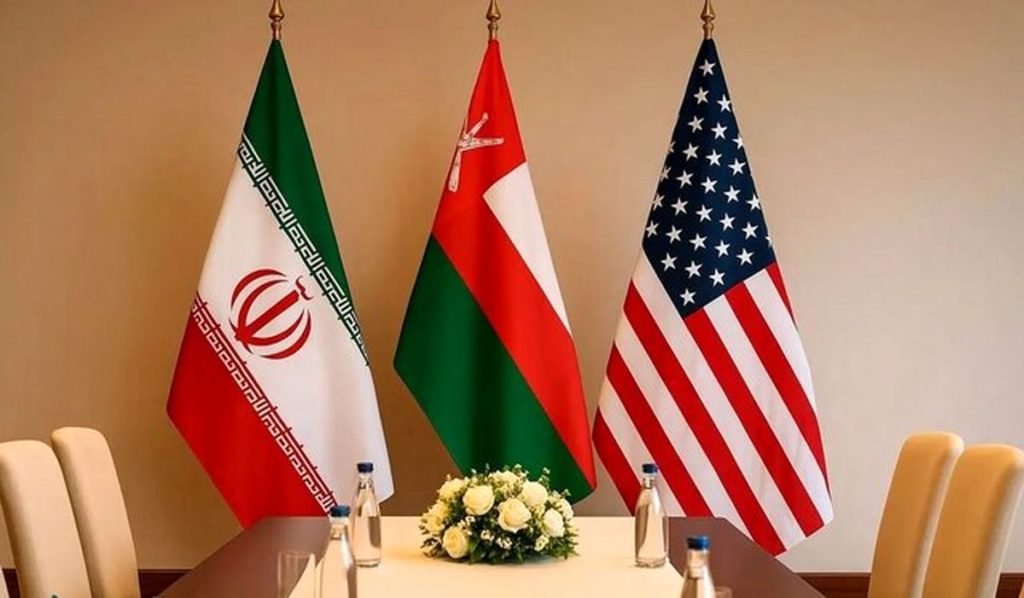
A critical diplomatic encounter is poised to unfold between the United States and Iran in Oman, widely seen as a pivotal moment to either de-escalate burgeoning tensions or face a perilous trajectory towards military confrontation. This high-stakes meeting, featuring a U.S. presidential envoy and Iran’s senior diplomat, Abbas Araqchi, takes place against a backdrop of intense regional dynamics and divergent strategic interests.
The Diplomatic Crossroads
The upcoming talks are framed as a decisive turning point, offering two starkly different paths. One leads to a potential agreement, effectively neutralizing the immediate risk of conflict. The other, however, warns of an impasse fueled by deep-seated disagreements, potentially setting the stage for open military confrontation. For certain regional actors, particularly Israel, such a confrontation is seen by some as an inevitable precursor to a decisive military engagement.
Israeli Red Lines and Broader Demands
Prior to the Oman meeting, Israeli Prime Minister Benjamin Netanyahu, alongside senior security officials, met with the U.S. envoy in Jerusalem. During this discussion, Israel reportedly conveyed its firm “red lines” regarding any potential agreement with Iran.
From Israel’s perspective, any accord that focuses solely on Iran’s nuclear capabilities is deemed largely insufficient. Israeli circles argue that the underlying nuclear infrastructure, coupled with the established expertise in managing such a program, would remain intact, allowing for potential future resurgence even if enriched uranium were temporarily transferred abroad.
Israel views the recent U.S. military buildup in the region as a significant opportunity. This mobilization is seen as a chance to either achieve a complete paradigm shift within Iran through military means – an outcome reportedly preferred by some Israeli strategists – or to compel Tehran to accept an agreement encompassing a stringent set of demands. These demands, considered by some to be highly challenging for Iran to meet, include:
- The transfer of all existing enriched uranium (estimated at approximately 400 kg) to another country.
- A complete cessation of uranium enrichment activities within Iran.
- Extensive restrictions on Iran’s ballistic missile program, limiting both range and dimensions.
- A halt to Iran’s financial and material support for its regional allies.
The message conveyed to the U.S. envoy emphasized that only an agreement simultaneously addressing all four of these components would be considered “strong” and effective by Israel.
Divergent Interpretations of Engagement
A core Israeli concern is that any agreement with Iran could inadvertently strengthen the Iranian system, both morally and politically. Consequently, a limited agreement is perceived by Israel as “bad and weak.” The primary worry in Tel Aviv is that the United States might prioritize the nuclear file while overlooking the ballistic missile program and Iran’s regional influence.
Israel considers Iran’s missile capabilities an existential threat, particularly given the perceived impact of ballistic missile attacks during a past conflict. Therefore, Tel Aviv insists that the missile program must be a fundamental component of any deal and expects Washington to press for its reduction.
For Israel, any U.S.-Iran agreement that does not lead to the complete, final, and long-term dismantling of Iran’s nuclear and ballistic missile capabilities is not a solution but merely a postponement of future confrontation. Israeli analyses suggest that Iran has historically utilized agreements to gain time, enhance capabilities, and secure international legitimacy. This perspective highlights a fundamental difference in strategic outlook: the U.S., as a global power, is seen as capable of absorbing long-term risks, while Israel, a state directly exposed to perceived threats, cannot afford strategic miscalculations.
Furthermore, Israel argues against decoupling the nuclear issue from Iran’s broader regional conduct. They contend that even if Iran formally adheres to a nuclear agreement, it could continue to expand its missile system, fund and arm regional allies, and gradually advance towards sophisticated nuclear capabilities. From Israel’s viewpoint, an agreement that neglects these crucial aspects risks creating a more dangerous reality by bolstering Iran’s economic and diplomatic standing while potentially limiting Israel’s freedom of action.
Concerns also extend to the effectiveness of U.S. security guarantees. Given past U.S. foreign policy shifts in various regions, Israeli circles express skepticism regarding Washington’s ability to provide reliable assurances against the risks of a partial agreement. Moreover, Tel Aviv warns that a return to an agreement with Iran, especially if framed as a U.S. diplomatic triumph, could undermine the international legitimacy of any future military action Israel might deem necessary.
Facing this dilemma, Israel finds itself navigating a complex strategic landscape. Open confrontation with Washington could strain ties with its key ally, while acquiescing to a problematic agreement is viewed as a long-term risk. This highlights a profound gap between the security understanding of a state directly threatened and the risk management strategy of a global power seeking to avoid further wars.
Trump’s Calculated Approach
From the perspective of some analysts, the U.S. approach under the former administration might not align with all of Israel’s desires. The core issue for the U.S., particularly for former President Trump, has largely centered on the nuclear program, with less emphasis on ballistic missiles or Iran’s regional influence. The notion of a “weakened” regional network is also considered by some U.S. observers as a diminished immediate concern.
Despite Israeli criticisms, Tel Aviv reportedly maintains hope that U.S. diplomatic efforts might serve to exhaust all diplomatic avenues, thereby potentially legitimizing military action should talks ultimately fail. The belief is that if negotiations falter, the U.S. could claim to have exhausted all options, leaving no alternative but a decisive response. This underpins the Israeli conviction that the deployment of significant U.S. military assets to the region was not merely a bluff but signaled a genuine consideration of military options.
While Israel may wish for a U.S. military engagement with Iran without direct Israeli involvement, there is also an understanding that the former U.S. President was a transactional leader, meticulously calculating the costs and benefits of any military action. Absent a clear strategic objective such as a complete change of the Iranian system – an aim for which Washington was reportedly not prepared to pay the price – a full-scale war was seen as illogical. The prevailing assessment suggests that the U.S. sought to achieve maximum results with minimum cost and in the shortest possible time.
Iran’s Strategic Posture
Against this backdrop, it remains challenging to envision a scenario where Iran would accept all proposed conditions, particularly given the perceived humiliating nature of such terms and the potential for internal instability. If Iran engages strategically and skillfully in the upcoming talks – a diplomatic capacity it is widely acknowledged to possess – the U.S. might conclude that initiating a war that could end without achieving its objectives would constitute a major defeat for both the U.S. and Israel. This could, in turn, pave the way for a partial agreement as the most pragmatic path forward for all parties at this juncture.