Iran Issues Stark Warning Against Aggression, Cites International Law
Tehran, Iran – In a strong and direct address, Iran has articulated its unwavering stance against any acts of aggression, emphasizing its commitment to international law and issuing a clear warning of a resolute response. The declaration comes in direct reply to recent provocations and threats.
Upholding Sovereignty and International Norms
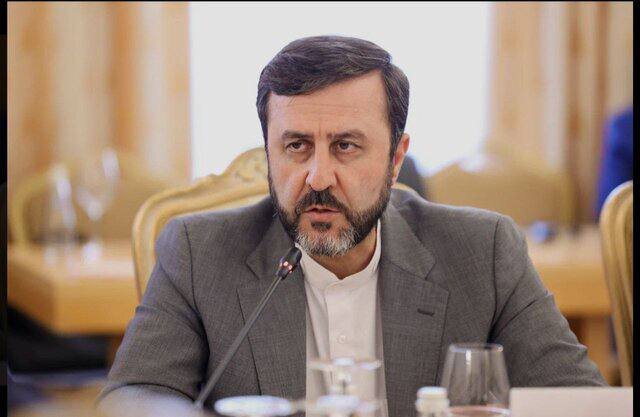
Kazem Gharibabadi, the Deputy Foreign Minister of the Islamic Republic of Iran, took to social media platform X to unequivocally state Iran’s position. He highlighted that any use of force against Iran’s territorial integrity would constitute a clear violation of Article 2(4) of the UN Charter, which strictly prohibits the threat or use of force. Furthermore, he asserted that such actions would be considered an act of aggression under UN General Assembly Resolution 3314.
Condemnation of Targeting Civilian Infrastructure
The Deputy Foreign Minister specifically condemned threats to target civilian infrastructure, such as power plants and bridges. He firmly stated that such actions would amount to war crimes, citing Article 8(2)(b) of the Rome Statute of the International Criminal Court and Article 52 of the First Geneva Protocol of 1977.
Individual Criminal Responsibility for War Crimes
Gharibabadi pointed out that the President of the United States, in his capacity as the highest official representative of his nation, has publicly threatened to commit war crimes. This, he emphasized, incurs individual criminal responsibility under the jurisdiction of the International Criminal Court and any other competent national court.
Right to Self-Defense and Decisive Response
Drawing upon Article 51 of the UN Charter, which enshrines the inherent right to self-defense, Iran declared that it will deliver a decisive, immediate, and regretful response to any act of aggression or imminent threat.
A Call for Restraint
Concluding his statement, the Deputy Foreign Minister advised the US President to cease these threats, suggesting that their repercussions would extend beyond Iran’s borders. He implied that continuing down this path could lead to the US President’s historical record being marked as a perpetrator of war crimes. These remarks followed previous statements by the US President that included threats to target Iran’s infrastructure, which international legal experts have identified as potentially falling under prosecutable war crimes.