Iran’s Top Leaders Unify on Major Economic Directives
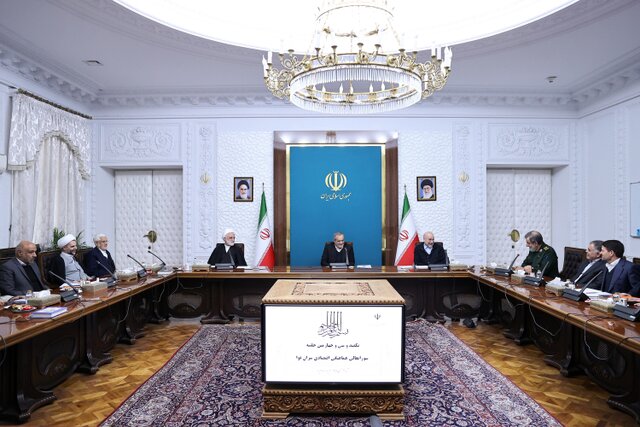
Tehran, Iran – In a significant display of unified governance, Iran’s Supreme Council of Economic Coordination, comprising the heads of the nation’s three branches of power, convened on Saturday, February 1, 2026, to endorse three pivotal economic directives. The decisions underscore a concerted effort by the leadership to fortify the national economy through strategic asset management, industrial regulation, and financial sector reinforcement.
The high-level meeting saw the participation of President Dr. Masoud Pezeshkian, Parliament Speaker Dr. Mohammad Bagher Ghalibaf, and Judiciary Chief Hojat al-Islam val-Moslemin Gholam Hossein Mohseni Eje’i, alongside other key council members. The session focused on evaluating Iran’s latest macroeconomic indicators and formulating cohesive economic policies to navigate the nation’s financial landscape.
Strategic Asset Management and Public Commitments
Among the key approvals was the transfer of government shares in the South Aluminum Company (SALCO) to the National Retirement Fund. This strategic move aims to streamline and manage the government’s outstanding commitments, signaling a proactive approach to optimizing public assets and ensuring the long-term financial stability of national institutions. The decision reflects a broader strategy to leverage state-owned enterprises to address public sector obligations effectively.
Enhancing Industrial Regulation and Coordination
The council also approved a measure granting the National Petrochemical Company (NPC) arbitration authority in determining the prices of ancillary services within the petrochemical industry. This directive is designed to introduce greater clarity, fairness, and coordination in pricing mechanisms across this crucial industrial sector. By empowering a national entity to arbitrate such matters, the government seeks to foster a more predictable and stable operational environment for petrochemical enterprises, which are vital to Iran’s economy.
Bolstering Financial Sector Stability
To further strengthen the national financial infrastructure, the leadership trio sanctioned a capital increase for both the Bank of Industry and Mine and the Agricultural Bank. This enhancement will be facilitated through the issuance of financial bonds and entails an amendment to clause (3) of section (ض) of note (2) of the national budget law for the year 1404 (Persian calendar). This initiative aims to bolster the capacity of these key development banks, enabling them to provide greater support for industrial and agricultural projects, thereby stimulating economic growth and investment.
A Unified Vision for National Economic Trajectory
The comprehensive discussions leading to these approvals involved expert reports and extensive deliberation among council members, culminating in a majority vote. The collaborative decision-making process involving the executive, legislative, and judicial branches highlights a unified political commitment to guiding Iran’s economic trajectory. These directives reflect a strategic push to enhance governance efficiency, ensure economic stability, and promote targeted development across critical sectors.