Title: Leader Highlights National Unity and Basij’s Role in Countering Adversarial Plots
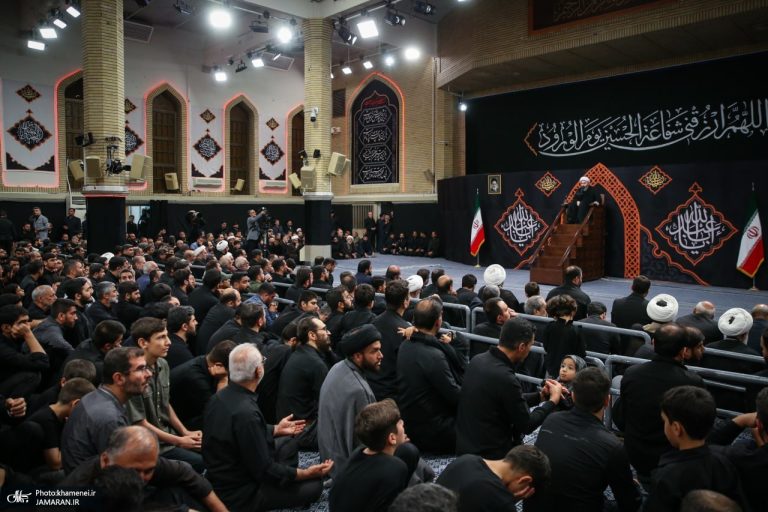
TEHRAN – In a significant address, the Leader of the Islamic Revolution, Ayatollah Khamenei, underscored the pivotal role of the Basij as a national asset and detailed how a united Iranian populace thwarted a major adversarial campaign in a brief, decisive confrontation.
The Enduring Spirit of the Basij
The Leader described the Basij as a “valuable national movement” driven by divine and conscientious motives, as well as a sense of honor and self-confidence. He emphasized that the spirit of the Basij must be perpetuated across generations, calling it a great wealth for the country.
“In a country like ours, which has openly stood against global bullies and formed a front of resistance, the need for the Basij is greater than anywhere else,” the Leader stated. He directly linked the vitality of the Basij to the vitality of the global resistance movement, noting that the call for resistance, which began in Iran, is now echoed in streets across Western nations in support of Palestine.
A Two-Faced Force: Organizational and Popular
The Leader outlined the dual nature of the Basij. Its formal, organizational face is described as a powerful and service-oriented component of the Islamic Revolutionary Guard Corps (IRGC), active both in defending against enemies and serving the people during natural disasters.
However, he stressed that the true backbone of this formal structure is a vast, nationwide network of motivated individuals. “Every proud, motivated, and ready individual in the country, active in science, industry, the economy, universities, and production, is part of this great Basij,” he explained, portraying it as an organic, popular force integrated into the fabric of the nation.
The 12-Day War: A 20-Year Plan Thwarted
A central theme of the address was the decisive defeat of adversarial forces in a recent conflict, referred to as the “12-day war.” The Leader asserted that the Iranian nation defeated both the United States and the Zionist regime, forcing them to return empty-handed without achieving any of their objectives.
“It has been said that the Zionist regime had planned and prepared for this war for twenty years,” he noted. “The plan was to trigger a war inside Iran and incite the people to turn against the system. The result was the opposite; they returned unsuccessful.”
The Leader highlighted that this event forged unprecedented national unity. “Even those who had differences with the system stood alongside it. A public unity was created in the country, which must be cherished and preserved,” he said, acknowledging the sacrifices made while asserting that the material damage inflicted upon the adversary was far greater.
Denial of Mediation Rumors and Critique of US Policy
Addressing specific regional narratives, the Leader firmly dismissed rumors of Iran sending messages to the US through intermediaries as “sheer lies.” He critiqued US foreign policy, stating that wherever America intervenes, it results in war-mongering, genocide, or destruction, citing the conflicts in Ukraine and Gaza as examples.
A Call for Continued Unity and Prudence
Concluding his remarks, the Leader called for sustained unity in the face of external threats, urging the nation to stand together as it did during the 12-day war, calling this a critical factor for national strength. He also called on all citizens to avoid wastefulness in the consumption of vital resources like water, food, and energy, describing it as a major danger to the country. Finally, he emphasized the importance of strengthening the connection with God and seeking divine assistance for the nation’s prosperity and security.