Justice and Ethical Leadership: Iran’s Judiciary Chief Charts the Revolution’s Future
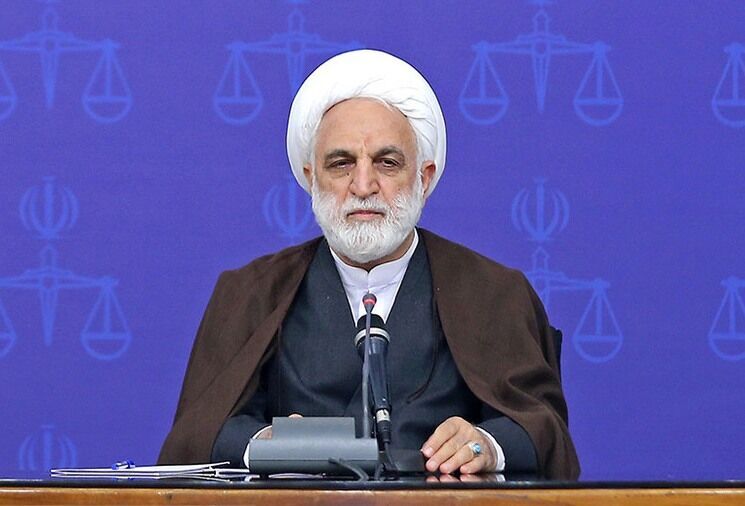
Tehran, Iran – As Iran prepares to mark the 47th anniversary of the Islamic Revolution, Hojjat al-Islam wal-Muslimin Gholamhossein Mohseni-Eje’i, the Head of the Judiciary, emphasized the revolution’s enduring resilience and its unwavering commitment to justice. Speaking at a meeting with members of the Headquarters for Commemorating the Fajr Decade, Mohseni-Eje’i underscored the critical role of ethical conduct among officials and a renewed push for comprehensive justice.
The Revolution’s Enduring Vision
Mohseni-Eje’i lauded the Islamic Revolution’s steadfast progress over the past 47 years, stating that despite numerous conspiracies by adversaries, the revolution continues to thrive and advance towards its sacred goals. He highlighted the revolution’s fundamental objectives, including guiding the populace towards enlightenment and establishing all-encompassing justice.
He detailed the significant strides made in expanding justice across all sectors of the Islamic Republic. Specifically, within the judiciary’s domain, concerted efforts since the revolution’s victory have focused on reclaiming public and national assets – including resources, mines, lands, and water – that were previously plundered. These assets, he affirmed, have been returned to the people, particularly benefiting the deprived and marginalized.
The Judiciary Chief reiterated the ongoing commitment to prosecuting individuals engaged in corruption or those who violate public and natural resources, ensuring the recovery of stolen wealth. This sustained endeavor, he noted, directly aligns with the revolution’s foundational aim of confronting oppression and establishing widespread justice.
A Candid Call for Greater Justice
Despite the significant efforts, Mohseni-Eje’i candidly acknowledged that the nation still has a considerable distance to cover to achieve the true justice envisioned by Islam, the revolutionary leaders, and the Iranian people. He stressed the imperative for all state officials to redouble their efforts in delivering and expanding justice across all dimensions, including economic and livelihood aspects.
In a call for greater transparency and accountability, he stated that officials must be receptive to criticism, complaints, and even reprimands. He personally expressed his openness to receiving feedback and guidance from elites and the public to enhance justice-oriented policies. Mohseni-Eje’i also elaborated on criminal justice, asserting that there should be no leniency for those who violate public safety and property, while also emphasizing the importance of rehabilitating those who have erred, guiding them back into the embrace of society.
Upholding Ethical Governance
Mohseni-Eje’i underscored the profound impact of officials’ conduct on public trust. “Our behavior and lifestyle should not undermine the faith and confidence of the people,” he cautioned, adding that citizens observe actions more closely than words. He urged attention to unfulfilled duties, warning that negligence in this regard would render officials accountable. He specifically called on judicial officials to exert greater efforts to realize the judicial governance envisioned by Islam and the revolutionary leadership, a responsibility he extended to all government officials across various sectors.
Reinforcing National Unity and Celebrating Achievements
The upcoming 22 Bahman (February 11) marches, commemorating the revolution’s victory, were highlighted as crucial opportunities to demonstrate national strength and unity. Hojjat al-Islam Mohammad Hossein Mousapour, head of the Islamic Propaganda Coordination Council, noted that international analysts often express surprise and admiration for the revolution’s enduring success despite the initial odds. He cited a specific “12-day imposed war” that concluded with requests for a ceasefire from the US and the Zionist regime, and recent national challenges where the revolution stood resilient.
Other officials echoed these sentiments:
- Hamidreza Hajibabaei, Head of the Fajr Decade Central Headquarters, described the revolution as idealistic, justice-seeking, and focused on livelihoods. He stressed the importance of unity against adversaries, particularly in the ongoing “real war” in cyberspace.
- Zahra Behrouzazar, Vice President and Head of the Women and Family Committee, highlighted significant achievements for women, including over 330 gold medals in sports, 53% female university students, and 70% of healthcare staff being women.
- Reza Movahedi, Head of the Judiciary Committee, detailed plans to showcase judicial actions in public rights, security, family, and banking, alongside service desks and meetings with martyrs’ families. The oath ceremony for 156 new judges was also announced.
- Hojjat al-Islam Rabbani, Head of the Rural and Nomadic Committee, emphasized efforts to illuminate the revolution’s services to rural and nomadic communities.
- Soleimani, Head of the Martyrs and Veterans Committee, announced the unveiling of 36 books related to martyrs and veterans and highlighted youth participation in commemorative events.
- Nodeh Farani, Head of the Guilds Committee, affirmed the steadfast support of bazaaris and guilds throughout the revolution’s history and announced a congress for 11,000 martyred guildsmen.
This year’s 22 Bahman rallies are anticipated to be held in 1,500 locations nationwide, with special innovations planned for the Fajr Decade programs, particularly in sports and education. The collective message from these officials underscores a shared vision for upholding revolutionary ideals, enhancing public service, and strengthening national cohesion in the face of ongoing challenges.