Leading Reformist: Iran Must Acknowledge Societal Shifts and Enact Deep Reforms
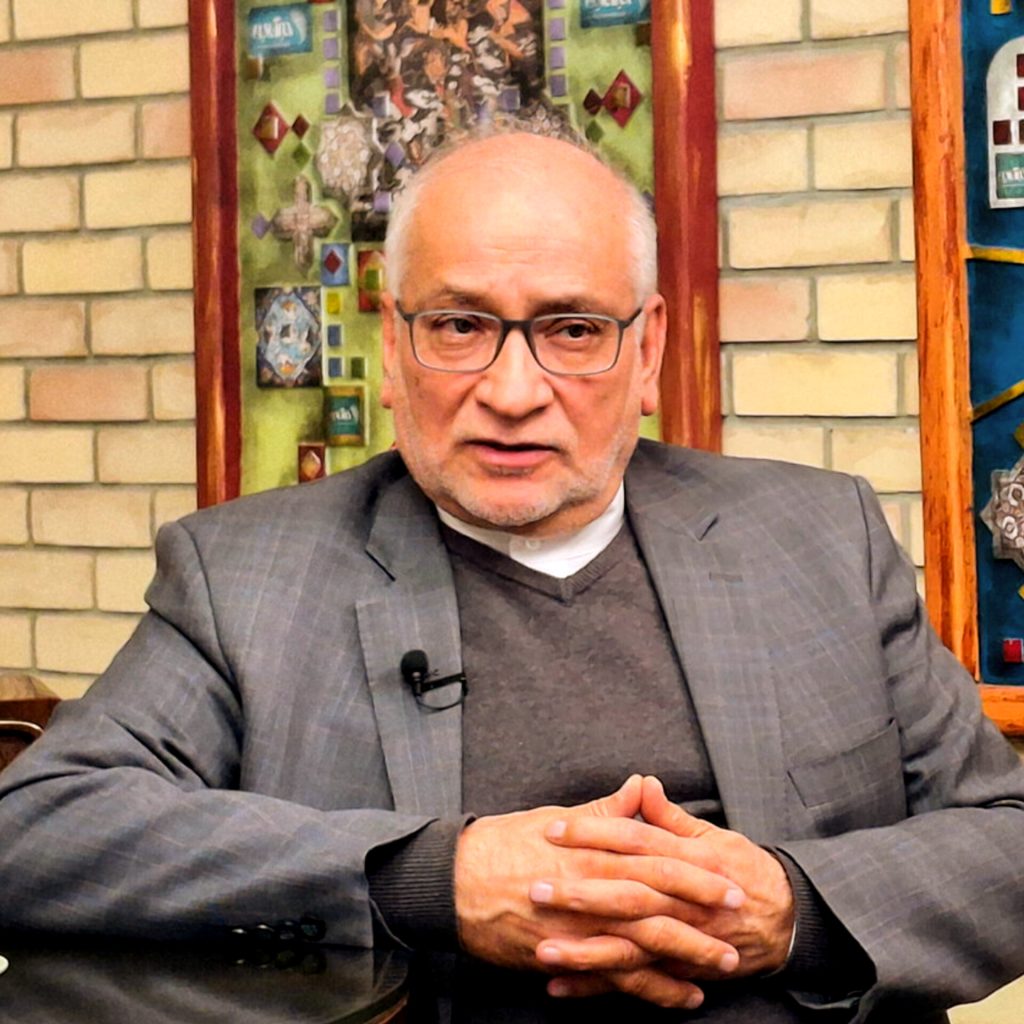
TEHRAN – Seyed Hossein Mar’ashi, Secretary-General of Iran’s Executives of Construction Party, has issued a stark warning and a comprehensive call for action, asserting that while recent protests may appear to have subsided, underlying public anger and accumulated resentment persist. In an editorial published in the Sazandegi daily, Mar’ashi emphasized that the core issue lies in a profound and widening gap between the nation’s official governance structures and the evolving realities of Iranian society.
A Widening Societal-State Gap
Mar’ashi argues that this chasm extends beyond mere political disagreement, permeating deeper cultural dimensions, including lifestyle choices, artistic expression, social conduct, the aspirations of younger generations, evolving forms of religiosity, and the society’s engagement with the global community. He contends that the governance paradigm, once reflective of public sentiment, no longer aligns with the lived experiences of a significant portion of the population.
The political system, Mar’ashi explains, was founded on the beliefs and demands of the majority in the 1980s, a period when approximately 80% of society was in strong alignment with the government. Shared objectives, unified thought, and a relatively homogeneous social culture characterized that era, evident in collective mobilization for defense and public mourning. However, Mar’ashi stresses that Iranian society has undergone significant transformation over the past four decades. New generations, shaped by diverse experiences, global connectivity, and distinct values, cannot be managed with the rhetoric, tools, or models of the 1980s.
The Escalation of Unaddressed Grievances
According to Mar’ashi, the Islamic Republic’s failure to adequately acknowledge and adapt to these societal shifts has become a primary driver of current crises. He describes a hidden anger festering among youth who find themselves disconnected from official rhetoric, state media content, and promoted lifestyles. This resentment, while not always overtly expressed, surfaces during critical junctures, manifesting in various forms of protest across different periods, including the events of 2009, 2017, 2019, and the widespread unrest following Jina (Mahsa) Amini’s death in late 2022 and early 2023.
Dissecting Recent Unrest: Factors and Flaws
Mar’ashi identifies multiple factors contributing to recent widespread protests: the persistent political and cultural divide, escalating economic dissatisfaction, high unemployment, surging prices, external provocations, and the unfortunate escalation of violence from both protesters and security forces. He highlighted the extensive geographical spread of the protests, encompassing approximately two-thirds of the country, and the intensity of the violence, which resulted in significant social and psychological costs that will be challenging to heal.
While welcoming the formation of fact-finding committees, Mar’ashi asserts their effectiveness hinges on scientific, independent, and courageous operation, with transparent publication of findings. He criticizes certain government decisions, such as the liberalization of essential goods prices during an economic downturn, as both ill-advised and provocative. Furthermore, he points to critical shortcomings in the preparedness and response of responsible institutions, noting a delay in accurately assessing the scale of unrest and an insufficient initial response. Mar’ashi places heavy responsibility on the National Security Council, Interior Ministry, Intelligence Ministry, IRGC, and the President for what he describes as a failure in realistic foresight that could have averted severe tensions.
Beyond Containment: The Imperative for Solutions
Mar’ashi cautions that while any governing system can contain protests, the crucial question is the cost incurred. He states that the recent period saw “unprecedentedly high costs,” with official figures indicating a significant number of casualties, each loss generating further sorrow, anger, and resentment. While acknowledging the role of foreign adversaries and hostile groups, Mar’ashi firmly rejects the notion of labeling all protesters as anti-revolutionary or foreign-backed. He stresses that many are legitimate critics, some even disagreeing with the system, but remain citizens whose concerns cannot be dismissed by solely attributing issues to external factors. He adds that any foreign recruitment or arms proliferation would, in itself, reflect a weakness in national security agencies.
Thus, Mar’ashi concludes that merely acknowledging protests is insufficient; the underlying problems must be resolved. He argues that governing the nation cannot rely solely on arrests and security or judicial measures. Effective governance, he contends, demands wisdom, strategic thinking, coordination, and cultural and intellectual harmony between the people and the government. He attributes rising dissatisfaction to extensive interference in personal lives, underdevelopment, poverty, unemployment, elite emigration, and unfavorable comparisons with regional countries.
The Path Forward: Modernizing for National Harmony
Mar’ashi warns that the protests, though dormant, remain like “fire under ashes,” with a serious risk of re-emergence given the decreasing intervals between events and increasing levels of violence. He proposes a path of “modernizing the Islamic Republic” through strengthening its republican foundations, relying on popular vote, and adhering to Islamic principles. The ultimate goal, he states, is to create a system where the majority of society can coexist with the political structure, trust it, and benefit from development, justice, and welfare. He emphasizes that national interests must be secured within the framework of the constitution, or through its amendment if necessary, ensuring no law impedes public good.
Crucially, Mar’ashi highlights the dangers of indifference to the growing divide between the people and the government. Healing this rift, fostering societal consensus, and leveraging opportunities for national solidarity are non-negotiable necessities. He criticizes missed opportunities for unity and the failure to implement even minimal reforms, such as in state media, as indicators of a fundamental inability to comprehend societal demands. The way forward, he asserts, is to adapt the Islamic Republic to the discourse and demands of today’s majority by initiating widespread and genuine reforms that align the system with the aspirations of at least 70% of current society. He acknowledges that while running a country with a deep societal-state gap is possible, it is immensely costly and serves neither the nation nor religious values. He also condemns acts of violence by some protesters against religious symbols, including the desecration of mosques, emphasizing that such behaviors are indefensible but should not be used as a pretext to ignore the fundamental roots of the protests.
Structural Hurdles and Presidential Authority
Mar’ashi identifies a significant obstacle to reform in the structural weakness of governments. Presidents, often elected on promises of change, frequently find their efforts thwarted by the resistance of institutions whose stability and power outweigh that of the executive branch. He cites institutions such as the Judiciary, the IRGC, the Supreme Council of Cultural Revolution, and the Supreme Council of Cyberspace, noting that while the government has a presence within them, they are not under direct governmental control. For meaningful reforms to take root, Mar’ashi argues that the elected President and their government must be empowered as the primary executive authority to fulfill their pledges to the people. He concludes by suggesting that a political figure like Pezeshkian, despite current challenges to his social support, retains the capacity for resurgence if he champions national interests and strengthens coordination between the system and contemporary societal trends.