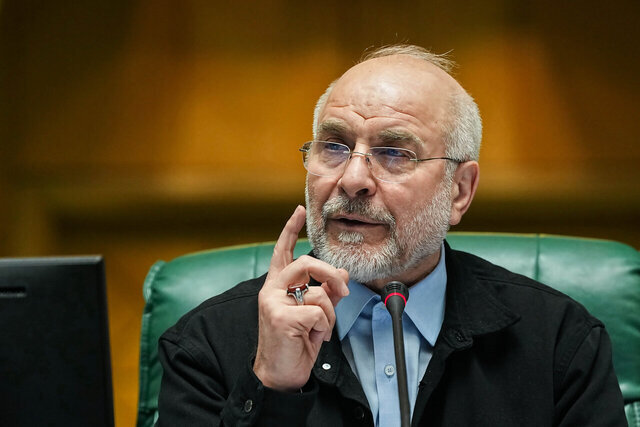
Title: Government Refines Subsidy Program to Target Low-Income Families, Minister Explains
In a move to enhance the efficiency and fairness of the nation’s social welfare system, the Iranian government is continuing the process of refining its universal subsidy program. The Minister of Cooperatives, Labour, and Social Welfare has provided detailed clarifications on the ongoing efforts to redirect support to the most vulnerable segments of society.
A Targeted Approach
The Minister confirmed that 75 million citizens currently receive subsidies. In line with parliamentary legislation, the 14th government has initiated the process of phasing out subsidies for higher-income brackets. To date, approximately 7 million individuals have been removed from the recipient list, a figure significantly lower than the 27 million initially mandated by the parliament for removal.
The Minister highlighted the precision of the new identification system, noting that the number of complaints filed is an indicator of its improved accuracy. “During a previous phase of adjustments from 2015 to 2017, 50% of those removed filed complaints,” he stated. “In contrast, for the first 4 million individuals removed under the current administration, complaints were only at 5%. This figure rose to 20% for the subsequent 3 million, which still indicates a more accurate process overall.”
Clear Criteria for Identification
The government has established transparent, data-driven criteria to identify the three highest-income deciles. According to the Minister, the methodology is based on comprehensive data from the Iranian Statistics Center.
“For instance, a family of three who owns their home and has a monthly income of 30 million Tomans falls into the eighth decile,” he explained. “If that same family were tenants, the income threshold would be 42 million Tomans.” He further called for parliamentary cooperation to define even clearer income benchmarks to guide future phases of the program.
The Minister was also keen to emphasize that certain vulnerable groups have been protected from these changes. “We have not removed individuals with disabilities, veterans, or those with specific illnesses from the subsidy list,” he assured.
A Robust and Transparent Data System
The identification process relies on a robust national data infrastructure. The government collects and cross-references information linked to individuals’ national identification codes from various sources, including law enforcement, insurance databases, the Central Bank, and the stock market.
“This system is transparent,” the Minister asserted. “If an individual disputes their assigned income decile, a field visit will be conducted for verification. However, if it is found that the individual has provided incorrect information, according to the Targeted Subsidies Law, the subsidies they previously received must be returned.”
The Minister concluded by reaffirming the government’s commitment to implementing the law accurately, noting that the current administration is building upon the intent of previous governments to create a more targeted and sustainable social safety net.